
'There Is a Limit....': Supreme Court on Fresh Pleas Against Places of Worship Case
SC dismissed several new petitions where notices were not issued, stating that petitioners could file intervention applications in the pending cases.
- India News
- 3 min read

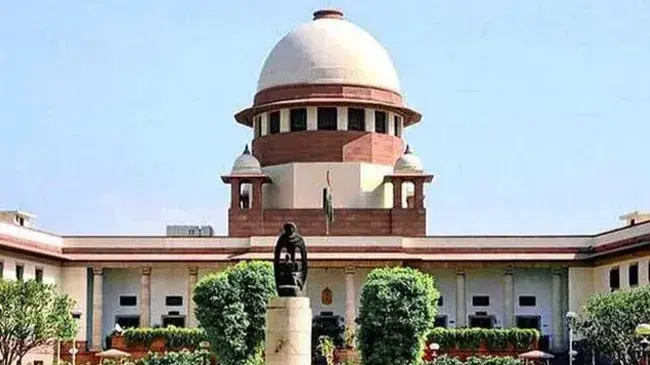
New Delhi: Chief Justice of India Sanjiv Khanna on Monday expressed strong displeasure over the continuous filing of fresh petitions on the Places of Worship (Special Provisions) Act, 1991. He said a three-judge bench would hear the pending petitions related to the law in April.
The Supreme Court dismissed several new petitions where notices were not issued, stating that petitioners could file intervention applications in the pending cases if they had new legal grounds. The bench, including Justice Sanjay Kumar, said, "The writ petitioners can file an (intervention) application raising new grounds."
What did the Supreme Court say?
Explaining the decision, the CJI added, "We are constrained to pass this order after taking note of the number of fresh petitions filed. The pending writ petitions, which have no notices, stand dismissed with the liberty to file an application raising additional grounds, if any. The new IA will only be allowed if there is any new point or new legal issue that has not been raised in the pending petitions."
At the outset of the hearing, the CJI criticised the continuous filing of new petitions, saying, "People keep on filing fresh petitions alleging that they have raised new grounds… It will become impossible for us to deal with the petitions besides whatever has already been filed."
Advertisement
Senior advocate Dushyant Dave supported the bench’s view and said no fresh plea should be allowed. Another senior advocate, Vikas Singh, representing one of the old petitioners, pointed out that the Centre had not filed a response to the petitions and urged the court to give the last opportunity for the government to do so.
‘Might Not Take It Up’
The bench also indicated that it might not take up the pending scheduled petitions during the day as it was a two-judge bench, while the earlier hearings were conducted by a three-judge bench. The CJI remarked, "We might not be able to take it up."
Advertisement
The Supreme Court had earlier stalled proceedings in about 18 lawsuits filed by Hindu parties seeking surveys of mosques like Gyanvapi in Varanasi, Shahi Idgah Masjid in Mathura, and Shahi Jama Masjid in Sambhal. Several petitions were filed later by politicians, including AIMIM chief Asaduddin Owaisi, Samajwadi Party leader Iqra Choudhary, and the Congress Party, seeking strict implementation of the 1991 law.
The Akhil Bhartiya Sant Samiti, a Hindu outfit, sought to intervene in cases challenging the Act’s validity. Muslim organisations, including Jamiat Ulama-i-Hind, called for strict enforcement of the 1991 law, saying it was necessary to maintain communal harmony and preserve the current status of mosques.
The bench had earlier noted, "Ultimately, we will have to hear the arguments," emphasising that the primary issue revolved around Sections 3 and 4 of the Act, which bar conversion of places of worship and prohibit courts from changing their religious character.
The Gyanvapi Mosque management committee opposed the petitions, calling them "mischievous" attempts to overturn legal protections given to various religious sites. The committee pointed to multiple claims made over the years on sites like Shahi Idgah Masjid in Mathura, Quwwat-ul-Islam Mosque near Qutub Minar, and Kamal Maula Mosque in Madhya Pradesh.
SC to Hear Places of Worship Act Case in April
The case will now be heard by a three-judge bench in April, deciding the fate of petitions challenging the 1991 law.
Get Current Updates on India News, Entertainment News, Cricket News along with Latest News and Web Stories from India and around the world.