
Twisha Sharma Death Case: Court Extends Judicial Custody Of Giribala Singh, Son Samarth Till June 30
CBI says forensic and digital evidence is still being analysed and questioning of other people linked to the case is pending. The agency is yet to receive Twisha Sharma’s second post-mortem report.
- India News
- 4 min read

;'%3e%3cpath%20d='m8,15.99c4.41,0,7.99-3.58,7.99-7.99S12.41,0,8,0,0,3.59,0,8s3.58,7.99,7.99,7.99Z'%20style='stroke:%23fff;%20stroke-miterlimit:10;%20stroke-width:.02px;'/%3e%3cpath%20d='m3.08,3.37l3.82,5.11-3.84,4.15h.87l3.37-3.64,2.72,3.64h2.94l-4.04-5.39,3.58-3.87h-.86l-3.1,3.35-2.5-3.35h-2.94Zm1.27.64h1.35l5.97,7.99h-1.35l-5.97-7.99Z'%20style='fill:%23fff;'/%3e%3c/g%3e%3c/svg%3e)


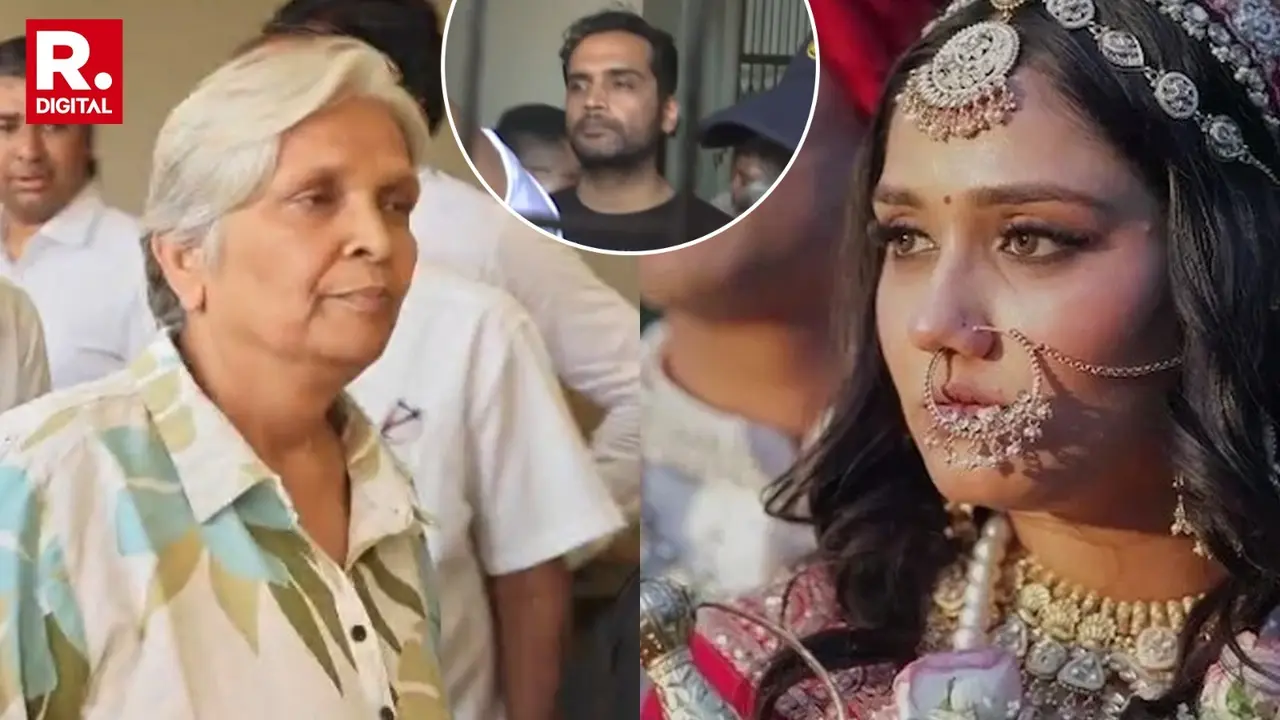
Bhopal: A court on Tuesday extended the judicial custody of Giribala Singh and Samarth Singh, the two accused in the Twisha death case, by another 14 days after the Central Bureau of Investigation (CBI) sought additional time to continue its probe.
With the latest order, both accused will remain in judicial custody till June 30.
During the hearing, the CBI informed the court that the investigation remains underway and that crucial forensic and digital evidence is still being analysed. The agency also said that questioning of other people linked to the case is pending.
The CBI further told the court that it is yet to receive Twisha's second post-mortem report, which is expected to play a key role in the ongoing investigation.
Advertisement
Meanwhile, Giribala’s counsel, George Carlo, urged the court to ensure that media coverage does not influence the proceedings. He requested that the media be kept away from the case and also sought directions restraining Twisha's family members and their lawyers from making public statements to the press.
The submissions by the defence were opposed by the prosecution, which argued that the investigation was still at a crucial stage and required additional time.
Advertisement
Following arguments from both sides, the court reserved its order before extending the judicial custody of the accused by another two weeks.
The Twisha death case has attracted widespread public attention, with the investigation focusing on forensic evidence, digital records and statements of people linked to the matter.
Negligence, Fine & Crucial Piece Of Evidence
Last week, Bhopal Police acknowledged lapses in the initial investigation by penalising a police officer linked to the handling of crucial evidence.
Sub-Inspector Dinesh Sharma had been fined Rs 5,000 for negligence during the probe, with the action approved by the Police Commissioner.
The disciplinary action pertains to procedural lapses involving the seizure of the alleged ligature belt, a key piece of evidence in the case.
The development comes weeks after Republic highlighted serious discrepancies in the handling of evidence and raised questions over the integrity of the initial investigation.
The penalty was imposed on Sub-Inspector Dinesh Sharma for negligence related to the seizure of the ligature material allegedly used in the incident.
The ligature belt is central to the hanging theory that formed the basis of the initial police investigation. However, questions have repeatedly been raised about how the evidence was collected, documented and preserved.
The action against the officer is being viewed as an admission that procedural shortcomings occurred during the early stages of the probe.
Republic Exposed Loopholes
Republic's ground reporting had earlier brought attention to what appeared to be serious irregularities in the seizure process.
According to seizure records, Sharma took possession of the alleged ligature belt on May 13. However, documents examined by Republic indicated that the seizure memo lacked crucial details, including proper identification markings and signatures typically required to establish an unbroken chain of custody.
The absence of signatures became particularly significant because other seizure memos in the case reportedly carried the signatures of accused persons Giribala Singh and Samarth Singh, while the memo relating to the belt did not.
Missing Evidence During Post-Mortem Raised Concerns
Further, the controversy surrounding the ligature belt deepened after it emerged that the material was not provided to forensic experts during the initial post-mortem examination.
Legal experts and Twisha's family have repeatedly argued that without the ligature material, doctors could not scientifically determine whether the marks found on Twisha's neck matched the alleged hanging instrument.
This omission prevented investigators from establishing a crucial forensic link at the earliest stage of the investigation.
The first autopsy report had also recorded ante-mortem injuries, adding further complexity to the case.
The spotlight had intensified on Sub-Inspector Dinesh Sharma after Republic reporters confronted him regarding the handling of evidence.
During the interaction, the officer stated that he was on sick leave and declined to answer detailed questions about the investigation.
The disciplinary action now places the officer's role firmly under scrutiny.
Case Transferred To CBI Amid Public Outrage
Twisha Sharma, a 33-year-old former Miss Pune and model from Noida, was found dead at her matrimonial home in Bhopal's Katara Hills area on May 12.
While local police initially treated the case as a suicide, Twisha's family alleged dowry harassment and murder, accusing her husband Samarth Singh and mother-in-law, retired judge Giribala Singh.
Following mounting public pressure, widespread outrage and questions over the handling of evidence, the case was transferred to the Central Bureau of Investigation (CBI).
With the CBI now investigating the case and arrests already made, attention is likely to remain focused on whether the alleged procedural failures compromised the search for truth in the death of Twisha Sharma.
Get Current Updates on India News, Entertainment News, Cricket News along with Latest News and Web Stories from India and around the world.