
Will Assam's New UCC Bill Effectively Ban Polygamy And Register Live-In Relationships?
In the bill's Statement of Objects and Reasons, Chief Minister Sarma emphasised that the legislation is designed to consolidate, simplify, and modernise laws governing marriage, divorce, succession, and live-in relationships.
- India News
- 2 min read

;'%3e%3cpath%20d='m8,15.99c4.41,0,7.99-3.58,7.99-7.99S12.41,0,8,0,0,3.59,0,8s3.58,7.99,7.99,7.99Z'%20style='stroke:%23fff;%20stroke-miterlimit:10;%20stroke-width:.02px;'/%3e%3cpath%20d='m3.08,3.37l3.82,5.11-3.84,4.15h.87l3.37-3.64,2.72,3.64h2.94l-4.04-5.39,3.58-3.87h-.86l-3.1,3.35-2.5-3.35h-2.94Zm1.27.64h1.35l5.97,7.99h-1.35l-5.97-7.99Z'%20style='fill:%23fff;'/%3e%3c/g%3e%3c/svg%3e)


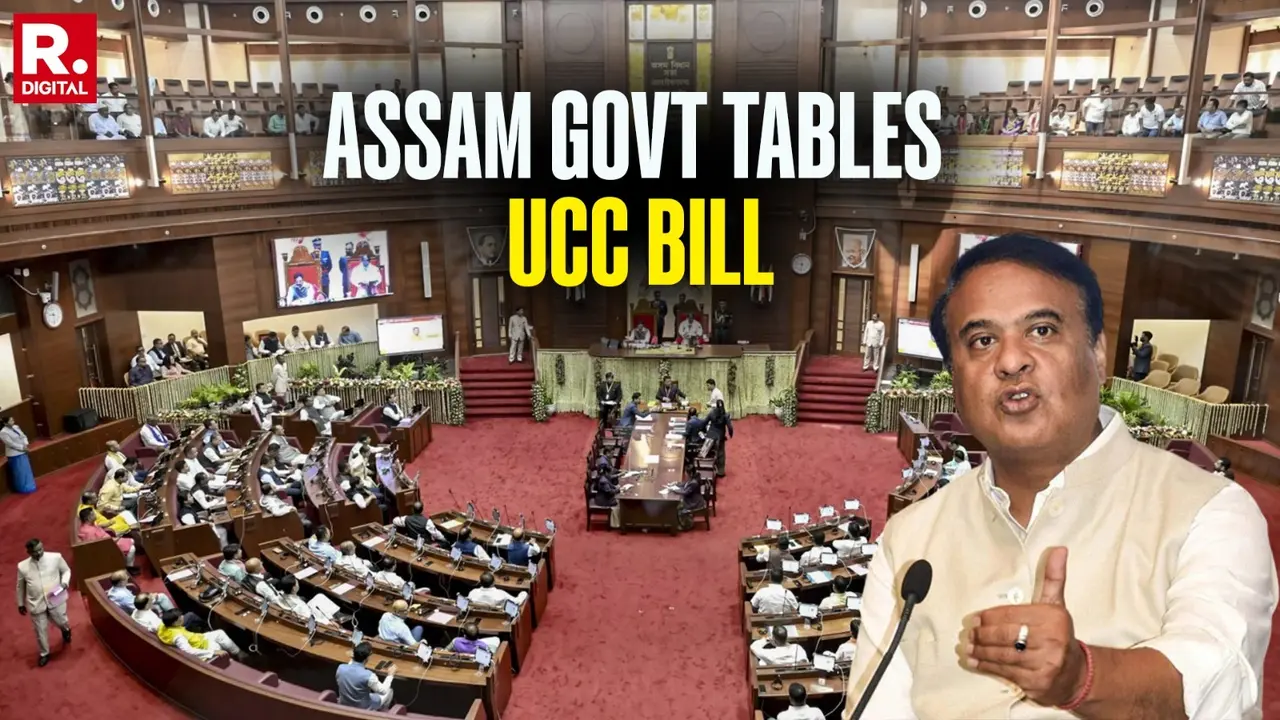
Guwahati: The Assam government on Monday officially introduced a highly anticipated bill on the Uniform Civil Code (UCC) in the state Legislative Assembly.
The landmark legislation fundamentally seeks to standardise personal laws across communities, making Assam the third state in India to table such a code, following Uttarakhand and Gujarat.
On behalf of Chief Minister Himanta Biswa Sarma, Parliamentary Affairs Minister Atul Bora presented "The Uniform Civil Code, Assam, 2026 Bill" to the House.
In the bill's Statement of Objects and Reasons, Chief Minister Sarma emphasised that the legislation is designed to consolidate, simplify, and modernise laws governing marriage, divorce, succession, and live-in relationships.
Advertisement
Among its most pivotal clauses, the UCC Bill explicitly prohibits the practice of polygamy across all communities, moving the state toward a strict single-spouse marriage framework.
It also standardises the legal age of marriage, firmly setting the statutory minimum at 21 years for men and 18 years for women.
Advertisement
In a historic legislative shift, the bill also provides a formal legal framework regulating live-in relationships.
Under the proposed provisions, partners cohabiting without marriage will be legally mandated to register their relationships.
According to the government, this mandatory registration is intended to ensure that the rights of both partners, and any children born out of such unions, are formally recognised and protected under the law.
However, recognising Assam’s distinct demographic diversity, the legislation incorporates strict exemptions.
The proposed civil code will not apply to any Scheduled Tribes residing in both the hill and plain regions of the state.
Furthermore, traditional religious customs, faith-based rituals, and indigenous practices will remain entirely outside the code's purview.
The bill's introduction triggered immediate friction on the assembly floor. Main opposition groups, including the Congress, the RJD, and the Trinamool Congress, strongly voiced their dissent.
Opposition leaders argued against a hurried passage, demanding that the bill be referred to a select committee for wider consultation with various religious and cultural stakeholders.
The introduction of the UCC fulfils a major campaign promise made by the ruling Bharatiya Janata Party (BJP) ahead of the 2026 state assembly polls.
With the cabinet having already cleared the draft on May 13, the Assembly is scheduled to hold a full debate and vote on the bill's statutory provisions tomorrow.
Get Current Updates on India News, Entertainment News, Cricket News along with Latest News and Web Stories from India and around the world.