
From ICU Ventilators to Self-Driving Safety: Engineering for Zero Margin of Error
At Noccarc, Vupparige worked on the design, development, testing, and validation of the company’s V310 ICU ventilator, a device that must precisely regulate airflow and oxygen delivery for critically ill patients.
- Utility News
- 3 min read

;'%3e%3cpath%20d='m8,15.99c4.41,0,7.99-3.58,7.99-7.99S12.41,0,8,0,0,3.59,0,8s3.58,7.99,7.99,7.99Z'%20style='stroke:%23fff;%20stroke-miterlimit:10;%20stroke-width:.02px;'/%3e%3cpath%20d='m3.08,3.37l3.82,5.11-3.84,4.15h.87l3.37-3.64,2.72,3.64h2.94l-4.04-5.39,3.58-3.87h-.86l-3.1,3.35-2.5-3.35h-2.94Zm1.27.64h1.35l5.97,7.99h-1.35l-5.97-7.99Z'%20style='fill:%23fff;'/%3e%3c/g%3e%3c/svg%3e)


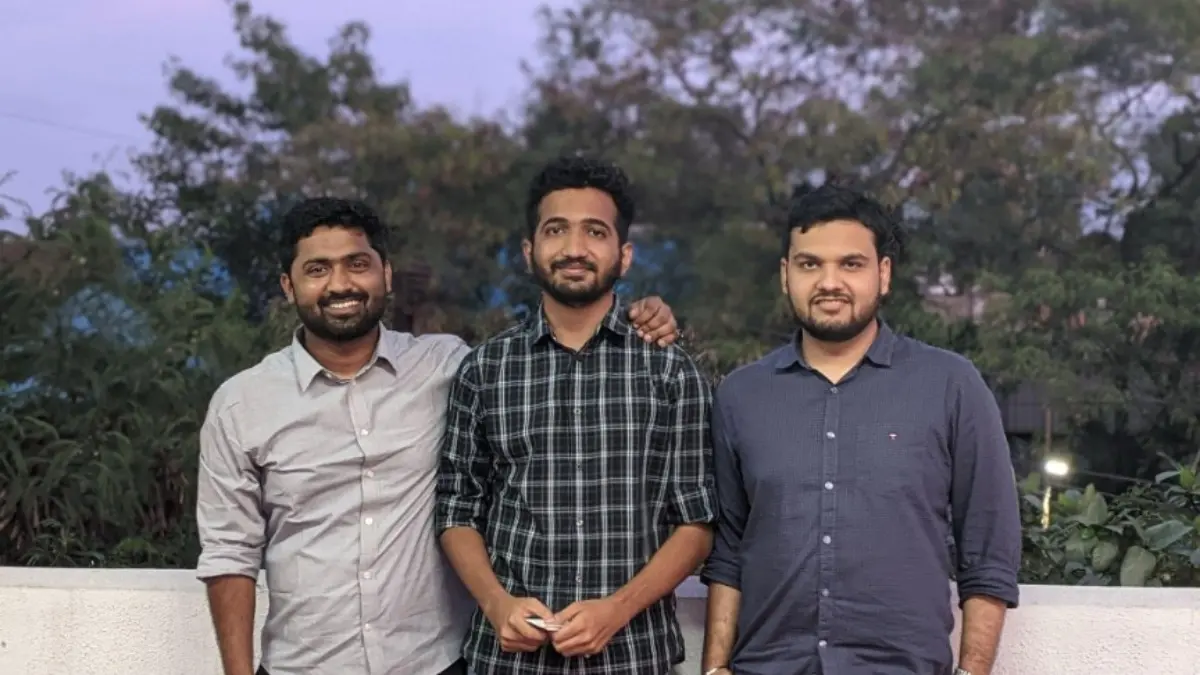
In the spring of 2021, as India’s second COVID-19 wave overwhelmed hospitals and oxygen shortages forced urgent action, a Pune-based engineering team was pressed to deliver one thing at scale. Reliable ICU ventilators. Among the engineers on that effort was Varun Vijaykumar Vupparige, whose work during the crisis helped define a career focused on safety-critical machines.
At Noccarc, Vupparige worked on the design, development, testing, and validation of the company’s V310 ICU ventilator, a device that must precisely regulate airflow and oxygen delivery for critically ill patients.
“A ventilator is a closed-loop control system where the patient is part of the loop,” Vupparige said. “You’re regulating pressure and flow against a person who is fighting for breath. There is no room for an algorithm that is ‘mostly’ right.”
He contributed to tuning PID control loops that drive the ventilator’s pneumatic valves using oxygen and flow-sensor feedback, and supported documentation required for medical-device compliance, including ISO 13485, IEC 60601, and IEC 62304. These standards are widely used to assess quality systems, electrical safety and performance, and medical device software processes.
Advertisement
The V310 effort supported the production and installation of more than 2,500 ICU ventilators across India during the COVID-19 crisis, according to the team’s account, generating more than $5 million in revenue for the company. The work also received recognition in the Limca Book of Records for its pandemic-era contribution and was later chronicled in the book The Ventilator Project. Vupparige also contributed to development work on Noccarc’s S200 and S600 cleaning robots, designed for sanitisation in hospital and industrial environments.
For Vupparige, the crisis reinforced a core principle. When outcomes are life-critical, correctness is non-negotiable.
Advertisement
“When your code is the difference between a machine working and a patient not getting enough air, you stop thinking of it as software,” he said. “You start thinking of it as a promise.”
That mindset has carried into automotive and autonomy. Vupparige earned a master’s degree in mechanical engineering from the University of California, San Diego, where he worked in the university’s Autonomous Vehicle Laboratory on trajectory optimisation and path tracking for self-driving systems. He also holds a granted patent for a strut-integrated wheel-hub drive assembly for electric vehicles, an approach that integrates the motor, suspension strut, and wheel hub into a compact corner module.
He now works at The Goodyear Tire and Rubber Company, developing state-estimation algorithms focused on a key safety variable for advanced driver-assistance and autonomy. Understanding the available grip between tyre and road in changing conditions.
“People see a ventilator and a self-driving car as completely different worlds,” Vupparige said. “To me they’re the same problem wearing different clothes. In both cases, a machine is making decisions in real time that affect whether someone is safe.”
A former colleague said such cross-domain experience is uncommon. “Most engineers go deep in one domain and stay there,” [Last Name] said. “What stands out about Varun is that he carries the same rigor from medical devices into automotive safety.”
As autonomous systems expand in healthcare, mobility and robotics, engineers who can build and validate control software for worst-case scenarios, not just ideal conditions, are increasingly in demand. Vupparige’s path from pandemic ventilator work in Pune to vehicle safety algorithms highlights how much modern innovation depends on getting critical systems right.