
A new era of joint replacement and faster recovery is brought about by Smart Robotics & Smart Implants: Dr Ramneek Mahajan
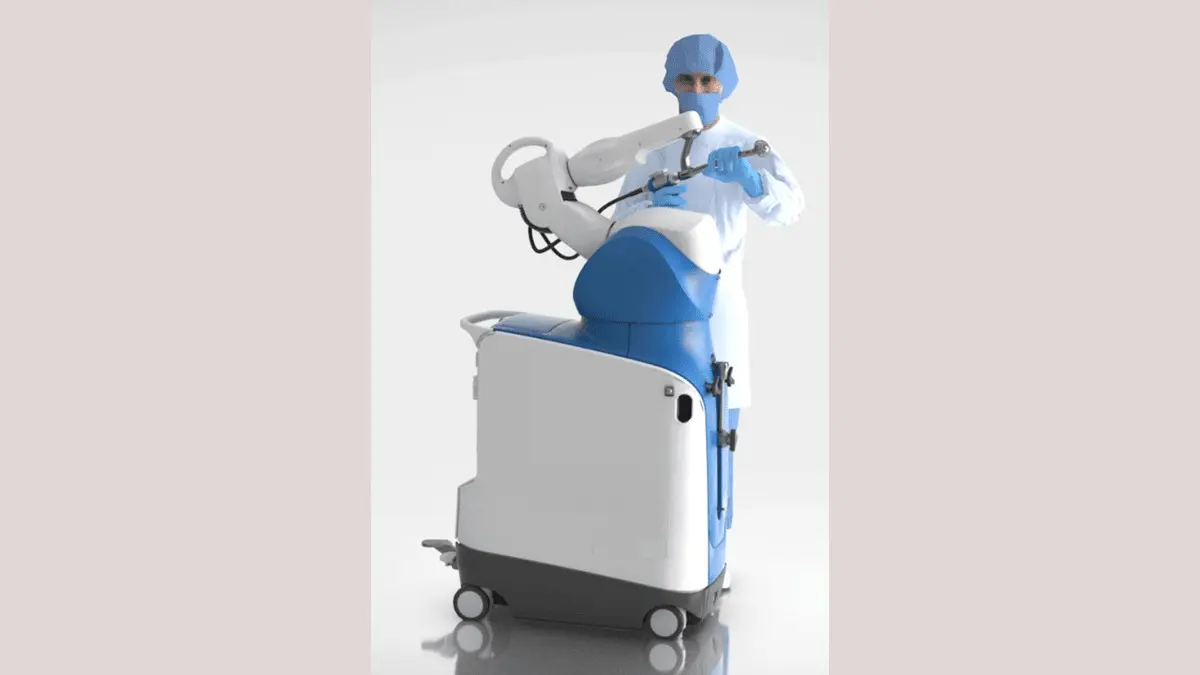
Robotic-assisted joint replacement surgery is revolutionizing orthopedic care by combining CT-based 3D imaging, personalized surgical planning, and robotic precision. This technology enables sub-millimetric accuracy, improves implant alignment, and enhances long-term joint function. Smart implants designed to work seamlessly with robotic systems mimic natural joint movement, improving stability and patient satisfaction.
- Initiatives News
- 3 min read

;'%3e%3cpath%20d='m8,15.99c4.41,0,7.99-3.58,7.99-7.99S12.41,0,8,0,0,3.59,0,8s3.58,7.99,7.99,7.99Z'%20style='stroke:%23fff;%20stroke-miterlimit:10;%20stroke-width:.02px;'/%3e%3cpath%20d='m3.08,3.37l3.82,5.11-3.84,4.15h.87l3.37-3.64,2.72,3.64h2.94l-4.04-5.39,3.58-3.87h-.86l-3.1,3.35-2.5-3.35h-2.94Zm1.27.64h1.35l5.97,7.99h-1.35l-5.97-7.99Z'%20style='fill:%23fff;'/%3e%3c/g%3e%3c/svg%3e)


Authored by : Dr. Ramneek Mahajan, Chairman - Orthopaedics, Joint Replacement & Chief Robotic Joint Replacement – Max Smart Super Specialty Hospital, Saket, New Delhi.
Joint replacement surgery has entered a new era with the rise of smart robotic technology - a sophisticated approach that blends 3D imaging, data-driven planning, and robotic assistance. This advancement marks a significant shift in orthopedic care, allowing for highly personalized procedures with greater precision and faster recovery. It is now widely used in hip, total knee, and partial knee replacements, offering benefits that were previously difficult to achieve with conventional techniques.
CT based technology: A new standard in robotic joint replacement
Smart robotic systems used in joint replacement are increasingly recognized worldwide for their ability to improve surgical precision, consistency, and outcomes. These systems
Advertisement
typically combine preoperative CT-based 3D imaging with intraoperative haptic
feedback, enabling the surgeon to stay in full control while achieving sub-millimetric
Advertisement
accuracy.
Prior to surgery, a CT scan is used to generate a highly detailed 3D model of the patient’s
joint. This allows for personalized surgical planning tailored to each individual’s anatomy.
During the operation, a robotic arm assists with bone preparation and implant placement,
helping ensure optimal alignment and joint balance. This added precision reduces
variability across procedures and supports long-term joint function and implant longevity.
Smart pairing: When Robotics and Implant design work together
Robotic-assisted joint replacement systems are typically designed to work with specific
implant systems that are engineered to complement the precision and workflow of the
robotic platform. This pairing allows for seamless integration between surgical planning,
robotic guidance, and implant performance, helping to ensure optimal results.
One such implant design, often described as a “round knee,” is shaped to more closely
replicate the natural motion of the human knee. This design - supported by decades of
clinical research has shown favorable outcomes in terms of joint stability, durability, and
patient satisfaction.
These are often referred to as smart implants, not because they contain electronics, but
because of their intelligent design, compatibility with robotic precision, and strong track
record of performance. Their effectiveness has been well documented in international
registries and peer-reviewed orthopedic literature.
Benefits for Patients: Smaller Incisions, faster recovery, better outcomes
Robotic-assisted joint replacement isn’t just about surgical precision, it also brings
meaningful benefits to patients, both during and after the procedure.
- Minimally invasive techniques using smaller incisions reduce trauma to surrounding
tissues.
- Reduced blood loss and less postoperative pain lead to quicker mobilization.
- Patients often begin walking within four hours after surgery, following enhanced recovery protocols.
- Many are discharged home within 24 hours, returning to the comfort of their own
environment faster than ever before.
- Stitchless, absorbable wound closures eliminate the need for suture removal visits,
simplifying postoperative care.
- These innovations significantly reduce the risk of complications and speed up
rehabilitation, helping patients return to daily life sooner, with better function and comfort.
Surgeon-Controlled, Robot-Assisted
A key aspect of robotic-assisted joint replacement is that the surgeon remains fully in
control throughout the procedure. The robotic arm does not perform surgery on its own, it
follows the surgeon’s guidance, providing real-time feedback and enhanced precision.
This collaboration between human expertise and advanced technology allows each
procedure to be tailored to the patient’s unique anatomy.
Robotic-assisted joint replacement, when paired with smart implant design and
personalized planning, represents a significant advancement in orthopedic surgery. It
empowers surgeons with tools to operate more precisely, while offering patients benefits
such as faster recovery, fewer complications, improved function and longer-lasting joint
performance.
As this technology continues to evolve, it is helping set a new standard - where innovation and surgical excellence come together to improve lives.
(This article is written by Dr. Ramneek Mahajan, Chairman - Orthopaedics, Joint Replacement & Chief Robotic Joint Replacement – Max Smart Super Specialty Hospital, Saket, New Delhi.)