
Beyond Emergency Response: Why I Built SAHAARA
India records more than 4.5 lakh cases of crime against women every year. Behind that number sits a harder truth. A large share of women in distress never manage to reach any help at all.
- Initiatives News
- 4 min read

;'%3e%3cpath%20d='m8,15.99c4.41,0,7.99-3.58,7.99-7.99S12.41,0,8,0,0,3.59,0,8s3.58,7.99,7.99,7.99Z'%20style='stroke:%23fff;%20stroke-miterlimit:10;%20stroke-width:.02px;'/%3e%3cpath%20d='m3.08,3.37l3.82,5.11-3.84,4.15h.87l3.37-3.64,2.72,3.64h2.94l-4.04-5.39,3.58-3.87h-.86l-3.1,3.35-2.5-3.35h-2.94Zm1.27.64h1.35l5.97,7.99h-1.35l-5.97-7.99Z'%20style='fill:%23fff;'/%3e%3c/g%3e%3c/svg%3e)


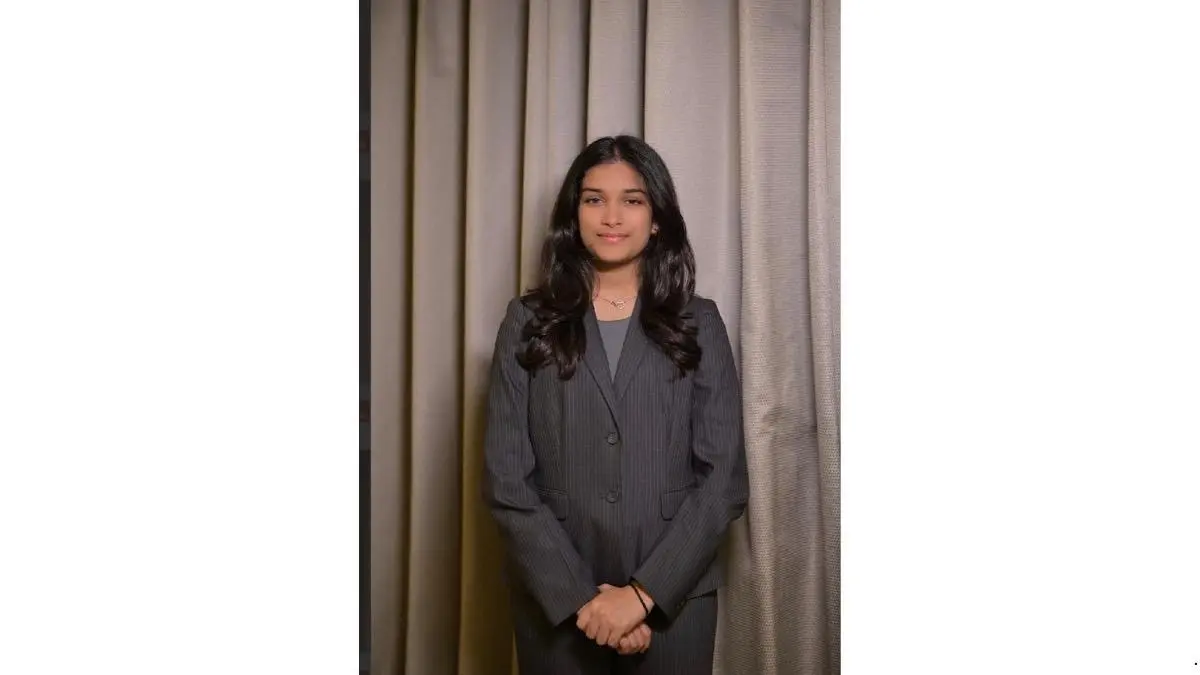
India records more than 4.5 lakh cases of crime against women every year. Behind that number sits a harder truth. A large share of women in distress never manage to reach any help at all. That bothered me for years. The systems exist, so why do so few women get through to them?
When I looked closely, the problem turned out to be the reverse of what I had expected. India does not lack support systems. It has plenty, and each one works in isolation from the others. So this Women's Day I launched SAHAARA, a 24/7 multilingual composite hotline. The thinking behind it is simple. A woman in crisis should not be left to handle it on her own, and she should not have to guess which door to knock on first.
Replacing Disjointed Systems with One Ecosystem
Before building anything, I mapped out how a woman in distress in India is actually expected to get help. Emergency response runs through 112. Women's distress calls go to 1091. Mental health support sits separately with iCall. Legal aid falls under NALSA. Each of these does its own job reasonably well. But because they operate in silos, the burden of connecting them falls entirely on the woman making the call, at the very moment she has the least capacity to carry it.
Advertisement
The conventional model asks what we should do when a woman is in danger. I wanted SAHAARA to ask a different question: how do we make sure she never has to face that danger alone? So rather than adding one more helpline to the list, we built SAHAARA as a central hub. One call activates a coordinated network on her behalf. Her case is followed up within that network, and it stays open until she is genuinely supported, instead of being closed the moment the call ends.
Tech-Enabled Legal Aid, Healthcare and Mental Healthcare
Advertisement
A woman's needs in a crisis are rarely limited to one kind of support. She may need emotional first response in the moment, medical attention soon after, and legal guidance weeks later. Under the current system, each of those means starting over with a new and unfamiliar institution, repeating her story each time.
SAHAARA's partner network was designed to remove that friction. Every partner, whether a healthcare provider, a psychiatric support service, a legal aid provider or a law enforcement liaison, goes through verification and training before being onboarded. Technology does the quiet work in the background: referral mapping and location intelligence help us dispatch the right resource quickly and maintain a live database of verified, geographically relevant support.
One principle, however, was non-negotiable from day one. No crisis decision at SAHAARA is ever made by AI alone. The judgment always rests with a trained human being.
Partnerships with On-Ground Organisations
None of this works as a solo effort. If anything, I have learned that building trust with institutions matters as much as building the technology. We work with Sudhamta Foundation India for partner onboarding and capacity building, alongside a wider network of women-focused NGOs, educational institutions and CSR initiatives that help us reach communities we could never reach alone.
Partnerships with organisations like Young Indians (Yi) Kolkata and the Confederation of Indian Industry (CII) have taken SAHAARA past the hotline itself, into sustained work inside communities. The aim there is prevention, reaching women well before a crisis develops instead of waiting for the call.
Building Through Community Action
Some of my most important lessons have come far from the call centre. Recently, that took me to the Sundarbans, where geographic isolation cuts many women off from formal support systems altogether. Over several days, our team ran school sessions on safety awareness, held community discussions with women on personal safety and their rights, and distributed menstrual health resources through our Sakhi initiative. Every session was held in Bengali. Many women told us afterwards that nobody had ever sat down with them for conversations like these.
I believe strongly in showing up in person. When you sit with women, listen to them and hand them resources yourself, it says something no poster can. Someone came looking for them, for a change.
I began this work because the question of why women do not reach out deserved a real answer. SAHAARA has not fully answered it yet. It is a start, though. A woman's safety should not depend on how many systems she can navigate on her own, or on how far she must travel before someone hears her.
(The article has been authored by Aanya Patni, Founder, SAHAARA)