
Can Artificial Intelligence Make Us Better Humans?
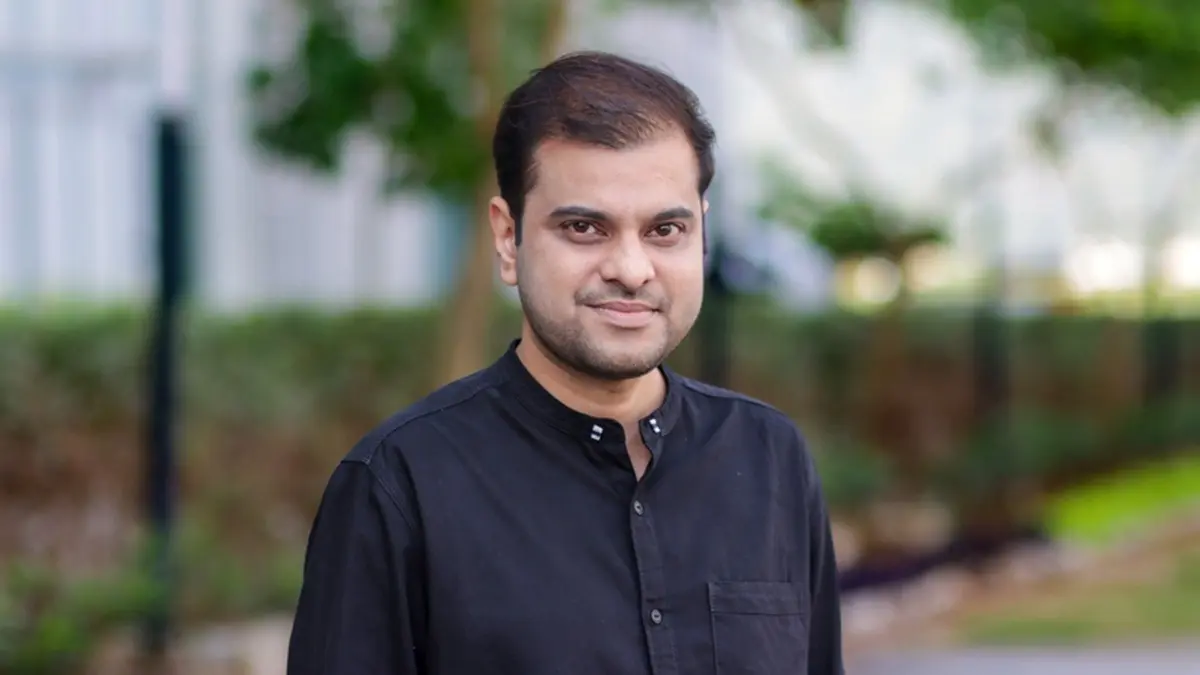
By - Dr Arijit Datta, Assistant Professor, Department of Electronics & Communication Engineering, SRM University-AP ( Amaravati)
- Initiatives News
- 3 min read

;'%3e%3cpath%20d='m8,15.99c4.41,0,7.99-3.58,7.99-7.99S12.41,0,8,0,0,3.59,0,8s3.58,7.99,7.99,7.99Z'%20style='stroke:%23fff;%20stroke-miterlimit:10;%20stroke-width:.02px;'/%3e%3cpath%20d='m3.08,3.37l3.82,5.11-3.84,4.15h.87l3.37-3.64,2.72,3.64h2.94l-4.04-5.39,3.58-3.87h-.86l-3.1,3.35-2.5-3.35h-2.94Zm1.27.64h1.35l5.97,7.99h-1.35l-5.97-7.99Z'%20style='fill:%23fff;'/%3e%3c/g%3e%3c/svg%3e)


Artificial intelligence has moved far beyond its origins as a computational tool. It can interpret medical images, generate software, synthesise information, compose music, and analyse enormous datasets with extraordinary speed. Yet behind this technological ascendancy lies a more consequential societal question: Can AI make us better humans, or merely more efficient ones? The answer depends less on the sophistication of machines than on the discernment, governance, and responsibility with which humanity chooses to deploy them.
AI is fundamentally an amplifier of human capability, and human fallibility. Machine-learning systems extract statistical patterns from data; when those data encode historical prejudice, systemic inequity, or inadequate representation, algorithms can reproduce and magnify those distortions at unprecedented scale. A model may achieve impressive predictive accuracy while producing outcomes that are socially or ethically indefensible. Optimisation, therefore, must never be mistaken for wisdom. In healthcare, finance, education, and autonomous systems, probabilistic predictions can support decision-making, but they cannot substitute for contextual understanding, ethical deliberation, and human accountability. Robustness, explainability, fairness, privacy, security, and accountability must consequently be treated as engineering imperatives rather than peripheral ethical considerations.
The more insidious challenge, however, may be cognitive dependence. Generative AI can write, calculate, design, summarise, code, and reason with remarkable fluency. As these capabilities become ubiquitous, humans may begin outsourcing not merely repetitive labour but intellectual effort itself. Students may accept machine-generated conclusions without verification; professionals may defer to algorithmic recommendations without interrogating their assumptions; and organisations may mistake automated outputs for informed judgment. What begins as cognitive convenience can gradually become intellectual complacency. The danger is not that machines will think too much for us, but that humanity may progressively think less for itself.
This demands a fundamental shift from AI substitution to AI augmentation. Machines possess extraordinary computational scalability, consistency, and pattern-recognition capabilities. Humans remain indispensable where ambiguity, empathy, contextual interpretation, moral reasoning, creativity, and value-based judgment prevail. The most productive relationship between humans and AI is therefore not one of passive dependence, but of critical collaboration: machines can generate possibilities, identify patterns, and accelerate analysis, while humans interrogate assumptions, verify evidence, assess consequences, and make accountable decisions.
Advertisement
Education must evolve accordingly. The objective should no longer be to produce individuals who merely know how to obtain answers from intelligent systems, but individuals capable of questioning, validating, contextualising, and challenging those answers. AI literacy must therefore extend beyond prompt formulation or tool usage to include data literacy, probabilistic reasoning, model limitations, bias detection, verification, privacy awareness, and ethical judgment. The ability to recognise when an AI system may be wrong is becoming as important as the ability to use it effectively.
Perhaps AI will ultimately compel society to redefine intelligence itself. When machines can retrieve information, calculate probabilities, and generate conventional solutions faster than humans, our distinctive value may increasingly reside in asking consequential questions, recognising uncertainty, challenging assumptions, exercising judgment, and imagining possibilities beyond established patterns. AI can expand human capability; whether it expands human wisdom remains a question of human choice.
Advertisement
The future should not be one in which machines think for humanity, but one in which machines expand our capacity to think without diminishing our willingness to do so. Artificial intelligence can be engineered to become increasingly intelligent; wisdom, however, cannot simply be programmed. It emerges through experience, reflection, empathy, responsibility, and moral judgment. The ultimate measure of AI, therefore, may not be how much human work it can replace, but how much human potential it can responsibly amplify.