
Dhruva Advisors: An Indian Tax Firm on the Path to Join the League of Big Four Firms
Dhruva Advisors, founded in 2014 by Dinesh Kanabar and four partners, has grown from 25 to 425 professionals by 2024, challenging the Big Four in tax and regulatory advisory. It emphasizes collaboration over hierarchy, despite setbacks during COVID-19.
- Initiatives News
- 9 min read

;'%3e%3cpath%20d='m8,15.99c4.41,0,7.99-3.58,7.99-7.99S12.41,0,8,0,0,3.59,0,8s3.58,7.99,7.99,7.99Z'%20style='stroke:%23fff;%20stroke-miterlimit:10;%20stroke-width:.02px;'/%3e%3cpath%20d='m3.08,3.37l3.82,5.11-3.84,4.15h.87l3.37-3.64,2.72,3.64h2.94l-4.04-5.39,3.58-3.87h-.86l-3.1,3.35-2.5-3.35h-2.94Zm1.27.64h1.35l5.97,7.99h-1.35l-5.97-7.99Z'%20style='fill:%23fff;'/%3e%3c/g%3e%3c/svg%3e)


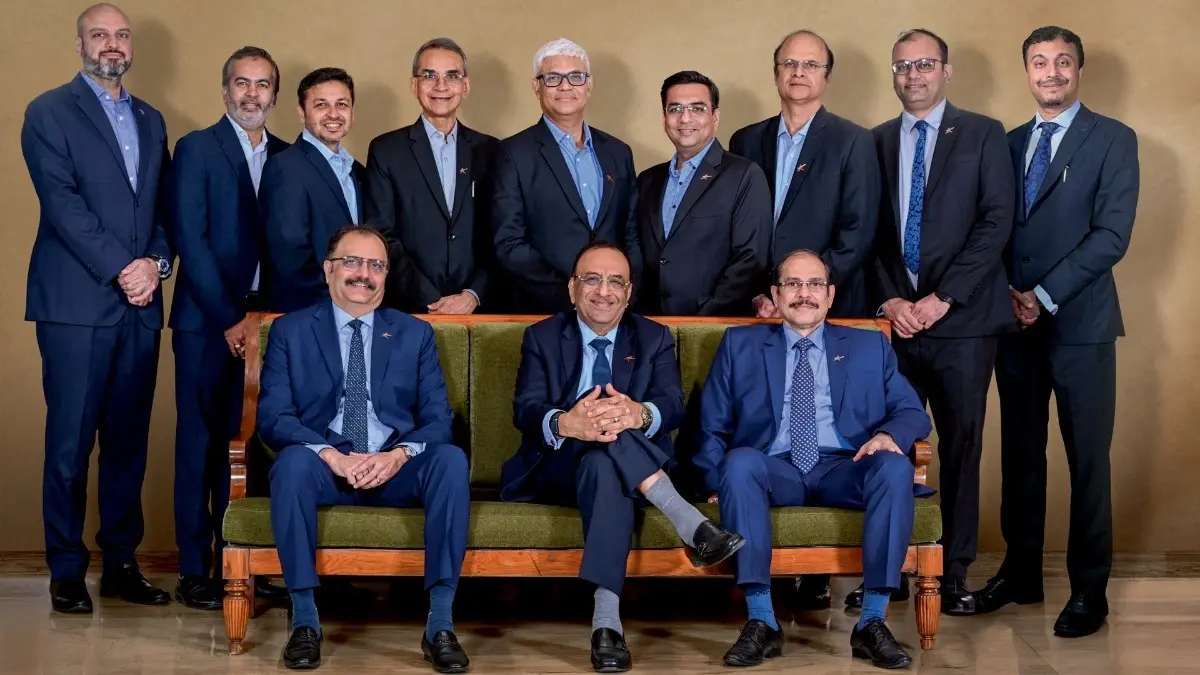
For decades, the global professional-services industry has been dominated by names that have become synonymous with scale, expertise and institutional credibility. But India may now be witnessing the emergence of a different kind of challenger one that does not simply seek to imitate the Big Four, but wants to build an alternative to them.
Dhruva Advisors, founded in 2014 by Dinesh Kanabar and four other founding partners, has spent its first decade building precisely that proposition. By 2024, the firm had grown from four partners and 25 professionals operating out of three Indian offices to 37 partners and 425 non-partner experts. It had emerged as an alternative to the Big Four for clients in India and the UAE and was expanding into Saudi Arabia.
The firm's rise was reflected in its 10th-anniversary celebrations in Mumbai in November 2024, which saw industry stalwarts including Mukesh Ambani of Reliance Industries and N. Chandrasekaran of the Tata Group attend the event to felicitate Kanabar and his team. Dhruva had also been consistently voted India's number one Indian tax firm of the year for five consecutive years, while its marquee client list included organisations willing to pay premium prices for complex work.
But Dhruva's story is not simply about growth. It is about attempting to build a professional-services organisation on a fundamentally different operating model.
Advertisement
Building an Alternative to the Big Four
Dhruva was founded with the belief that professional-services firms did not have to be driven by individual targets, internal competition and conventional hierarchies.
Kanabar and his co-founders wanted to create an organisation where culture would define the organisational architecture and influence strategic decisions. Partners were expected to collaborate rather than compete, while cultural fit, rather than the size of an individual partner's business book, would influence decisions on bringing in partners or adding practices.
Advertisement
The firm also consciously rejected the multi-practice model followed by the Big Four. Instead of combining audit, tax and advisory, Dhruva focused exclusively on taxation and regulatory advisory services.
Kanabar believed that offering multiple services could compromise independence and create inherent tensions within an organisation. Dhruva therefore concentrated on complex, high-end work and positioned itself as a firm that would provide clear and confident advice rather than simply present clients with a range of alternatives.
When Collaboration Became the Competitive Advantage
Dhruva's model was built around the idea that expertise should not remain confined to individual partners or practices.
The firm organised its work around direct and indirect tax, supported by advisory, M&A, litigation and compliance functions. Partners were given flexibility to work across these areas and collaborate with colleagues outside their own practices. The intention was to prevent turf-related issues and create integrated solutions for clients.
Dhruva initially began with seven to eight levels of designation, similar to large audit and tax firms. But employee feedback led it to simplify the structure to three layers—Associate, Principal and Partner. The firm moved away from a multi-layered hierarchy towards a role-based organisation, with greater emphasis on clarity of responsibility.
Partners did not have individual targets. Budgets were prepared for the organisation as a whole, while learning and knowledge-sharing were actively encouraged.
The logic was straightforward: if clients came to Dhruva with complex problems, solving those problems could not be the responsibility of only the partner who owned the relationship. Expertise from across the firm had to be pooled.
A Culture Designed to Challenge Hierarchy
Symbols of power distance were abolished. Secretaries were advised to address partners by their first names, while associates were encouraged to walk directly into partners' offices. The firm also introduced skip-level meetings, allowing junior employees to engage directly with senior leaders without their immediate managers present.
The case suggests that these mechanisms were not simply cultural exercises. They contributed to organisational change, including the eventual introduction of the manager designation.
The broader proposition was that culture and performance did not have to be opposites. Instead, Dhruva believed that collaboration, transparency and respect could directly contribute to client-service excellence.
The Setbacks That Created Dhruva 2.0
Some founding partners eventually left because of differences over the firm's ideal size and their status within it. The firm also experienced employee attrition during the COVID-19 pandemic.
Yet around 30-40% of those who had joined Dhruva at its inception remained with the firm, with several progressing to partnership. The new leadership team, including Punit Shah, Sandeep Bhalla, Mehul Bheda and Vaibhav Gupta, became part of the effort to reinforce the principles on which Dhruva had been founded.
Rather than viewing the setbacks as a reason to abandon its original model, Dhruva used them to strengthen its processes. This became the foundation for what the case describes as Dhruva 2.0.
Dubai: The Real Test of the Model
When Dubai introduced VAT in 2017, Dhruva identified an opportunity and moved quickly to establish a UAE practice. But the firm entered a market where it had limited brand recognition and where large government organisations preferred the Big Four.
Instead of attempting to compete for every client, Dhruva targeted large local family-owned business groups, sovereign funds and listed entities with complex operations and the financial capacity to pay premium fees.
The ambition was not to become a cheaper alternative to the Big Four. Dhruva wanted to compete in what its leadership described as the "premier league".
The early years were difficult. The Dubai operation was burning cash, with funding coming from India. There were temptations to take smaller accounts simply to keep revenue flowing. But the firm remained committed to the premium positioning.
From Unknown Entrant to Big Four Challenger
Dhruva invested heavily in brand building and local knowledge. It published technical articles, guides and other material for prospective clients and used local newspapers such as Gulf News and Khaleej Times to establish its technical credentials. During COVID-19, it also released short videos explaining technical subjects.
Its tax-only positioning became another advantage. Rather than competing across multiple professional-services categories, Dhruva could tell clients that its partners and professionals had focused solely on tax throughout their careers.
By 2024, the Dubai office had grown to eight partners and 120 people. The firm had the largest tax advisory practice outside the Big Four, with a 20–25% market share, while its VAT practice had surpassed that of some Big Four accounting firms.
The Dubai experience also opened the door to Saudi Arabia, while Dhruva established an India-based delivery centre to support its front-end international teams.
That success gave Dhruva something it needed for the next phase: confidence that its homegrown model could work outside India.
The Big Four Question
By 2025, Dhruva was increasingly being viewed as a competitor to the Big Four. The success of Dubai had strengthened the possibility that it could become a genuinely homegrown multinational professional-services firm.
The larger Indian question is equally significant. If Indian professionals can lead global institutions, why should Indian firms not build global institutions of their own?
Kanabar has argued that India can transition from being a marketplace for global consulting firms to becoming their birthplace, with the next Big Four potentially bearing Indian names.
It is an ambitious proposition. But ambition alone will not be enough.
The Scale Problem
Dhruva's biggest challenge may be that the qualities that made it successful are precisely the qualities that become difficult to preserve at scale.
The firm remains a mid-sized partnership with limited resources for rapid global expansion. At the same time, professional-services firms are increasingly exploring private-equity-backed structures that can provide capital for technology upgrades, talent and strategic acquisitions.
Dhruva therefore faces a fundamental strategic choice: how aggressively should it scale, and what should it be willing to change in order to do so?
The answer could determine whether it remains an exceptionally successful specialist firm or becomes a global professional-services institution.
Can the One-Firm Philosophy Survive Global Expansion?
Dhruva has been built around a one-firm philosophy. But global professional-services organisations have historically had to balance global integration with local adaptation.
As Dhruva enters more countries, maintaining a single organisational identity while adapting to different regulatory systems, markets, cultures and client expectations will become increasingly difficult.
The Dubai experience already demonstrated some of those challenges. The firm had to recruit non-Indians, build formal HR systems and consciously create a critical mass of diverse employees because hiring people was easier than retaining them. That experience could become even more important as the firm expands.
The Dinesh Kanabar Challenge
Perhaps the most important question is also the most personal.
Dhruva's first decade was largely shaped by Dinesh Kanabar's vision, leadership and reputation. His credibility helped open doors in Dubai, while his leadership remained central to the firm's culture and strategic direction.
At 66, Kanabar still has the capacity to drive the firm's next phase. But a global institution cannot ultimately depend on one individual.
If Dhruva 3.0 is to become one of India's next Big Four-level firms, it will have to institutionalise the qualities that Kanabar personally embedded in the organisation.
That means creating an architecture capable of surviving leadership transitions while preserving the culture that made Dhruva distinctive in the first place.
Dhruva 3.0: India's Global Bet?
The first decade established that an Indian tax firm could build a premium franchise without copying the traditional Big Four model. Dubai demonstrated that the proposition could travel internationally.
Now Dhruva 3.0 must answer the hardest question of all: can that model be institutionalised and scaled without losing the culture, collaboration and client-first philosophy that made it successful?
Dhruva's stated values-delivering excellence, being honest and transparent, building relationships, remaining unconventional, adding value and taking accountability—provide the framework for that journey.
The opportunity is larger than Dhruva itself.
India has long produced professionals who have reached the highest levels of global corporations. The next step is to build Indian institutions capable of reaching those heights themselves.
Dhruva has already shown that a homegrown firm can challenge established global players in a specialised field. It has demonstrated that premium positioning does not necessarily require a Big Four name. And its international expansion has shown that an Indian professional-services model can travel.
But becoming India's next Big Four will require more than a strong brand, technical expertise and a successful first decade. It will require Dhruva to solve the very problem every successful organisation eventually faces: how to become bigger without becoming different from the organisation that made you successful.