
Fashion Designing Colleges in Chhattisgarh: Inside AAFT University Raipur's B.Des to M.Des Pathway
Explore AAFT University Raipur’s B.Des and M.Des in Fashion Design, course structure, career opportunities, facilities and admission process for the 2027 batch.
- Initiatives News
- 9 min read

;'%3e%3cpath%20d='m8,15.99c4.41,0,7.99-3.58,7.99-7.99S12.41,0,8,0,0,3.59,0,8s3.58,7.99,7.99,7.99Z'%20style='stroke:%23fff;%20stroke-miterlimit:10;%20stroke-width:.02px;'/%3e%3cpath%20d='m3.08,3.37l3.82,5.11-3.84,4.15h.87l3.37-3.64,2.72,3.64h2.94l-4.04-5.39,3.58-3.87h-.86l-3.1,3.35-2.5-3.35h-2.94Zm1.27.64h1.35l5.97,7.99h-1.35l-5.97-7.99Z'%20style='fill:%23fff;'/%3e%3c/g%3e%3c/svg%3e)


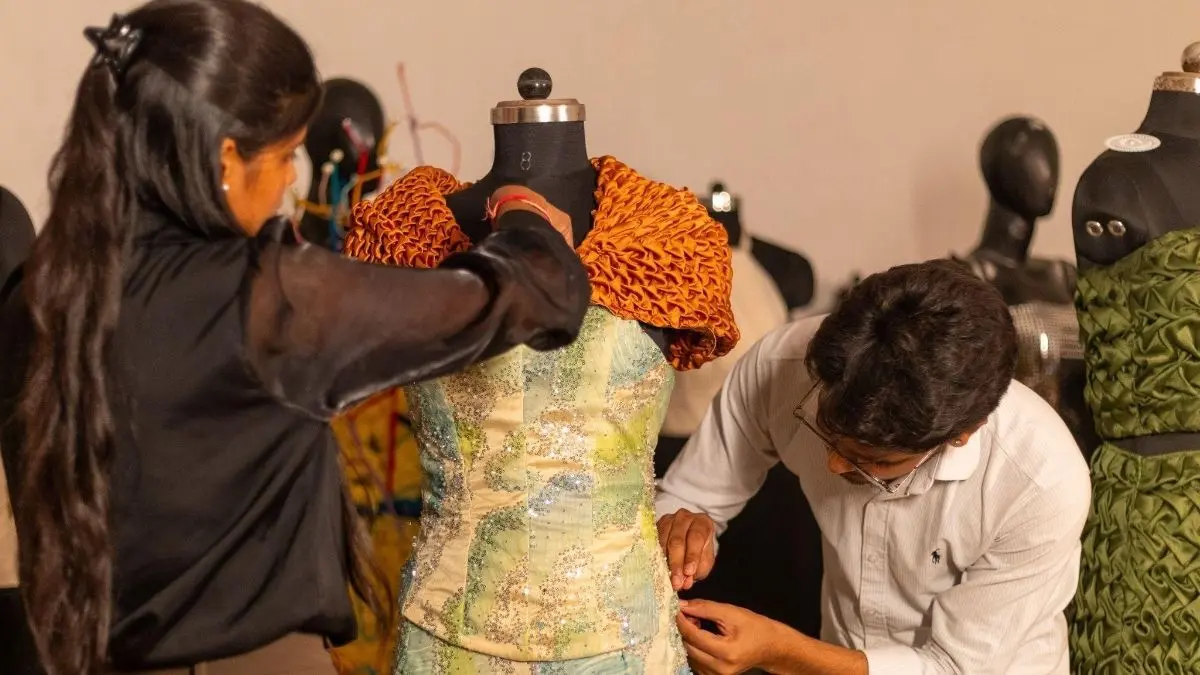
Raipur, India — Comparing fashion designing colleges in Chhattisgarh? One practical question is whether a college lets you continue from an undergraduate to a postgraduate degree in the same place. The four-year fashion designing course in Raipur at AAFT University, a B.Des in Fashion Design, leads straight into a two-year M.Des, so students can follow a 4+2 route on one campus.
AAFT University of Media and Arts in Raipur, Chhattisgarh, offers the four-year B.Des in Fashion Design and the two-year M.Des in Fashion Design through the AAFT University School of Fashion Design.
Fashion design combines art, craft and business, and a designer's work affects how a garment looks, fits, is produced and is sold. A useful degree therefore covers drawing and design, garment construction, and the commercial side of the industry. The programme is taught on the university's Kharora campus near Raipur, and applications for the 2027 batch are open.
Is Fashion Design a Good Career After 12th?
Advertisement
Yes. India's textile and apparel sector employs designers, merchandisers, stylists and product developers. That makes a fashion design degree after 12th a practical career option.
Pay depends on the portfolio and the type of employer. Designers who combine strong construction skills with a clear collection in their portfolio usually move into senior roles faster.
Advertisement
India's Fashion Industry in Numbers
Indicator | Figure | Source |
Textile and apparel market target | About US$350 billion by 2030 | Invest India |
People employed in the sector | About 45 million | Invest India |
Share of global textile and apparel trade | About 4.5% | Invest India |
The sector covers everything from fibre and fabric production to garment manufacturing, retail and export. These figures show the size of the industry that fashion graduates enter.
A sector of this scale needs people who can design products, plan collections and manage how clothing reaches buyers, both in India and in export markets. Design is one link in that chain, and it connects closely with sourcing, production and retail teams.
Design, Styling or Merchandising: Understanding the Field
Fashion is a wide industry, and a design degree touches several parts of it. Knowing the differences helps students choose electives and internships.
· Fashion design. Creates the garment itself, from sketch and pattern to finished piece.
· Styling. Decides how garments are combined and presented in shoots, shows and stores.
· Merchandising. Plans what a brand sells, in what quantity and at what price.
· Textile and surface design. Develops prints, weaves and surface treatments for fabric.
Many fashion careers combine more than one of these areas, especially in smaller brands where one person may design, style and plan a range. A B.Des in Fashion Design is centred on design and construction, but it also introduces styling, marketing and textiles. That gives graduates enough grounding to move into related roles if their interests change.
The B.Des to M.Des Pathway, Side by Side
| B.Des in Fashion Design | M.Des in Fashion Design |
Duration | 4 years | 2 years |
Entry requirement | 10+2 from a recognised board | A bachelor's degree |
Focus | Core design, textiles, garment construction and portfolio | Advanced design, research and specialisation |
Leads to | Industry roles or postgraduate study | Senior, research or leadership roles |
The B.Des is the undergraduate foundation, while the M.Des in Fashion Design is designed for students who already hold a degree and want to go further.
Students can finish the B.Des and start working, or continue to the M.Des on the same campus. The combined 4+2 route means the second degree builds directly on the first, without changing institutions. Some students also choose to work for a few years after the B.Des and return for the M.Des later, bringing industry experience into their postgraduate study.
Year-by-Year Learning in the B.Des
The four years of the fashion design course in Raipur move from fundamentals to a finished collection.
Each stage adds skills that the next one depends on, so pattern-making, for example, comes before collection development.
Stage | What students study |
Foundation | Drawing, colour, textile science and design basics |
Core skills | Pattern-making, garment construction and fashion illustration |
Industry skills | Styling, trend forecasting and fashion marketing |
Specialisation and portfolio | Sustainable fashion, collection development and a final portfolio |
Sustainability in Fashion Education
Sustainable fashion is part of the B.Des curriculum, taught alongside fashion marketing in the later stages of the course. The topic covers how fabric choice, production methods, waste and garment lifespan affect the environment.
For designers, this means learning to choose materials carefully, reduce cutting waste through smarter pattern layouts, and design pieces meant to last. Brands increasingly report on sourcing and production practices, so designers who understand these issues can contribute to those decisions.
Facilities and What Each One Is For
Facility | What students do there |
Pattern-making labs | Draft and cut patterns that turn designs into wearable garments |
Sewing labs | Construct garments and test fit and finish |
Design studios | Develop ideas, mood boards and collections |
CAD labs | Create digital designs using Photoshop, Illustrator and CorelDRAW |
Working across these spaces lets students take a design from sketch to finished garment, and record each stage in their portfolio. Digital design skills from the CAD labs are also used in industry for technical drawings, print development and presentations to buyers.
What Goes Into a Fashion Design Portfolio
Employers and postgraduate programmes usually assess a portfolio before anything else. A fashion design portfolio typically includes the following.
· Illustrations. Hand or digital sketches showing design ideas.
· Mood and concept boards. Boards that show the theme, colours and references behind a collection.
· Textile work. Fabric swatches and notes on material choices.
· Flat sketches. Technical drawings that show how a garment is constructed.
· Final pieces. Photographs of finished garments, ideally on a model.
The B.Des fashion design programme builds these elements through coursework, and the M.Des programme continues that work at postgraduate level.
Students assemble the portfolio as they progress, rather than all at once in the final year.
Careers After a B.Des, With Skills Needed
Career Role | Key skills | Typical Salary (industry estimate) |
Fashion Designer | Design, illustration, collection planning | ₹3–6 LPA |
Textile / Surface Designer | Print, weave and textile knowledge | ₹3–6 LPA |
Merchandiser | Range planning, sourcing, retail data | ₹4–8 LPA |
Graduates who want senior or research roles can add a master's in fashion design after gaining their first degree.
Senior designers and design heads often earn ₹10 LPA and above. Salaries depend on city, employer and experience, so these ranges are industry estimates, not promised outcomes.
Faculty and Industry Mentorship
Teaching sits within the School of Fashion Design, which combines an industry dean with a core teaching faculty.
· Rina Dhaka is the Industry Dean. A practising Indian fashion designer, she brings direct experience of running a label and showing collections to the programme.
· Dr. Ruchi Agrawal is an Assistant Professor in the School of Fashion Design.
· Ms. Harshita Chandrakar teaches core design and garment skills.
· Ms. Shikha Singh Rajpoot supports students across the design process.
Dr. Sandeep Marwah, President, AAFT University, said: “Chhattisgarh has creative talent, and we built this university so students can study fashion design close to home. Our students learn in studios and labs, and they can move from the B.Des to the M.Des on the same campus. They graduate with a portfolio and practical design skills.”
Is Fashion Design Right for You? A Quick Self-Check
· You enjoy sketching, colour and putting outfits together.
· You are curious about fabrics and how clothes are made.
· You are willing to redo work until the fit and finish are right.
· You are interested in trends and how people choose what to wear.
· You would like to understand the business side, such as pricing and retail.
If most of these describe you, fashion design is worth exploring. No prior design training is needed to apply. Students who have not sketched before learn drawing from the basics in the foundation stage.
How Technology Is Used in Fashion Design
Design software is now a standard part of the fashion workflow. Programs such as Adobe Photoshop, Illustrator and CorelDRAW are used for sketches, prints and technical drawings, and these are taught in the CAD labs.
Beyond these, the industry uses 3D garment simulation software to preview fit on virtual models before sampling, and AI tools to analyse trend data and generate early design ideas. These tools help designers test ideas faster, but decisions on fit, fabric and final design still rest with the designer. Students who are comfortable with digital tools can work more easily with brands that use digital sampling. The course starts with core software, which gives students a base for learning newer tools once they join the industry.
A Typical Path From Idea to Garment
Most garments move through a similar sequence, and the B.Des teaches each step.
1. Research. Study trends, references and the needs of the target customer.
2. Design. Sketch ideas and build mood boards for a collection.
3. Material selection. Choose fabrics, trims and colours.
4. Pattern-making. Draft patterns and cut the fabric.
5. Construction and fitting. Sew a sample and adjust fit.
6. Presentation. Finish the garment and photograph it for the portfolio.
Why Choose a Fashion Designing College in Chhattisgarh?
For students from Chhattisgarh and nearby states, studying in Raipur means staying close to home, with family support available through a demanding four-year course. Living costs in Raipur are generally lower than in large metro cities, which can reduce the overall cost of a four-year degree.
The state also has its own textile traditions, including Kosa silk from Chhattisgarh. Designers who understand regional crafts can draw on them in their collections. Handloom and craft-based fashion is also a recognised segment of the Indian market, and it relies on designers who can work with traditional techniques and artisans.
Industry Connections
The university's career cell supports students during the course. Employers in fashion typically review a candidate's portfolio first, and internships are a common way for students to gain experience inside a studio, brand or production unit. All programmes are listed on the AAFT University School of Fashion Design page.
Admission Steps for 2027
1. Complete Class 12 from a recognised board; science, commerce and humanities students are all eligible.
2. Fill in the online application and GET registration on aaft.edu.in.
3. Take the GET entrance test, then attend the interview round.
4. Accept your offer and complete enrollment.
M.Des applicants need a completed bachelor's degree. Check the programme page for current requirements, as details such as dates and selection steps can change from year to year.
About AAFT University Raipur
Part of the AAFT group, AAFT University in Raipur draws on a creative-education history of more than 30 years. It is a private university recognised by the UGC, offering degrees in media, arts and design, including fashion design at undergraduate and postgraduate level.