
India Watches COP11 Debate On Tobacco Harm Reduction And WHO Policies
At COP11, nine European Union (EU) countries – Italy, Greece, Poland, Romania, Bulgaria, Lithuania, Cyprus, Portugal and the Czech Republic – expressed concern that excessive controls and lack of a clear scientific basis could inadvertently pave the way for increased smuggling.
- Initiatives News
- 3 min read

;'%3e%3cpath%20d='m8,15.99c4.41,0,7.99-3.58,7.99-7.99S12.41,0,8,0,0,3.59,0,8s3.58,7.99,7.99,7.99Z'%20style='stroke:%23fff;%20stroke-miterlimit:10;%20stroke-width:.02px;'/%3e%3cpath%20d='m3.08,3.37l3.82,5.11-3.84,4.15h.87l3.37-3.64,2.72,3.64h2.94l-4.04-5.39,3.58-3.87h-.86l-3.1,3.35-2.5-3.35h-2.94Zm1.27.64h1.35l5.97,7.99h-1.35l-5.97-7.99Z'%20style='fill:%23fff;'/%3e%3c/g%3e%3c/svg%3e)


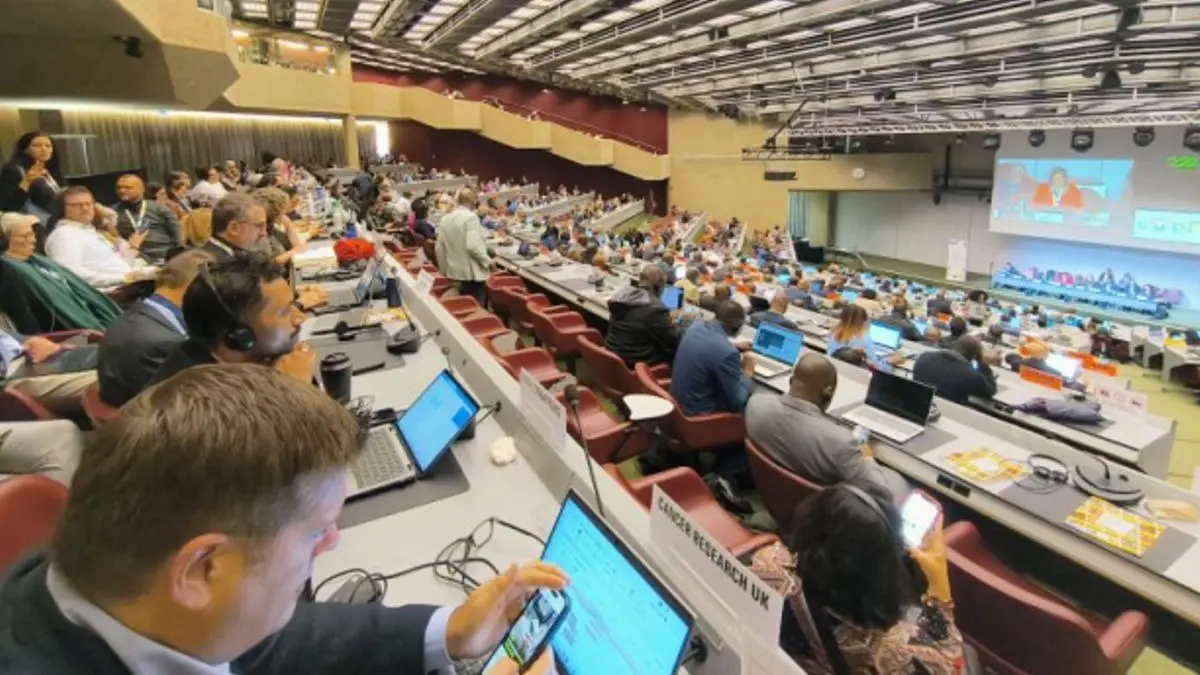
The 11th Conference of the Parties (COP11) to the Framework Convention on Tobacco Control (FCTC) in Geneva has become a hotbed of debate, raising doubts about the World Health Organisation (WHO)'s response to scientific evidence on tobacco harm reduction and the tobacco control direction for member states.
Scientific Community Raises Concerns Ahead of COP11
On the eve of COP11, the tobacco control scientific community has spoken out against the WHO’s position. More than 50 independent experts in the fields of pharmacology, toxicology and public health policy said that the WHO’s strategy of equalising the toxicity of smokeless tobacco products and traditional cigarettes could cause the world to miss out on the opportunity to reduce up to 8 million deaths a year from smoking.
Experts cite a Cochrane review, considered the “gold standard” of medical evidence, which found that smokeless products are more effective at helping people quit than nicotine patches or gum. However, the WHO maintains that harm reduction is a tobacco industry concept rather than an evidence-based public health strategy.
Advertisement
Concerns Over Funding Scale and Extreme Measures Leading to Global Impact
According to sources, the WHO's current tobacco control budget is more than 1 billion USD. However, the WHO is now calling for an increase in funding of up to $9 billion to achieve the goal of eliminating the use of all nicotine products, an increase of 800% in the context of economic and health crises in many countries.
Advertisement
At COP11, nine European Union (EU) countries – Italy, Greece, Poland, Romania, Bulgaria, Lithuania, Cyprus, Portugal and the Czech Republic – expressed concern that excessive controls and lack of a clear scientific basis could inadvertently pave the way for increased smuggling, rather than contributing positively to the goal of protecting public health.
The WHO and some countries are pursuing an extreme approach to tobacco control, with unprecedented budget increases and comprehensive bans. This is happening at a time when the world is still facing the threat of new epidemics and the need to recover from COVID-19, raising questions about the balance of resources. Excessive policies not only create financial pressure but also promote the black market, which in turn leads to crime and security risks.
Call for a Balanced and Evidence-Based Approach
According to experts, instead of a never-ending war and bottomless investment in absolute anti-nicotine campaigns, we need a flexible public health strategy, based on scientific evidence, that both protects public health and ensures the ability to respond to future global health crises.