
India’s Renewable Sector is Moving Beyond ‘Plain Vanilla Solar’
India’s Ministry of Power and MNRE have already formalised that shift through firm-and-dispatchable renewable procurement rules, resource adequacy planning, and storage-linked bidding frameworks
- Initiatives News
- 3 min read

;'%3e%3cpath%20d='m8,15.99c4.41,0,7.99-3.58,7.99-7.99S12.41,0,8,0,0,3.59,0,8s3.58,7.99,7.99,7.99Z'%20style='stroke:%23fff;%20stroke-miterlimit:10;%20stroke-width:.02px;'/%3e%3cpath%20d='m3.08,3.37l3.82,5.11-3.84,4.15h.87l3.37-3.64,2.72,3.64h2.94l-4.04-5.39,3.58-3.87h-.86l-3.1,3.35-2.5-3.35h-2.94Zm1.27.64h1.35l5.97,7.99h-1.35l-5.97-7.99Z'%20style='fill:%23fff;'/%3e%3c/g%3e%3c/svg%3e)


For much of the last decade, India’s clean power story was built around solar and wind at the lowest possible tariff. In 2026, that formula looks incomplete. The market now must deliver power that arrives in the right hour, follows the demand curve, and stays dependable through the evening peak. The result is a clear shift toward hybrid, FDRE, RTC and storage-backed projects, which are moving from the margins of the pipeline to its centre.
India’s Ministry of Power and MNRE have already formalised that shift through firm-and-dispatchable renewable procurement rules, resource adequacy planning, and storage-linked bidding frameworks.[1]
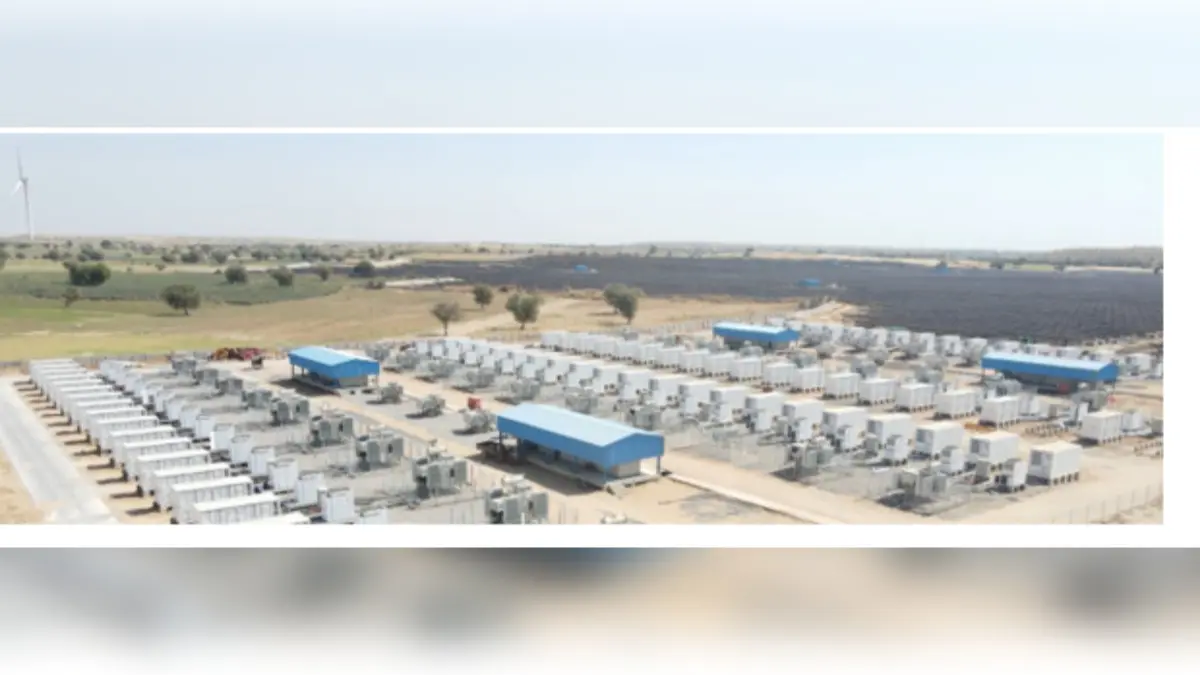
Juniper Green Energy’s recent project sequence fits that wider shift. In January 2026, it fully commissioned a 100 MWh merchant BESS in Bikaner, which was among the largest operating battery storage assets in India at the time. In April 2026, Juniper began commissioning its FDRE project under the SJVN scheme, combining 259 MWp of solar, 280 MW of wind and 200 MWh of battery storage across Rajasthan and Gujarat; Power Line reported that the solar component had been commissioned and the BESS had begun commercial operations, with a 200 MW PPA structured to supply firm renewable power to Haryana. Juniper’s own company history shows that it expanded into FDRE in 2023 with a 320 MW award from SJVN, and its portfolio now spans solar, wind, hybrid and FDRE/BESS assets.
Storage is becoming a major pillar of this transition. In January 2026, IESA projected that India’s battery energy storage additions would rise nearly tenfold to about 5 GWh in 2026, as projects moved from tendering to execution. Around 60 GWh of projects were entering implementation and framed 2026 as the year the sector would be tested on commissioning, financing and execution. That matters because storage is what allows renewable developers to sell not just energy, but timing, firmness and system value.
Advertisement
The change is visible in the auction mix. Industry data cites that FDRE tenders accounted for nearly 59% of renewable auctions in FY25, which is a sharp jump from the low double-digit contribution seen until a few years ago. [2]
Currently in May 2026, we are seeing peak electricity demand going beyond our current estimates of 270 gigawatts due to ongoing heat's effect on electricity availability, as well as a need for battery storage to support demand during the evening hours when the sun goes down.
Advertisement
That pressure is changing how developers build. The newest clean energy platforms do not stop at solar. They combine solar, wind, and battery storage to shape output around demand rather than weather. The scale of that transition is also moving quickly in storage. In January 2026, IESA projected that India’s battery energy storage additions could rise nearly tenfold in 2026 to about 5 GWh, as the pipeline moved from tendering to execution[3]. That growth is important because it gives renewable developers a practical tool to supply firm power, reduce variability, and compete for contracts that prize reliability over pure tariff aggression.
That is why the current transition in Indian renewables feels structural rather than cosmetic. The old model optimised for the lowest tariff on a single asset. The new model optimises for reliability, dispatchability, and grid value. Developers that once sold solar megawatts are now designing integrated energy platforms. Utilities that once bought the cheapest units now want power they can schedule, back up, and bank on during the evening peak. In that context, the companies moving earliest into hybrid and storage-backed portfolios are helping define the next phase of India’s clean energy market.