
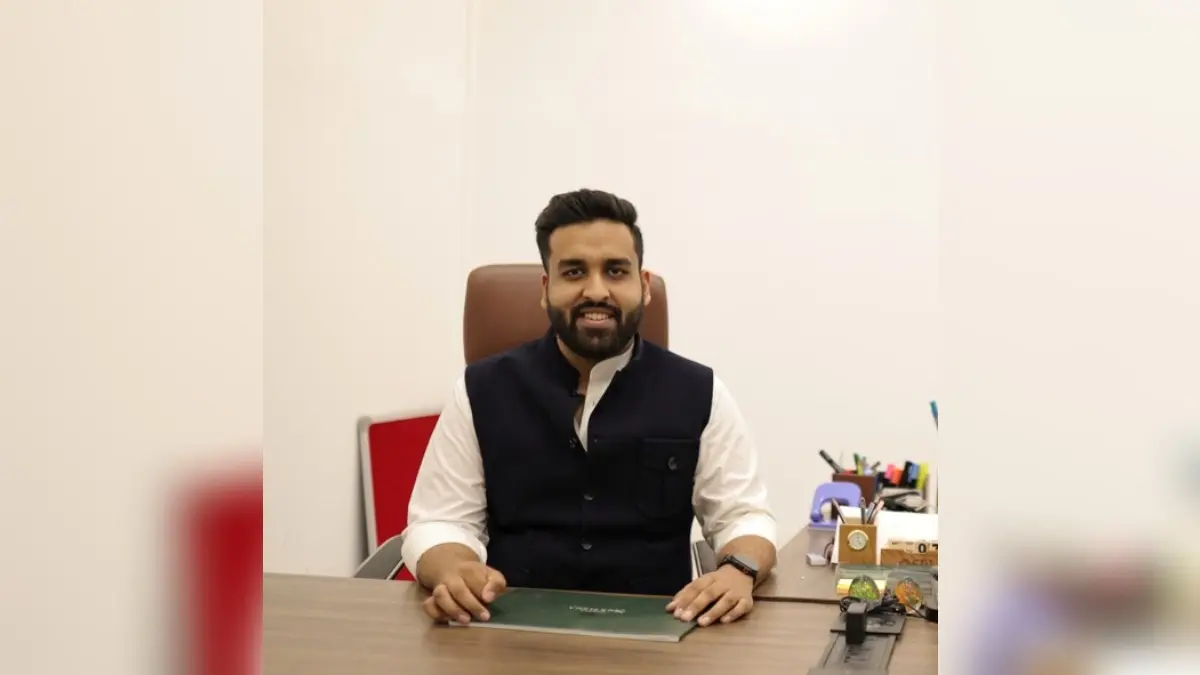
Interview with Shaurya Garg
The industry will also become more organised and transparent. Buyers today conduct extensive research before making a decision and closely evaluate a developer’s track record, design approach, construction quality, delivery commitment and post-possession service.
- Initiatives News
- 7 min read

;'%3e%3cpath%20d='m8,15.99c4.41,0,7.99-3.58,7.99-7.99S12.41,0,8,0,0,3.59,0,8s3.58,7.99,7.99,7.99Z'%20style='stroke:%23fff;%20stroke-miterlimit:10;%20stroke-width:.02px;'/%3e%3cpath%20d='m3.08,3.37l3.82,5.11-3.84,4.15h.87l3.37-3.64,2.72,3.64h2.94l-4.04-5.39,3.58-3.87h-.86l-3.1,3.35-2.5-3.35h-2.94Zm1.27.64h1.35l5.97,7.99h-1.35l-5.97-7.99Z'%20style='fill:%23fff;'/%3e%3c/g%3e%3c/svg%3e)


Q1. The Indian real estate sector has witnessed unprecedented growth over the past few years. How do you see the industry evolving over the next decade?
Indian real estate is moving from a largely product-driven industry to an experience- and trust-driven one. Over the next decade, buyers will expect much more than well-constructed buildings. They will look for thoughtfully planned communities that offer better connectivity, meaningful open spaces, wellness, convenience and long-term value.
The industry will also become more organised and transparent. Buyers today conduct extensive research before making a decision and closely evaluate a developer’s track record, design approach, construction quality, delivery commitment and post-possession service.
At Northwind Estates, we have seen that buyers respond positively when the planning philosophy is clear and visible. In Northwind Sanctuary, for instance, our focus has been on low-density living, substantial green open spaces and fewer residences per acre rather than simply maximising the number of units.
Advertisement
I believe the next phase of growth will be led by developers who combine responsible planning with technology, sustainability and strong customer relationships. The focus will not simply be on building more, but on building better.
Q2. What, according to you, are the biggest factors influencing today’s homebuyers?
Advertisement
Today’s homebuyers are making far more informed and considered decisions. Purchasing a home is no longer only about owning an asset; it is closely connected to lifestyle, wellness, convenience and long-term financial security.
Connectivity and location remain important, but buyers are also looking closely at green open spaces, lower-density planning, community amenities, smart-home features and the credibility of the developer. They want to know how a project will feel to live in every day, not just how it appears in a brochure.
Elements such as limited apartments per floor, privacy and generous open areas are not just design features; they directly shape the quality of life residents experience over time. Buyers have become far more perceptive about this difference.
Another major factor is future infrastructure. Buyers want to understand how an area will develop over the next five to ten years and whether it will offer better accessibility, employment opportunities and appreciation potential.
Ultimately, people are not just purchasing square footage. They are investing in a better everyday living experience.
Q3. Sustainability has become a major conversation across industries. How important is it for real estate developers today?
Sustainability is no longer an additional feature or a marketing proposition. It has become a fundamental responsibility for every developer.
A project built today will continue to consume energy, water and resources for several decades. Developers therefore need to think beyond the construction stage and consider the long-term environmental and operational impact of their projects.
Energy-efficient design, rainwater harvesting, responsible waste management, EV-charging infrastructure, increased green cover and the use of sustainable materials can significantly improve residents’ quality of life while also reducing operating costs.
At Northwind Estates, sustainability is incorporated into the planning process from the beginning. Northwind Sanctuary is being developed in line with IGBC Platinum standards, with a focus on energy efficiency, water conservation, responsible waste management and healthier living environments.
For us, sustainability is not about adding a few green features at the end of the design process. It is about creating communities that are practical to maintain, healthier to live in and more responsible towards the environment over the long term.
Q4. Technology is rapidly transforming real estate. How do you see PropTech influencing the sector?
Technology is improving both the homebuying experience and the way projects are planned and executed.
Customers increasingly expect virtual walkthroughs, digital documentation, real-time construction updates, online service requests and transparent communication throughout their journey. These tools make the buying process more convenient while also strengthening trust.
Within development and construction, technologies such as BIM, artificial intelligence, predictive analytics and digital project-management systems are helping developers improve coordination, control costs, shorten timelines and maintain quality.
We see technology as a way to improve transparency and execution rather than as a substitute for personal interaction. A home remains a deeply emotional purchase, and customers still value direct communication and accountability.
Our objective is to use technology to provide buyers with better information, clearer updates and a more organised experience, while ensuring that the relationship remains personal throughout the journey.
Q5. Infrastructure development is transforming several emerging markets. How do you see this impacting real estate?
Infrastructure is one of the strongest drivers of real estate growth. Airports, expressways, metro networks, industrial corridors and employment hubs can completely transform the way a region is perceived.
Improved infrastructure reduces travel time, increases accessibility and encourages commercial and residential development. Locations that were once considered peripheral can gradually emerge as major urban centres.
We are already witnessing this transformation across Greater Noida and the Yamuna Expressway region. The development of the Noida International Airport, along with expanding road connectivity, industrial activity and planned urban infrastructure, is creating an entirely new growth corridor.
Northwind Sanctuary reflects our belief in Greater Noida’s long-term potential. The region already offers planned infrastructure, wide roads, established social amenities and significant scope for future appreciation.
However, infrastructure-led growth should not encourage unplanned development. Developers must align their projects with the larger vision of the region and create communities that remain liveable as the surrounding market grows.
Q6. Luxury housing has witnessed significant momentum in recent years. What is driving this demand?
The meaning of luxury has changed significantly.
Earlier, luxury was often associated primarily with larger homes, expensive finishes and prestigious addresses. Today’s buyers are also looking for privacy, lower density, wellness, thoughtful design, personalised services and a stronger sense of community.
They value natural light, open spaces, better air quality, efficient layouts and amenities that genuinely improve everyday living. Technology and sustainability are also becoming important parts of the luxury experience.
This philosophy has shaped Northwind Sanctuary. Instead of defining luxury only through specifications, we have focused on elements such as two apartments per floor, greater privacy, fewer residents, extensive green spaces and thoughtfully planned common areas.
Modern luxury is therefore less about excess and more about comfort, exclusivity and attention to detail. For us, true luxury is the ability to offer residents more space, more privacy and a calmer living environment.
Q7. What advice would you give to first-time homebuyers?
A first home is both an emotional and financial decision, so buyers should avoid making it in haste.
The first priority should be the credibility of the developer. Buyers should examine the developer’s track record, legal approvals, construction quality, financial discipline and delivery commitments.
They should also evaluate the location beyond its present condition. Upcoming infrastructure, connectivity, employment opportunities, social infrastructure and long-term development plans can have a significant impact on both quality of life and future appreciation.
It is equally important to understand the project’s density, maintenance ecosystem, common-area planning and the actual usability of amenities. Buyers should ask how much open space they will genuinely experience, how many families will share each floor and whether the project has been planned for long-term liveability.
Finally, buyers should look beyond the headline price and compare the overall value a project offers. The lowest price does not always represent the best decision. A thoughtfully planned home by a credible developer can offer significantly greater value over the long term.
Q8. What is your vision for Northwind Estates over the coming years?
Our vision is to build Northwind Estates into one of the most trusted and thoughtful real estate brands in the region.
We do not want to measure our success only by the number of projects we develop. We want every Northwind project to be recognised for intelligent planning, meaningful green spaces, lower-density living, sustainability and attention to the customer experience.
Northwind Sanctuary represents the foundation of this philosophy. Through the project, we have tried to demonstrate that premium living can be defined by more than finishes and amenities. It can be defined by space, privacy, openness, thoughtful design and responsible development.
As we grow, we want to carry the same values into every future development while continuing to strengthen our design, technology and execution capabilities.
Our ambition is not simply to become a larger developer. It is to build a brand that customers trust, communities value and future generations are proud to associate with.