
Pain, Swelling And Stiffness After Knee Replacement: How Post-Operative Recovery Helps
Pain, swelling and stiffness after knee replacement are normal. Learn how early physiotherapy and structured post-operative care help speed up recovery.
- Initiatives News
- 5 min read

;'%3e%3cpath%20d='m8,15.99c4.41,0,7.99-3.58,7.99-7.99S12.41,0,8,0,0,3.59,0,8s3.58,7.99,7.99,7.99Z'%20style='stroke:%23fff;%20stroke-miterlimit:10;%20stroke-width:.02px;'/%3e%3cpath%20d='m3.08,3.37l3.82,5.11-3.84,4.15h.87l3.37-3.64,2.72,3.64h2.94l-4.04-5.39,3.58-3.87h-.86l-3.1,3.35-2.5-3.35h-2.94Zm1.27.64h1.35l5.97,7.99h-1.35l-5.97-7.99Z'%20style='fill:%23fff;'/%3e%3c/g%3e%3c/svg%3e)


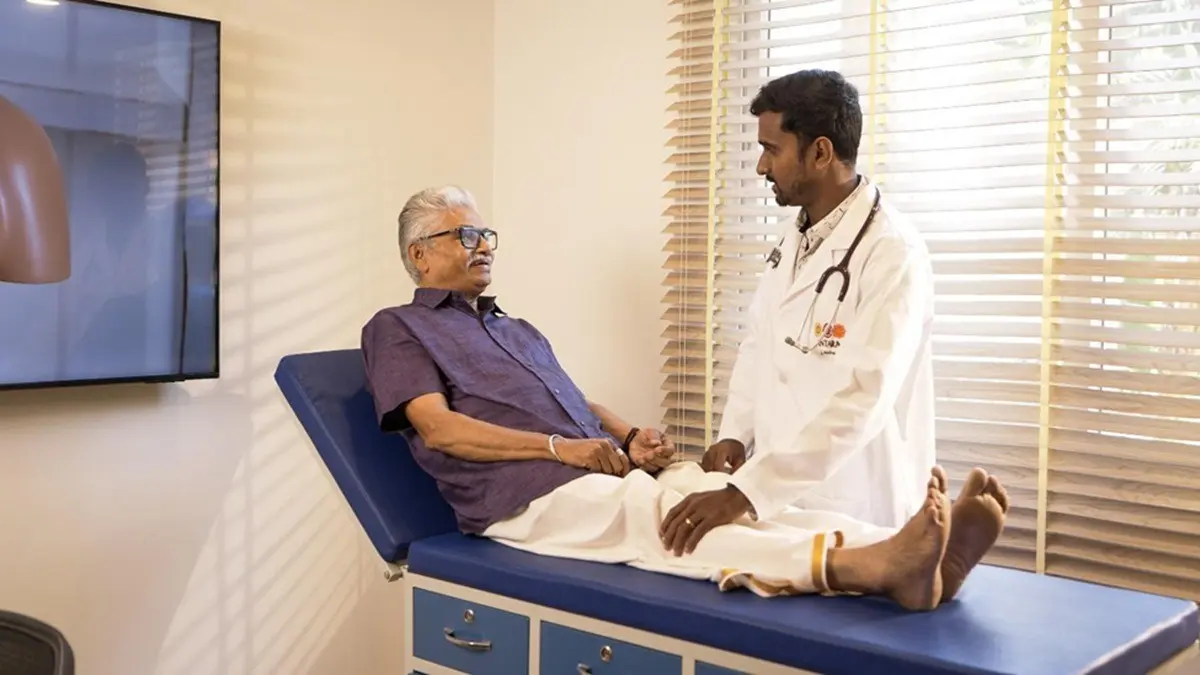
Most people expect knee replacement to fix the problem immediately. What they are not prepared for is the weeks that follow, the swollen joint, the stiff morning, the hesitation before the first step. Pain, swelling, and stiffness after surgery are not signs that something has gone wrong. They are part of how the body heals. What determines how fast they fade is post-operative recovery and how well it is managed from day one
Why Do Pain, Swelling and Stiffness Happen After Knee Replacement?
Surgery involves cutting through tissue, muscle, and bone. The body responds with inflammation. That's normal. It's actually part of healing.
Swelling after knee replacement happens for a simple reason. Fluid builds up around the joint. Blood flow increases, and swelling follows. Pain comes from tissue trauma and nerve irritation. The joint is also adjusting to something new inside it. Stiffness sets in when scar tissue forms. Muscles around the knee stay tight too, especially without movement.
None of this means something is wrong. It just means the body needs help through the process.
Advertisement
How Does Post-Operative Recovery Help?
This is where real progress happens.
Good orthopedic rehabilitation after knee replacement manages pain early, so movement doesn't feel impossible. Medication, ice, and elevation all play a role here, especially in the first few days.
Advertisement
Swelling gets addressed through elevation and compression. Gentle movement helps too, keeping fluid from pooling around the joint. Left unchecked, swelling limits how well the knee can bend. That slows everything else down.
Stiffness responds directly to movement. Structured physiotherapy after knee replacement stretches the joint gradually. It breaks up early scar tissue before it limits motion long-term. Waiting too long to start this often makes stiffness harder to reverse later.
Recovery also involves close monitoring. Wound checks. Range-of-motion tracking. Adjustments to the plan based on how the knee is actually responding, not a fixed schedule.
This is also where a place like Antara Care Homes makes a real difference. Physiotherapists, nurses, and doctors work as one team here. They watch pain, swelling, and mobility together, not as separate problems.
Done well, post-operative recovery doesn't just manage symptoms. It shortens how long they stick around.

Why Is Early Movement Important After Knee Replacement?
Movement sounds counterintuitive right after surgery, but it matters more than rest does.
Early movement keeps blood flowing, which reduces swelling and lowers the risk of blood clots. It also stops the knee from stiffening up while healing.
Most patients start gentle movement within a day of surgery, sometimes sooner. Early mobilisation within 24 hours is recommended by the American Academy of Orthopaedic Surgeons as standard post-surgical protocol¹. This might mean simple leg exercises in bed, or a few assisted steps. Small as it seems, this early activity sets the tone for the whole knee replacement recovery timeline ahead.
What Does Physiotherapy After Knee Replacement Involve?
It starts gently and builds from there.
Early sessions focus on range of motion, gently bending and straightening the knee to prevent stiffness from setting in. Strengthening exercises come next, targeting the muscles around the knee that support stability and movement.
Walking practice follows, often using a walker or crutches at first, then progressing as strength improves. Balance training gets added later, especially important for preventing falls during recovery.
Every physiotherapy session builds on the last. It gets adjusted based on swelling, pain, and how the joint is healing that week. Not some generic timeline that applies to everyone the same way.
When Should You Take Post-Operative Care?
Right away, ideally from the day of surgery itself.
Waiting until pain or stiffness becomes a real problem just makes recovery harder. Start right after surgery, and swelling gets managed before it worsens. Movement begins before stiffness has a chance to take hold.
How Can a Full Post-Operative Care Programme Help?
A full programme brings everything together. Nothing gets treated in isolation.
Pain management, physiotherapy, wound care, and mobility support all run as one plan. Not separate appointments. This matters because pain, swelling, and stiffness don't happen alone. They feed into each other constantly.
A well-structured postoperative rehabilitation provides everything under one roof for proper recovery. Swelling increases? Physiotherapy shifts to match it. Pain spikes? The plan responds right away, not at the next scheduled visit. That kind of quick response often makes the biggest difference in how smoothly recovery goes.
How Long Does Knee Replacement Recovery Take?
It varies, but there are general patterns.
Most people see real improvement in pain and swelling within two to six weeks. Full recovery, strength and flexibility included, often takes three to six months, according to guidelines from the American Academy of Orthopaedic Surgeons. Some stiffness can linger up to a year. It usually keeps improving, though, with steady physiotherapy along the way.
FAQs
1. Is swelling normal weeks after knee replacement?
Yes, mild swelling can persist for several weeks or longer, gradually improving with movement and elevation.
2. How can I reduce stiffness after knee replacement?
Consistent physiotherapy, gentle stretching, and staying active within your prescribed limits all help reduce stiffness effectively.
3. When does pain typically improve after knee replacement?
Most people notice significant pain reduction within the first few weeks, though some discomfort during activity can continue longer.
4. Is it normal to still feel stiffness months later?
Yes, mild stiffness can linger for months, especially without consistent physiotherapy, but it typically continues improving over time.
Conclusion
Pain, swelling and stiffness after knee replacement are normal, they are the body healing, not signs something has gone wrong. What determines how long they last and how completely they resolve is the quality of post-operative care from day one. Early movement prevents stiffness from taking hold. Consistent physiotherapy rebuilds the strength the knee needs to function properly. And a co-ordinated clinical team, watching pain, swelling, and mobility together rather than separately, makes the difference between a recovery that stalls and one that moves steadily forward. Start early, stay consistent, and choose a programme built around the whole picture.