
Krishan Rattan and Terra Invest: Why an Investor Who Has Overseen $12 Billion in Transactions Is Betting Big on Longevity
Krishan Rattan, Founding Partner of Terra Invest, thinks one of the largest investment opportunities of the next several decades will come from turning the healthcare sequence around.
- Initiatives News
- 6 min read

;'%3e%3cpath%20d='m8,15.99c4.41,0,7.99-3.58,7.99-7.99S12.41,0,8,0,0,3.59,0,8s3.58,7.99,7.99,7.99Z'%20style='stroke:%23fff;%20stroke-miterlimit:10;%20stroke-width:.02px;'/%3e%3cpath%20d='m3.08,3.37l3.82,5.11-3.84,4.15h.87l3.37-3.64,2.72,3.64h2.94l-4.04-5.39,3.58-3.87h-.86l-3.1,3.35-2.5-3.35h-2.94Zm1.27.64h1.35l5.97,7.99h-1.35l-5.97-7.99Z'%20style='fill:%23fff;'/%3e%3c/g%3e%3c/svg%3e)


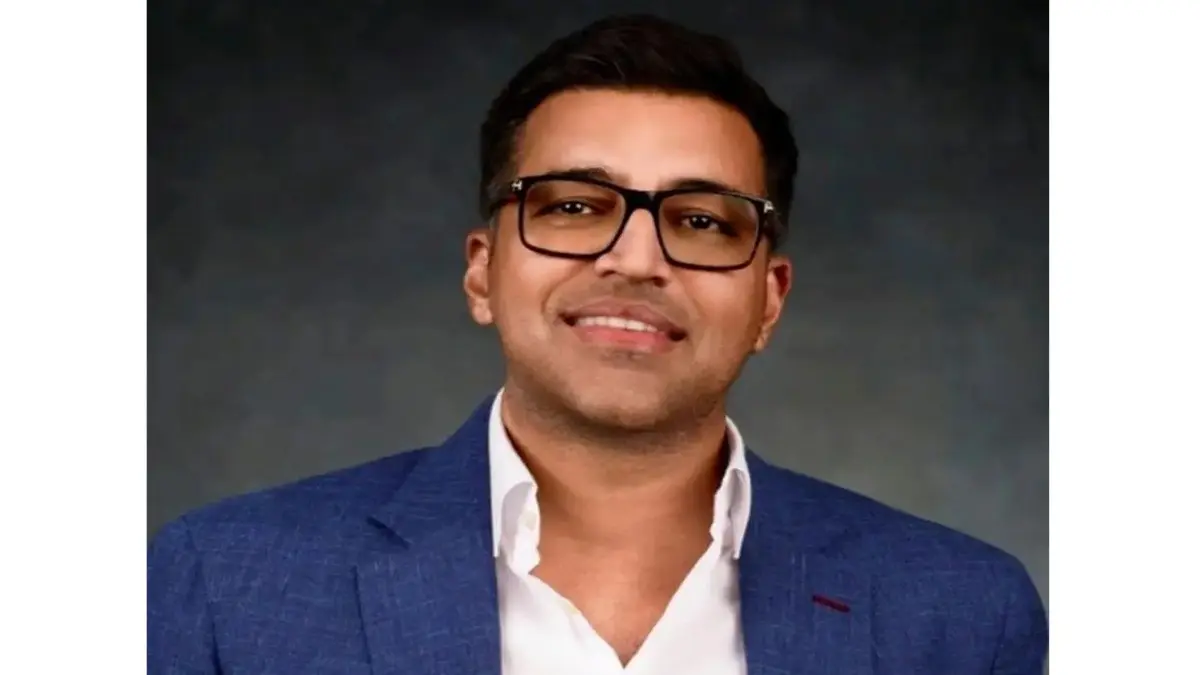
Terra Invest sees longevity not as an anti-ageing fad, but as a convergence of healthcare, diagnostics, artificial intelligence and a simple economic goal: more healthy human years.
For most of modern medicine, the economic model has been remarkably consistent. Something goes wrong. A patient develops symptoms. The healthcare system diagnoses the problem. Treatment begins.
Krishan Rattan, Founding Partner of Terra Invest, thinks one of the largest investment opportunities of the next several decades will come from turning that sequence around.
What if healthcare increasingly intervenes before people become patients? What if diagnostics identify risk years earlier? What if artificial intelligence can interpret increasingly large volumes of biological data? What if therapies and performance protocols once reserved for elite athletes become part of mainstream preventive health?
Advertisement
Those questions sit behind Terra Invest’s growing conviction around longevity, preventive healthcare, AI-led diagnostics and personalised medicine.
Rattan’s own financial career provides an unusual vantage point. Terra Invest says he has raised, deployed and overseen more than US$12 billion in transactions and previously built Mount-Row to more than US$1.2 billion in assets under management. To him, longevity does not look like a niche wellness trend. It looks increasingly like infrastructure for a society that will live longer.
Advertisement
Longevity is bigger than anti-ageing
One reason the sector has sometimes been misunderstood is its vocabulary. “Anti-ageing” can conjure images of supplements, cosmetic treatments and affluent consumers trying to turn back the clock. Rattan believes the serious investment case is much broader.
Longevity is ultimately about healthspan: the number of years a person remains functionally healthy, independent and cognitively capable.
That can encompass diagnostics, metabolic health, cardiovascular medicine, cancer detection, genomics, regenerative medicine, musculoskeletal health, hormone health, mental performance, sleep and nutrition, as well as pharmaceutical and biotechnology platforms targeting biological mechanisms associated with ageing.
“Living to 100 is not particularly attractive if the final 30 years are spent managing multiple chronic diseases. The real objective is extending the part of life in which people are healthy, capable and independent.”
The demographic argument is unavoidable
The world is ageing while healthcare systems are already struggling with the cost of chronic disease. Longer life expectancy without longer healthspan can mean more years of cardiovascular disease, diabetes, dementia, frailty and musculoskeletal problems.
That creates pressure on governments, insurers, employers and families. It also creates an enormous incentive to shift intervention earlier.
For Rattan, this is what distinguishes longevity from a passing consumer trend. Keeping a person healthy for longer has consequences far beyond the individual. It affects healthcare expenditure, workforce participation, productivity, insurance, retirement planning and consumer behaviour.
“If you add healthy years to a life, you are potentially changing several economic systems at once.”
From episodic medicine to continuous health management
Traditional healthcare generates information intermittently: an annual blood test, a scan after symptoms appear, a consultation when something feels wrong. The emerging preventive model generates far more data.
Wearables can monitor physiological signals continuously. Imaging can identify disease earlier. Genomics can surface inherited risk. Blood, saliva and other biomarkers can be combined. AI systems can help find patterns across data sets that would be difficult for one clinician to process manually.
For Terra Invest, the compelling opportunity is not simply another diagnostic test. It is the layer that connects diagnostics, longitudinal data, clinical expertise and intervention.
“The exciting part is what happens when diagnostics, longitudinal data, artificial intelligence and clinical decision-making start speaking to one another.”
Why AI changes the economics of personalisation
Personalised medicine has historically faced a basic economic constraint. Personalisation requires information, analysis and expert time. Expert time is expensive and difficult to scale.
Artificial intelligence may alter that equation. A well-designed AI-enabled healthcare system can process more patient information, track changes over time, identify anomalies and help clinicians prioritise what deserves attention.
The doctor does not disappear. The doctor becomes better informed.
“The best model is not technology versus doctors. It is a very good doctor with dramatically better information.”
Rattan sees the convergence as particularly powerful because two secular trends are colliding. Healthcare is becoming more measurable just as machine intelligence is becoming more capable of interpreting complex information.
The clinic of the future may follow the patient
Terra Invest’s longevity thesis also extends to how care is delivered. Consumers accustomed to instant banking, digital communication and personalised services are unlikely to accept indefinitely that healthcare must remain fragmented, inconvenient and purely reactive.
Some care will move into the home. Telehealth will improve. Diagnostics will become easier to access. High-end preventive clinics may evolve into continuous health-management platforms rather than places people visit only when something is wrong.
Through its interests around the 2100 Group ecosystem, including Shookra Clinics and related healthcare initiatives, Terra Invest is exploring models where diagnostics, specialist medicine, aesthetics, performance, regenerative care, telehealth and concierge health management can converge around an individual rather than around a hospital department.
The objective is a longitudinal relationship with a person’s health, not a sequence of disconnected treatments.
Why the Gulf can matter
Rattan believes the UAE is unusually well positioned to become an important hub for this transition. The country combines sophisticated consumers, significant investment capital, high-quality hospitality infrastructure and governments actively interested in artificial intelligence and healthcare innovation.
Geography also matters. Dubai and Abu Dhabi sit within relatively short flight times of large populations across India, Europe, Africa and the wider Middle East. That creates the potential to build healthcare platforms in the UAE that serve a much broader international market.
Rattan therefore sees the Gulf not only as a consumer market for advanced health services, but also as a place where longevity businesses can be financed, tested and scaled.
There will not be one miracle solution
Despite the excitement around longevity biotechnology, Rattan is wary of reducing the sector to the search for one molecule that “solves” ageing.
Some of the largest improvements in healthspan may be less dramatic: better metabolic health, earlier cancer detection, maintaining muscle mass, cardiovascular risk management, better sleep, earlier identification of disease and higher adherence to preventive interventions.
“There may be extraordinary breakthroughs in longevity biotechnology, and we want to understand those. But there is also enormous value in applying things we already know much earlier and much more intelligently.”
The economics of more good years
Ultimately, Rattan thinks the longevity market will become less about extreme lifespan and more about something intuitive. People want more good years: more years travelling, playing sport, spending time with family, running businesses and functioning at a level they recognise.
That desire is not new. What has changed is the amount of technology, medicine and capital being directed toward it.
“We do not see longevity as simply a healthcare vertical. If people routinely remain healthy for another ten years, it changes employment, consumption, financial services, housing, travel and the way people think about their own lives.”
For Terra Invest, the thesis can therefore be reduced to a simple proposition: healthy human time is one of the world’s most valuable resources, and technology may allow society to create considerably more of it.