
QNET India Speaks: Compliance, Customer Centricity, and Responsible Business Practices Build Customer Trust
India's direct selling industry has undergone a significant transformation over the past decade. Stronger regulatory frameworks, rising consumer awareness and a growing emphasis on ethical business conduct have together shaped a more mature and accountable industry.
- Initiatives News
- 4 min read

;'%3e%3cpath%20d='m8,15.99c4.41,0,7.99-3.58,7.99-7.99S12.41,0,8,0,0,3.59,0,8s3.58,7.99,7.99,7.99Z'%20style='stroke:%23fff;%20stroke-miterlimit:10;%20stroke-width:.02px;'/%3e%3cpath%20d='m3.08,3.37l3.82,5.11-3.84,4.15h.87l3.37-3.64,2.72,3.64h2.94l-4.04-5.39,3.58-3.87h-.86l-3.1,3.35-2.5-3.35h-2.94Zm1.27.64h1.35l5.97,7.99h-1.35l-5.97-7.99Z'%20style='fill:%23fff;'/%3e%3c/g%3e%3c/svg%3e)


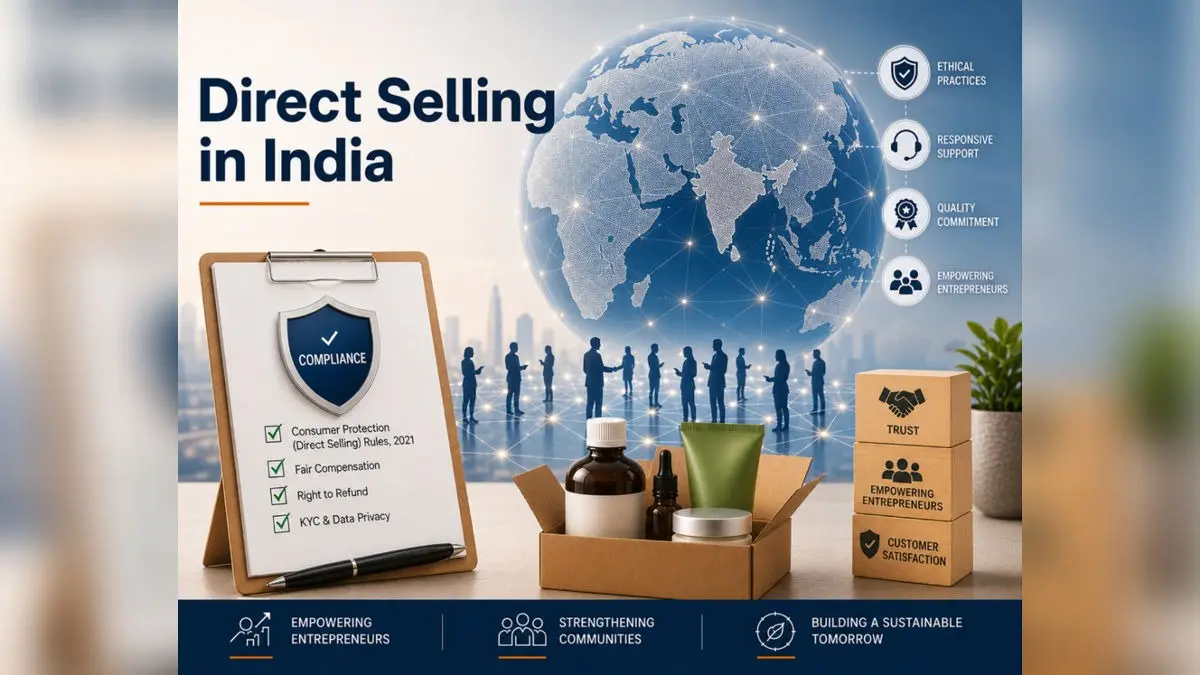
India's direct selling industry has undergone a significant transformation over the past decade. Stronger regulatory frameworks, rising consumer awareness and a growing emphasis on ethical business conduct have together shaped a more mature and accountable industry. As this evolution continues, trust is increasingly being earned not through claims, but through transparent operations, customer-first policies and consistent adherence to established legal and regulatory standards.
For businesses operating in the direct selling sector, long-term credibility depends on more than commercial success. It is built through responsible corporate conduct, robust governance, and an unwavering commitment to customers. QNET's operations in India, through its authorised sub-franchisee, Vihaan Direct Selling (India) Pvt. Ltd., demonstrate how compliance, accountability, and customer-centric practices can reinforce trust and strengthen confidence in the direct selling industry.
Compliance and the Rule of Law Matter
The introduction of the Consumer Protection (Direct Selling) Rules, 2021 marked an important milestone for India's direct selling sector by establishing a clear regulatory framework for businesses and independent distributors. The Rules reinforce transparency, consumer rights, ethical selling practices and defined responsibilities for direct selling entities. At the same time, it is equally important to distinguish legitimate direct selling businesses from illegal financial schemes. QNET's operations in India do not fall under the purview of the Prize Chits and Money Circulation Schemes (Banning) Act, 1978, nor do they constitute a pyramid scheme. The company's business model is centred on the sale of genuine products, with commissions linked to actual product sales rather than recruitment or passive monetary contributions. This distinction reflects the fundamental principles that separate lawful direct selling from the activities the PCMC Act was designed to prohibit.
Advertisement
Judicial Developments Reinforce Operations Compliance
Recent judicial developments have also brought greater clarity to QNET’s operations in India, while reinforcing the importance of evaluating businesses on the basis of facts and due process. Recently, the Telangana High Court issued an interim order directing that ‘no coercive action’ be taken against the QNET’s sub-franchise, Vihaan. Earlier, as a significant development, the Karnataka High Court directed the company’s delivery and logistics partners to continue supplying QNET products to Indian customers, while also recognizing the legitimacy of Vihaan’s business operations. In another important ruling, the Court of the City Civil and Sessions Judge restrained the Financial Frauds Victims Welfare Association from making defamatory statements against the QNET brand and Vihaan's operations in any public forum.
Advertisement
Taken together, these developments reinforce an important principle: legitimate businesses should be evaluated through regulatory compliance, judicial scrutiny and verifiable facts rather than perception or unsubstantiated allegations. Due process is fundamental to strengthening confidence in any regulated industry.
Building Trust Through Customer-Centric Practices
While legal and regulatory clarity is important, trust is ultimately strengthened through everyday business practices and customer experience. QNET’s sub-franchisee, Vihaan has established systems designed to promote accountability and consumer confidence. These include a structured compliance and ethics framework for independent distributors, customer education initiatives that encourage informed decision-making, and product authenticity measures that help consumers purchase genuine products through authorised channels. The company also maintains dedicated customer support and grievance redressal mechanisms, ensuring that consumers have clear avenues to seek assistance or resolve concerns. Complementing these initiatives is a 30-day money back guarantee on products purchased (product refund policy), providing customers with added confidence in their purchase decisions.
Collectively, these measures reflect a commitment to transparency, responsible conduct and delivering a positive customer experience, principles that are increasingly becoming central to the direct selling industry's continued growth.
The Future of Direct Selling Depends on Trust
As India's direct selling ecosystem continues to evolve, its long-term success will depend on companies embedding strong governance, ethical business practices and customer-first thinking into every aspect of their operations. Regulatory compliance alone is not enough; it must be supported by transparency, accountability and a sustained commitment to protecting consumer interests.
QNET India's journey through Vihaan reflects this broader industry direction. By strengthening compliance systems, prioritising customer welfare and operating within India's regulatory framework, the company seeks to contribute to a more credible and trusted direct selling ecosystem.
Ultimately, trust cannot be built through a single milestone or statement. It is earned over time through consistent actions, responsible business practices and an unwavering focus on customers. As the industry continues to mature, these principles will remain the foundation on which sustainable growth and long-term credibility are built.