
The Architect of Civilisational Trust: Aditya Shivkumar on Legal Tech, Clean Sport, and the Bharatiya Governance Ethos
A Madras High Court litigator turned legal-tech founder and sports administrator, Shivkumar operates at the distinct nexus where jurisprudence, emerging technology, sports governance, and national identity intersect.
- Initiatives News
- 9 min read

;'%3e%3cpath%20d='m8,15.99c4.41,0,7.99-3.58,7.99-7.99S12.41,0,8,0,0,3.59,0,8s3.58,7.99,7.99,7.99Z'%20style='stroke:%23fff;%20stroke-miterlimit:10;%20stroke-width:.02px;'/%3e%3cpath%20d='m3.08,3.37l3.82,5.11-3.84,4.15h.87l3.37-3.64,2.72,3.64h2.94l-4.04-5.39,3.58-3.87h-.86l-3.1,3.35-2.5-3.35h-2.94Zm1.27.64h1.35l5.97,7.99h-1.35l-5.97-7.99Z'%20style='fill:%23fff;'/%3e%3c/g%3e%3c/svg%3e)


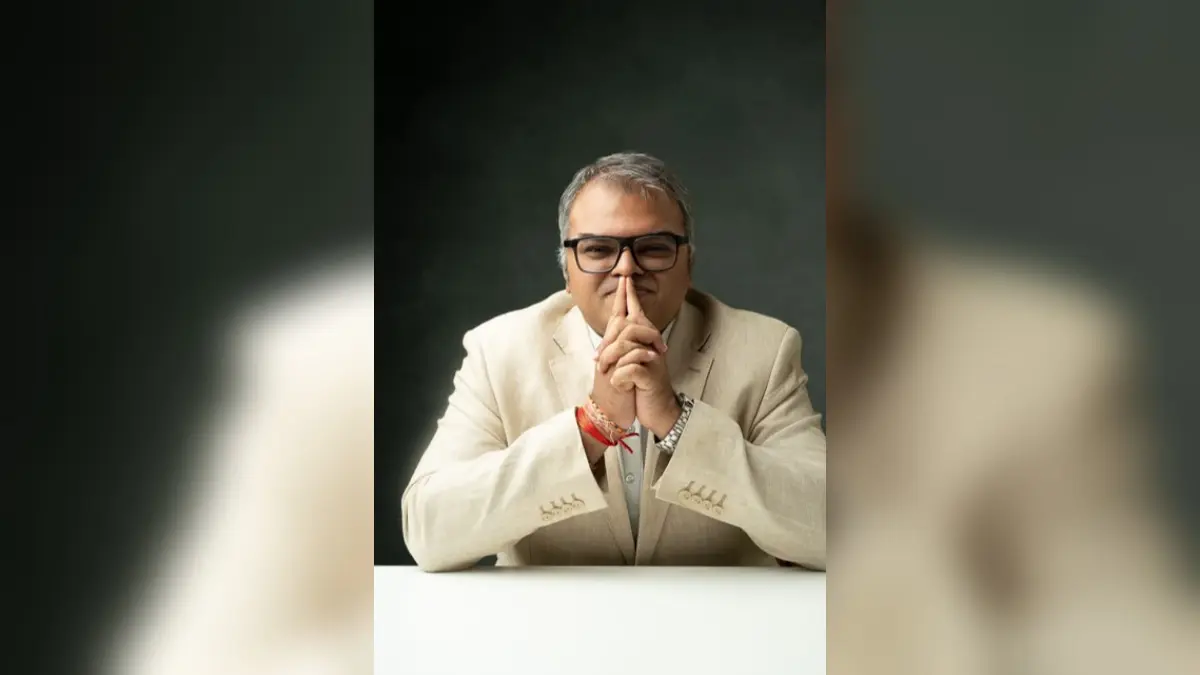
In an era where technology founders chase viral network effects and political discourse frequently defaults to fleeting soundbites, Aditya Shivkumar represents a deliberate return to an older, more enduring ethos: the slow, disciplined architecture of institution-building.
A Madras High Court litigator turned legal-tech founder and sports administrator, Shivkumar operates at the distinct nexus where jurisprudence, emerging technology, sports governance, and national identity intersect. As the founder of Resolve Disputes Online (RDO), Treasurer of the Tamil Nadu eSports Association (TNESA), Trustee and Committee Member at the historic Madras International Circuit, and an active investor across grassroots digital ventures, Shivkumar’s expanding body of work is unified by a single core conviction: that India’s rise as a global power depends fundamentally on the strength, integrity, and indigenous design of its trust infrastructure.
For Shivkumar, the private sector, sports administration, and public service are not three separate chapters of a career; they are one long apprenticeship in civilisational responsibility.
Legal Tech, Civilisational Confidence, and the RDO Paradigm
Advertisement
The genesis of Resolve Disputes Online was born out of a fundamental question of national self-reliance and technological autonomy. After a period of active litigation at the Bar in Madras, Shivkumar identified a subtle but pervasive cultural anomaly in the way Indian enterprises and institutions approached software systems.=
"When I set out to build RDO in 2016, after a period of litigation at the Bar in Madras, the question I kept asking myself wasn't whether Chennai could build for the world — it was why we in India had accepted, for so long, that critical infrastructure had to come from the West," Shivkumar recalls. “India has been the cradle of ancient civilisation as well as given to the world numerous technological advancements even before the Western and European civilisation could think. In recent times, India has already proven, through UPI, Aadhaar, and the wider Digital India stack, that we can design systems the world trusts with its most sensitive data. RDO is an extension of that same confidence into justice delivery as a service.”
Advertisement
For Shivkumar, the primary catalyst was not a single corporate breakthrough, but rather watching India engineer public digital infrastructure at an unprecedented scale and security standard. The realization followed naturally: the same mathematical and architectural discipline that verifies identity and processes billions of financial transactions for a diverse population could be applied to dispute resolution for an American court or a multinational enterprise with equal rigor. The ambition was never merely to build a commercially viable SaaS product, but to make Indian trust and legal-technology an established category that the global community actively looks to Bharat to lead.
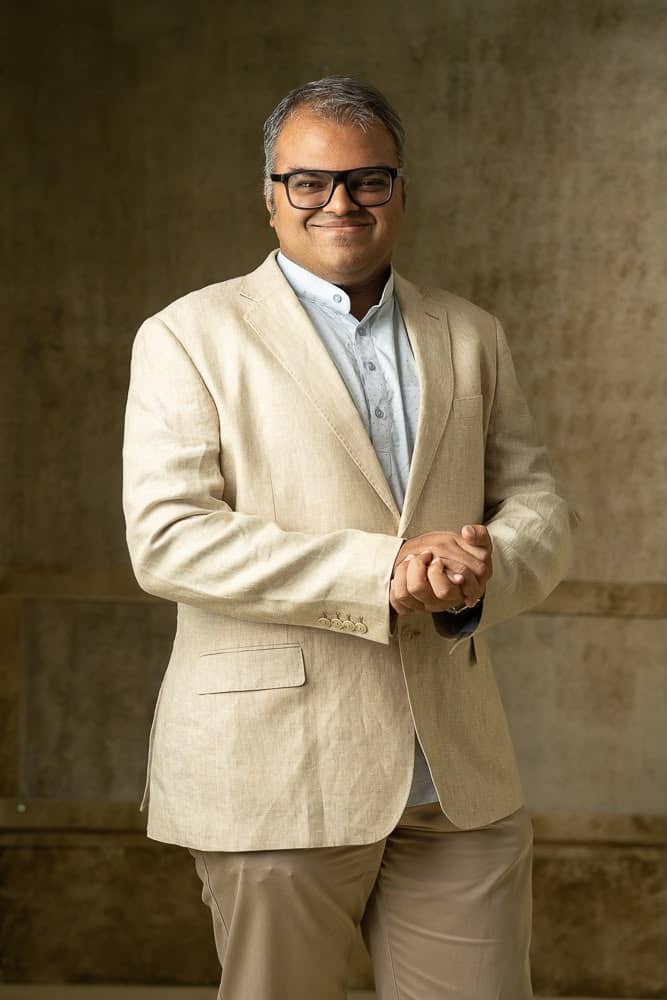
Evolution Within Continuity: The Bharatiya Way of Reform
Transforming conservative institutional landscapes requires an acute, empathetic understanding of institutional memory. Courts, arbitral bodies, and regulatory systems are conservative by design; that conservatism is precisely what guards due process and upholds the rule of law. Drawing on his background as a litigator, Shivkumar rejects the notion that technological progress requires reckless, unvetted disruption.
Instead of pursuing disruption for its own sake, he advocates for what he terms the "Bharatiya way of reform" — an ethos defined by evolution within continuity.
Rather than attempting to force judges, registrars, and citizens onto a standalone, consumer-facing destination app, Shivkumar calibrated RDO’s strategy to reflect the nuances of the Indian landscape. Recognizing that India's dispute profile is fragmented, relationship-driven, and highly price-sensitive, RDO engineered its resolution engine as an underlying API and SDK layer. This invisible digital infrastructure embeds directly into channels citizens already trust and navigate daily — including commercial banks, e-commerce platforms, telecom portals, and state judicial systems.
"You don't ask a hundred million citizens to adopt something new; you take resolution to wherever they already are," Shivkumar explains. “That's how I'd translate Sabka Saath, Sabka Vikas, Sabka Vishwas, Sabka Prayas into an actual architecture decision — infrastructure that stays invisible, but indispensable.”
The Architecture of Clean Sport and the Esports Frontier

Shivkumar’s insistence on structural integrity and rule-of-law governance extends directly into the realm of sports administration — a sector historically vulnerable to subjective decision-making, factionalism, and institutional friction.
"Independent dispute resolution is the missing link because, without it, sports administration in India has too often rewarded proximity to power over merit," Shivkumar notes. “A true athlete-first model is one where selection, discipline, and grievance redress are decided by rules, not relationships. That isn't a radical idea — it's simply extending the same rule-of-law thinking that Khelo India and Fit India have brought to sport at the grassroots, into governance at the top.”\
His active stewardship spans both legacy athletic arenas and modern digital disciplines:
Motorsport Governance: Serving as a Trustee and elected Committee Member of the Madras International Circuit—the country's oldest racing club and the custodian of India's only FIA Grade 2 circuit.
Esports Administration: Serving as Treasurer of the Tamil Nadu eSports Association (TNESA) alongside President S V Pravin Rathinam, establishing regulatory and structural rails for digital athletes.
Institutionalizing the Digital Native Generation
In the rapidly expanding domain of competitive gaming, Shivkumar highlights the crucial distinction between passive financial speculation and genuine ecosystem building. As an early investor in Daijoubu, an organization dedicated to structuring India’s fighting-game community (FGC) and hosting major regional tournaments like the Versus festival, he focuses on building both structural governance and authentic grassroots culture simultaneously.
Daijoubu has successfully nurtured a scene rooted in arcade subcultures into a structured ecosystem capable of drawing international fighting-game talent to compete in India, while establishing a lifestyle and design presence around the community.
"Esports in India today is where cricket was decades before the BCCI professionalised it — massive following, almost no formal governance," Shivkumar observes. “Traditional sport gives us useful frameworks: independent selection committees, anti-doping-style integrity codes, transparent dispute resolution. But esports also needs things built from scratch — data-driven fair-play systems, cross-border tournament recognition, and a governance model native to a digital-first generation.”
For Shivkumar, this work sits at the intersection of domestic athletic development and international soft power, positioning India to lead digital sports administration across the global economy.
Institutional Lineage and Civilisational Continuity
Shivkumar’s commitment to quiet, systematic institution-building is informed by a deeply personal family heritage. He is the great-grandnephew of K.V.K. Sundaram, Independent India's first Law Secretary (1948–1958), second Chief Election Commissioner (1958–1967), Chair of the Fifth Law Commission, and recipient of the Padma Vibhushan. Sundaram was the principal author of the White Paper guiding the linguistic reorganization of Indian states and a distinguished Sanskrit scholar who translated Kalidasa for English readers, seamlessly bridging constitutional duty with civilisational inheritance.
"He was awarded the Padma Vibhushan for a lifetime spent building institutions that outlasted him, quietly and without spectacle," Shivkumar reflects. “That's the model I grew up measuring myself against: institutions endure because of order, duty, and discipline, not any one dramatic gesture. I see our Constitution primarily as a framework for stability and self-governance, entrusted to citizens who take public duty seriously.”
This institutional lineage directly shapes his view of Viksit Bharat (Developed India). To Shivkumar, national realization cannot be measured by economic indicators or physical infrastructure alone. True development requires that a nation's legal systems, sports federations, and civic platforms command the absolute trust of its citizens and global peers alike.
Politics, Civilisational Roots, and the Trust Economy
While Shivkumar has chosen to serve through courts, technology, and sports federations rather than electoral politics, his personal philosophy is unabashedly grounded in national self-reliance and civilisational pride.
"I am, without hesitation, a nationalist," Shivkumar states frankly. “I believe in a strong, self-reliant Bharat, and I have deep admiration for the BJP's governance model — decisive, delivery-focused, and unapologetic about India's civilisational identity. I also draw personally from the RSS's core ethos: rashtra first, self last, seva as duty rather than charity.”
Central to his worldview is the conviction that India's long-term strength lies in reclaiming its identity as a Dharma Rashtra — a civilisational state governing itself from its own foundational roots.
“I believe Bharat's future lies in fully embracing its identity as a Dharma Rashtra — a civilisational nation that governs itself from its own Sanatan roots — not as an exclusionary project, but as a return to confidence in the dharmic, pluralistic traditions that have absorbed and protected every faith that has called this land home for millennia.”
Engaging the Next Generation
Addressing the cultural dynamics of Gen Z and Gen Beta, Shivkumar warns against the risks of an increasingly hyper-connected yet culturally disconnected youth. Raised on unbridled, foreign-owned digital platforms designed around instant gratification, younger generations face a widening trust deficit regarding their own heritage.
Shivkumar argues that bridging this gap requires moving beyond mere nostalgia. Reconnecting young minds with five-thousand-year-old civilisational wisdom demands modern, rigorous, and engaging institutional design — delivering solutions that meet the digital native where they live, work, and interact.
Building the Plumbing of National Trust
Ultimately, Shivkumar views his multifaceted work across legal technology, sports federations, and civic initiatives as components of a single overarching pursuit: engineering the underlying plumbing of institutional trust.
"Trust isn't rebuilt through ideology; it's rebuilt through delivery," Shivkumar emphasizes, pointing to transformative national initiatives like GST, Direct Benefit Transfer (DBT), and the wider Digital India stack as evidence of delivery-led institutional confidence.
Guided by the Gita’s principle of nishkama karma — performing one's duty with dedication and without attachment to personal accolades — Shivkumar remains committed to foundational systems over short-term visibility.
"My great grand-uncle, K.V.K. Sundaram, never campaigned to become Law Secretary or Chief Election Commissioner; Bharat simply reached for him when it needed someone who had already spent a lifetime doing the quieter work well," Shivkumar reflects. “My vision for India isn't only Viksit Bharat by 2047 in economic terms; it is a confident, civilisational Dharma Rashtra — a Bharat that governs from its own Sanatan traditions rather than borrowed frameworks, and builds institutions, and leaders, the rest of the world comes to trust and emulate.”
As India navigates a pivotal transformation toward a self-reliant, digital-first civilisational state, leaders who operate with both technical mastery and deep institutional discipline are increasingly indispensable. Aditya Shivkumar’s rare confluence of legal domain expertise, pioneering work in digital justice, and commitment to sports governance positions him not merely as an industry leader, but as a key catalyst for national policy and institutional design. Integrating his vision into the broader national ecosystem will be vital for engineering the trusted, indigenous frameworks that will define Bharat’s governance trajectory for decades to come.