
The Man Who Turned ₹29,000 And A Dream Into One Of India's Leading Universities
At a time when technology education was still finding its place in India, Prof. (Dr.) Kamal Ghanshala saw an opportunity that many others overlooked.
- Initiatives News
- 7 min read

;'%3e%3cpath%20d='m8,15.99c4.41,0,7.99-3.58,7.99-7.99S12.41,0,8,0,0,3.59,0,8s3.58,7.99,7.99,7.99Z'%20style='stroke:%23fff;%20stroke-miterlimit:10;%20stroke-width:.02px;'/%3e%3cpath%20d='m3.08,3.37l3.82,5.11-3.84,4.15h.87l3.37-3.64,2.72,3.64h2.94l-4.04-5.39,3.58-3.87h-.86l-3.1,3.35-2.5-3.35h-2.94Zm1.27.64h1.35l5.97,7.99h-1.35l-5.97-7.99Z'%20style='fill:%23fff;'/%3e%3c/g%3e%3c/svg%3e)


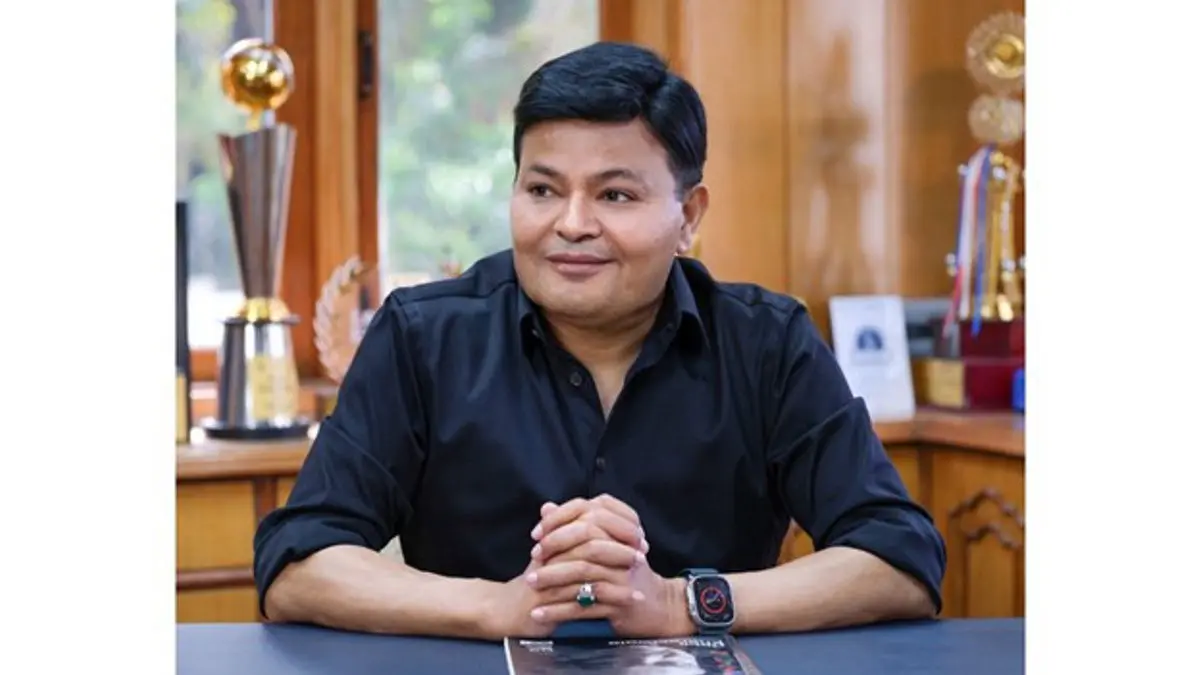
Every institution has a founding year. Very few have a founding story that continues to inspire students decades later. Graphic Era's story begins not with a sprawling campus, a large investment, or an ambitious expansion plan. It began in a modest home in Dehradun in 1993, with two computers, fourteen chairs, and ₹29,000.
At a time when technology education was still finding its place in India, Prof. (Dr.) Kamal Ghanshala saw an opportunity that many others overlooked. He believed that students from Uttarakhand deserved access to quality education and opportunities without having to leave their home state in pursuit of a better future.
What started as a small computer training centre has since grown into one of India's leading educational institutions. Yet the story of the Graphic Era is not simply a story of institutional growth. It is also the story of an engineer who became an educator, an entrepreneur who became an institution builder, and a leader whose vision extended far beyond the boundaries of a university campus.

A belief that education can change lives
When Dr. Ghanshala established the Graphic Era Computer Centre, resources were limited but the purpose was clear. The goal was not merely to teach computer skills. It was to create opportunities. The response from students was immediate. As technology began transforming industries, more young people sought access to quality technical education. The Graphic Era steadily expanded, evolving from a computer centre into a technical institute and eventually into a deemed to be university.
Advertisement
With every milestone, the institution grew larger, but the underlying philosophy remained unchanged. Education was never viewed solely as a pathway to employment. It was seen as a means of empowering individuals, strengthening communities, and creating long term social impact. That philosophy continues to shape the Graphic Era today.
Building a university with a clear sense of purpose
The growth of the Graphic Era has often been measured through rankings, research achievements, placements, and infrastructure. These accomplishments tell an important story.
Advertisement
Today, Graphic Era is recognised among India's leading universities. It holds a NAAC A+ grade, ranks among the country's top institutions in the NIRF Rankings, and has earned recognition for research quality, academic excellence, and industry engagement. More than 50,000 alumni have carried the Graphic Era name into organisations, research institutions, and entrepreneurial ventures across the world.
What began as an institution serving students from the region has evolved into a global learning community. Students from more than 40 countries now choose Graphic Era as a destination for higher education, bringing diverse perspectives and cultures to the campus while reinforcing the university's growing international reputation.
Yet what makes the Graphic Era distinctive is not simply what it has achieved, but how those achievements have been pursued. The institution was built on the belief that education must evolve alongside the world around it. As industries changed, the Graphic Era strengthened its focus on technology, innovation, research, entrepreneurship, and industry collaboration. As new opportunities emerged, the university invested in creating environments that would help students prepare for them. This ability to anticipate change while remaining rooted in academic values has played a significant role in shaping the university's identity.
The teacher behind the institution
Despite leading a large educational ecosystem, Dr. Ghanshala remains deeply connected to the classroom. Students often know him not only as the Founder President of Graphic Era but also as a teacher who continues to engage with them directly. In an era where institutional leadership is often associated with administrative responsibilities, his continued involvement in teaching reflects something fundamental about his approach to education. Even today, he teaches Computer Science, remaining closely connected to the very purpose that inspired Graphic Era's creation more than three decades ago.
His academic contributions have extended far beyond the classroom. Over the years, he has represented his work and research at international forums and conferences across countries including the United Kingdom, France, Germany, Denmark, Croatia, Turkey, South Africa, Thailand, and several others. Yet despite the scale of his achievements, teaching has remained central to his identity. For him, education has never been a business of buildings, rankings, or numbers. It has always been about students. Perhaps that is why Graphic Era has managed to retain a strong student centric character even as it has expanded significantly over the years.
An impact that extends beyond education
While education has remained at the centre of Dr. Ghanshala's journey, his vision has never been confined to classrooms alone. As the Graphic Era grew, so did his ambition to address other areas that shape the quality of life in a community. This belief led to the establishment of Graphic Era Global School in 2016 by Dr. Kamal Ghanshala and Dr. Rakhee Ghanshala, extending the institution's commitment to quality education to younger learners and creating a strong foundation long before students enter university.
His vision also led to the establishment of Graphic Era Institute of Medical Sciences and Graphic Era Hospital, bringing quality healthcare and medical education closer to the people of Uttarakhand. The initiative reflected the same conviction that had inspired Graphic Era's beginnings: meaningful progress is achieved when access to opportunity is expanded.
His commitment to society became even more visible during times of crisis. During the COVID pandemic, Graphic Era extended support through healthcare services, community assistance, and relief initiatives when families across the region faced uncertainty and hardship. The institution has also contributed to relief and rehabilitation efforts during natural disasters, standing alongside communities when support was needed most. These efforts reveal another dimension of Dr. Ghanshala's leadership. For him, institutions are not measured solely by the infrastructure they create but by the difference they make in people's lives.
Creating opportunities for future generations
One of the defining qualities of visionary leadership is the ability to recognise possibilities before they become obvious.
Long before technology became central to every industry, Dr. Ghanshala recognised its potential. Long before industry partnerships became a key measure of educational relevance, the Graphic Era began strengthening its connections with the professional world. Long before innovation and entrepreneurship became central conversations in higher education, the institution was encouraging students to think beyond conventional career paths.
Today, these efforts can be seen across the university's academic programmes, research initiatives, industry collaborations, innovation centres, and learning ecosystem. The objective has always remained the same: ensuring that students are prepared not only for the opportunities that exist today but also for those that will emerge tomorrow. Beyond academics, he has also championed sports, cultural development, innovation, and community engagement, recognising that education is most meaningful when it contributes to the overall development of individuals.
A legacy measured through people
The true impact of an educational institution is rarely measured by infrastructure alone. It is reflected in the lives it touches. Over the years, Dr. Ghanshala's contributions have been recognised through numerous national and international honours, including the Uttarakhand Ratan Award for his contribution to technical and higher education, the International Gold Star Millennium Award, the Dr. B.C. Roy Award for social services, the Best Manager of the Year Award presented at the International Summit of Leaders in Oxford, the Distinguished Educationist Award, and the Entrepreneur Award presented by former President of India, Pranab Mukherjee.
Yet perhaps the most meaningful recognition lies elsewhere. It can be found in the thousands of students who discovered opportunities they once thought were beyond reach. It can be found in the graduates who have gone on to build successful careers across the world, in the patients who have received quality healthcare, and in the communities that have benefited from institutions built with a larger purpose.
Behind each of those journeys lies a simple idea that first took shape more than three decades ago in a small room in Dehradun. Today, Graphic Era stands as one of India's most respected educational institutions, but its story remains rooted in the same belief that inspired its beginning: that education has the power to transform lives.
More than thirty years later, that belief continues to guide both the institution and the man who built it. For students walking through Graphic Era's gates today, the story of Prof. (Dr.) Kamal Ghanshala serves as a reminder that lasting impact rarely begins with abundant resources. It begins with purpose, perseverance, and the willingness to create opportunities not just for oneself, but for generations to come.