
The Next Phase of Artificial Intelligence: From Digital Intelligence to Physical-World Applications
India’s AI ecosystem is expanding from enterprise software and generative AI to computer vision, multilingual models, predictive maintenance, IoT and intelligent connected products. Explore 10 Indian companies, including TCS, Infosys, Wipro and Transline Technologies, shaping AI’s real-world applications.
- Initiatives News
- 5 min read

;'%3e%3cpath%20d='m8,15.99c4.41,0,7.99-3.58,7.99-7.99S12.41,0,8,0,0,3.59,0,8s3.58,7.99,7.99,7.99Z'%20style='stroke:%23fff;%20stroke-miterlimit:10;%20stroke-width:.02px;'/%3e%3cpath%20d='m3.08,3.37l3.82,5.11-3.84,4.15h.87l3.37-3.64,2.72,3.64h2.94l-4.04-5.39,3.58-3.87h-.86l-3.1,3.35-2.5-3.35h-2.94Zm1.27.64h1.35l5.97,7.99h-1.35l-5.97-7.99Z'%20style='fill:%23fff;'/%3e%3c/g%3e%3c/svg%3e)


Artificial intelligence is no longer confined to research laboratories or technology demonstrations. It is increasingly becoming part of the infrastructure through which companies operate, make decisions, protect assets, serve customers and develop products.
India has emerged as an important contributor to this global transition. Its technology industry combines engineering depth, digital expertise and the ability to deliver technology solutions across highly diverse markets. That combination is allowing Indian companies to develop AI applications that extend from enterprise software and cloud infrastructure to surveillance, telecommunications, automotive technology and connected consumer experiences.
Here are 10 companies demonstrating the breadth of India’s contribution to the global AI transformation.
1. TCS and the Rise of Cognitive Enterprise Automation
Tata Consultancy Services is bringing AI deeper into the enterprise through platforms and frameworks designed to automate complex business and technology environments. Its Ignio platform is a prominent example of cognitive automation, helping organizations manage operations through intelligent systems.
Advertisement
With its extensive global enterprise footprint, TCS is also supporting organizations across banking, retail and manufacturing as they incorporate generative AI and other intelligent technologies into their operating models.
2. Infosys Topaz and Enterprise Generative AI
Infosys is positioning generative AI at the centre of its enterprise transformation strategy through Infosys Topaz. The suite brings together generative AI, machine learning, data analytics and cloud capabilities to help businesses rethink how work is performed.
Advertisement
Its focus on responsible AI and enterprise-scale implementation reflects the shift from simply experimenting with AI to integrating it into critical business processes.
3. Wipro’s ai360 Approach
Wipro’s ai360 ecosystem is built around the idea that AI can become an intelligence layer across the enterprise. Rather than limiting AI to individual use cases, Wipro is integrating it across business functions while investing in research, employee upskilling and industry-specific applications.
Its AI work spans areas such as healthcare, financial services and enterprise automation, supporting organizations as they move toward broader intelligent transformation.
4. Transline Technologies: Turning Computer Vision Into Business Intelligence
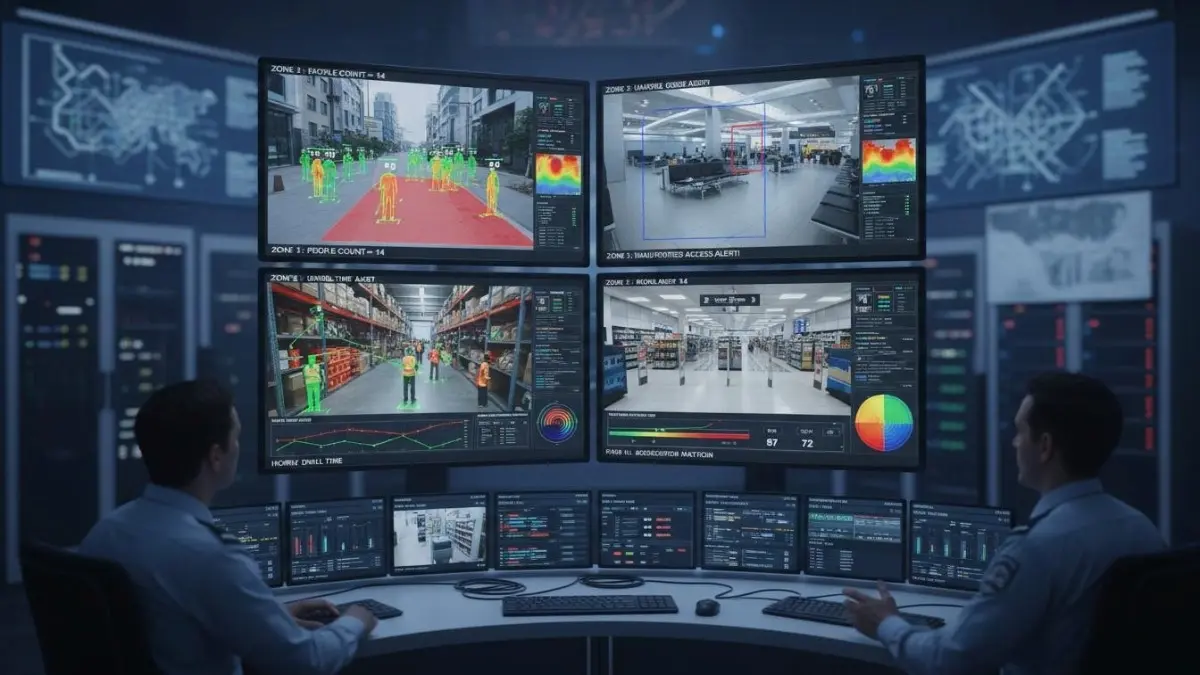
Artificial intelligence is increasingly moving beyond screens and software environments into the physical spaces where businesses operate. Computer vision is one of the technologies driving that transition, enabling systems to interpret and respond to visual information from real-world environments.
Transline Technologies is developing this category through AI-powered products including CamStore+, StorePulse, Idone and CheckCam. Its solutions are designed around practical applications in security, surveillance, monitoring and business operations.
What makes this segment of AI particularly significant is the connection between intelligence and the physical world. Traditional businesses often rely on manual observation or conventional surveillance infrastructure to understand what is happening within their environments. Computer vision can introduce an additional layer of automated intelligence, helping organizations process visual information more efficiently.
Through its portfolio, Transline Technologies illustrates how AI can be applied to established business processes rather than being limited to futuristic or purely digital applications. The use of computer vision in surveillance and operational environments also demonstrates the expanding range of industries where AI can create practical value.
As businesses look for ways to make physical environments more observable and intelligent, computer vision is becoming an increasingly relevant part of the broader AI transformation.
5. Tech Mahindra and Multilingual AI
Tech Mahindra is exploring the intersection of artificial intelligence, telecommunications and language through initiatives such as Project Indus.
The initiative underscores the importance of building AI systems capable of working across diverse linguistic environments. By focusing on multilingual foundation-model capabilities, Tech Mahindra is addressing one of the key challenges in making advanced AI more inclusive and globally applicable.
6. Jio Platforms and Population-Scale Digital Intelligence
Jio Platforms is helping Reliance Industries expand its technology footprint into cloud infrastructure, digital services and AI.
Its approach is closely linked to the scale of Jio’s existing digital ecosystem. By developing infrastructure and intelligent technologies designed for broad accessibility, the company is working toward making AI capabilities available across a massive consumer and enterprise base.
7. LTIMindtree and AI-Driven Digital Engineering
LTIMindtree combines the capabilities of LTI and Mindtree, bringing together digital engineering and industry expertise to address increasingly complex business requirements.
Its AI and data capabilities are being applied to areas such as supply chains and financial services, where intelligent platforms can support more efficient operations, stronger analytics and faster digital transformation.
8. HCLTech: Connecting AI With Engineering
HCLTech occupies a distinctive position at the intersection of physical engineering and digital technology. Its AI capabilities extend into cybersecurity, predictive maintenance and IoT.
For sectors dependent on physical infrastructure and industrial assets, AI-driven systems can help organizations identify anomalies, anticipate maintenance requirements and improve operational continuity.
9. Persistent Systems and AI-Native Product Development
Persistent Systems is applying AI across software product engineering and digital transformation. The company works with technology companies and enterprises to accelerate product development and integrate machine learning into modern software environments.
Its focus on secure AI deployment is particularly relevant as businesses increasingly move AI applications from experimentation into production.
10. Tata Elxsi and Intelligent Connected Products
Tata Elxsi is applying AI to industries where software, hardware and user experience increasingly converge. Its work spans automotive, healthcare and media, with AI, IoT and autonomous technologies playing a central role.
In automotive and connected-product ecosystems, these technologies are contributing to the development of smarter vehicles, connected environments and increasingly intelligent consumer experiences.
From AI Adoption to Practical Intelligence
The evolution of India’s AI ecosystem is significant because it reflects the growing application of artificial intelligence to real-world challenges.
Enterprise automation, generative AI, computer vision, multilingual models, predictive systems and autonomous technologies represent different dimensions of the same transformation. The work of companies such as Transline Technologies also highlights how AI is increasingly being integrated into physical business environments, where computer vision can support security, surveillance and operational visibility.
As organizations worldwide move from AI experimentation toward implementation, India’s technology ecosystem is contributing not only engineering talent, but also platforms and solutions designed to address practical business requirements across industries.