
What the Global Energy Transition Means for Indian Mining Leaders Like Balasubramaniam Prabhakaran
This has placed mining leaders under sharper public and industrial scrutiny than before. Scale still matters, but cleaner operations, regional trust and stronger social outcomes now carry equal weight.
- Initiatives News
- 5 min read

;'%3e%3cpath%20d='m8,15.99c4.41,0,7.99-3.58,7.99-7.99S12.41,0,8,0,0,3.59,0,8s3.58,7.99,7.99,7.99Z'%20style='stroke:%23fff;%20stroke-miterlimit:10;%20stroke-width:.02px;'/%3e%3cpath%20d='m3.08,3.37l3.82,5.11-3.84,4.15h.87l3.37-3.64,2.72,3.64h2.94l-4.04-5.39,3.58-3.87h-.86l-3.1,3.35-2.5-3.35h-2.94Zm1.27.64h1.35l5.97,7.99h-1.35l-5.97-7.99Z'%20style='fill:%23fff;'/%3e%3c/g%3e%3c/svg%3e)


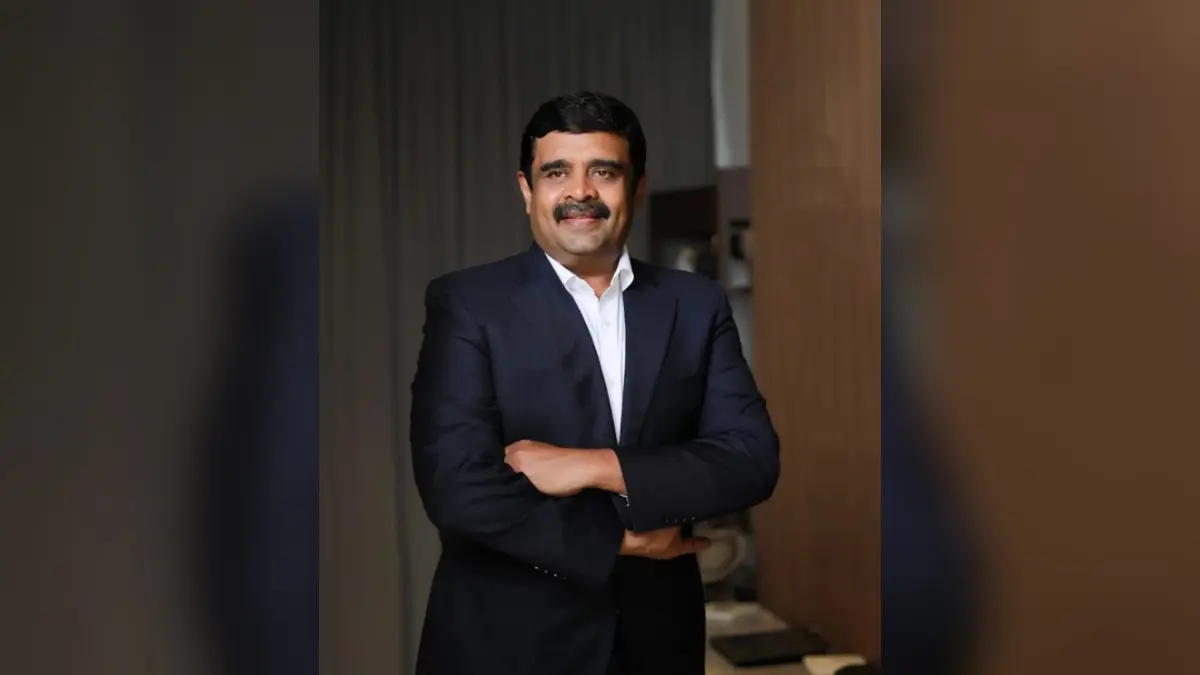
The global energy transition has not reduced the importance of mining; it has changed what mining must look like. Clean power, electric mobility, and modern infrastructure all depend on a steady mineral supply.
This has placed mining leaders under sharper public and industrial scrutiny than before. Scale still matters, but cleaner operations, regional trust and stronger social outcomes now carry equal weight.
In India, this creates a defining test for leaders such as Balasubramaniam Prabhakaran, whose career reflects field discipline paired with systems-led growth. The story of B Prabhakaran and Thriveni shows how inclusive mining leadership is evolving as demand patterns shift.
Let's explore what this transition means for Indian mining leadership.
Advertisement
The Energy Transition is Rewriting the Purpose of Mining
For decades, mining success was measured by reserves, output, and market reach alone. That equation has changed. Steel-intensive infrastructure, renewable installations and electric vehicles all depend on dependable mineral supply chains, which puts responsible extraction at the centre of industrial planning rather than at its edge.
Advertisement
Leaders must now weigh emissions, land use, processing capacity, and community confidence together, instead of treating them as separate conversations. The shift is no longer about mining more. It is about mining better, with cleaner systems and clearer accountability.
Why Indian Mining Leaders Carry a Larger Strategic Responsibility
India's industrial and clean-energy ambitions need a stronger domestic resource base to draw on. Iron ore, steel inputs, and processing capacity are increasingly tied to questions of national resource security.
This gives mining leadership a role that extends beyond company-level growth alone. Leaders must support exploration, beneficiation, logistics, and regional development within one coherent operating vision.
The challenge sharpens in districts where mineral wealth sits alongside long-standing development gaps. Patience, technical maturity, and public accountability are no longer optional in major resource decisions. Balasubramaniam Prabhakaran's career offers a useful lens for understanding this wider responsibility.
From Extraction to Systems Thinking in Indian Mining
The next phase of mining will favour leaders who treat mines as complete operating systems. Equipment, transport, processing, people, and communities need to function as connected parts of one industrial design.
B Prabhakaran's career traces this shift, from contract execution toward systems-led mining growth over three decades. His early path was built on site discipline, difficult-terrain experience, and careful equipment management.
That field knowledge later shaped a broader approach to mine development and operational scale. For India's resource priorities, this matters because mineral security depends on execution that holds up on difficult ground, not just on paper.
Carbon-smart Operations Will Define the Next Mining Cycle
Future-ready mining will be judged on how efficiently it cuts emissions while holding output steady. Electrification, equipment retrofitting, cleaner logistics, and energy-efficient processing all sit inside that judgement.
Sustainability can no longer sit apart from core operating decisions around fleets, haulage and material movement. For leaders like B Prabhakaran, this calls for practical engineering rather than distant pledges.
Cleaner mining comes from machines redesigned, routes shortened, and waste converted into usable value, not from statements alone. The leaders who treat this as an engineering problem, rather than a messaging one, will set the pace for the next cycle.
Inclusive Growth Is Becoming a Leadership Imperative
The energy transition cannot be called responsible if mining regions sit outside its gains. Tribal and rural communities need jobs, education, healthcare, and a visible stake in industrial growth nearby.
This is visible in how inclusive growth through mining in tribal India has taken shape on the ground, linking resource activity with employment and education in mineral-rich districts. This context matters because mineral-led growth often unfolds in regions that already carry long-standing development gaps.
Mining leadership has to work as both an industrial and a social discipline. Without community confidence, even technically sound projects can struggle to hold lasting legitimacy.
Regional Mining Experience Can Shape National Transition Readiness
National outcomes are often tested first in places that demand more than capital alone. Districts such as Gadchiroli require trust, timing, and administrative patience before they require investment.
They also demand operating systems built to withstand terrain, distance, and social complexity together. B. Prabhakaran's regional experience shows how difficult districts can become strategic resource centres through sustained leadership.
His field-led growth story also points to the value of execution that precedes visibility. In a transition era, India needs leaders who can convert regional capability into national readiness without losing sight of local conditions.
What the Future Demands from Indian Mining Leadership
The next era of Indian mining will require sharper technical skill and broader institutional thinking. Leaders must support mineral exploration, domestic processing, cleaner logistics, and stronger downstream integration at once.
Mining increasingly needs to connect with energy, infrastructure, and manufacturing planning, not operate apart from them. That requires coordination across government, industry, and the communities closest to the resource.
It also requires established mining enterprises to keep upgrading how projects are planned and delivered over time. The work is growing more complex, but also more consequential for the leaders willing to take it on.
The Road Ahead for Indian Mining Leadership
The global energy transition does not make mining less important. It makes mining leadership more accountable, more visible, and more closely watched. India needs resource security, but it also needs cleaner systems and stronger community outcomes alongside it.
B Prabhakaran's career shows how execution-led mining experience can adapt to that combined demand. His growth arc, from a single excavator to a national mining operation, reflects how field discipline scales into something larger.
The leaders who connect minerals with manufacturing and growth with trust will shape what credibility looks like next in Indian mining. That credibility will increasingly depend on lessons drawn from international markets, alongside the strength built at home.