
Why Dubai South Is Becoming the Address Serious Logistics and Trading Businesses Choose First
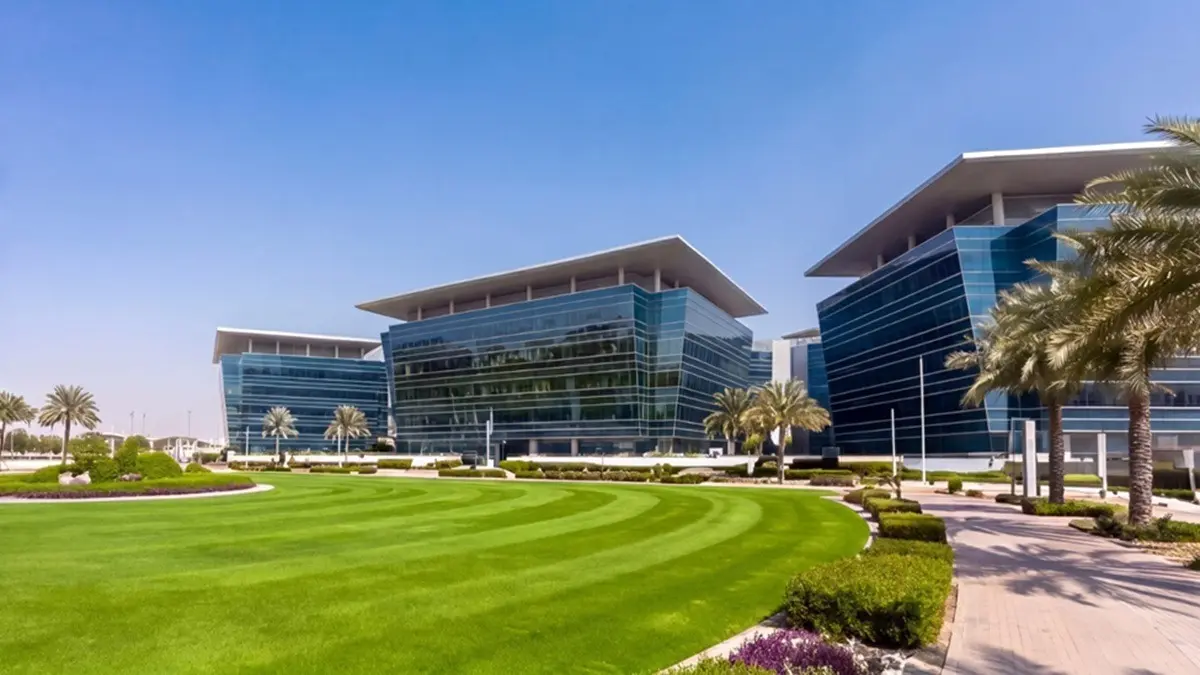
Dubai South is a purpose-built economic district spanning roughly 145 square kilometres, developed around Al Maktoum International Airport, which sits inside its master plan and is being expanded toward a scale intended to become the world's largest airport by capacity.
- Initiatives News
- 4 min read

;'%3e%3cpath%20d='m8,15.99c4.41,0,7.99-3.58,7.99-7.99S12.41,0,8,0,0,3.59,0,8s3.58,7.99,7.99,7.99Z'%20style='stroke:%23fff;%20stroke-miterlimit:10;%20stroke-width:.02px;'/%3e%3cpath%20d='m3.08,3.37l3.82,5.11-3.84,4.15h.87l3.37-3.64,2.72,3.64h2.94l-4.04-5.39,3.58-3.87h-.86l-3.1,3.35-2.5-3.35h-2.94Zm1.27.64h1.35l5.97,7.99h-1.35l-5.97-7.99Z'%20style='fill:%23fff;'/%3e%3c/g%3e%3c/svg%3e)


A company's registered address rarely gets a second thought once the license is issued. For a logistics or trading business, it should be: proximity to the infrastructure that actually moves goods changes real operating costs, not just a line on a letterhead.
The Infrastructure Underneath the District
Dubai South is a purpose-built economic district spanning roughly 145 square kilometres, developed around Al Maktoum International Airport, which sits inside its master plan and is being expanded toward a scale intended to become the world's largest airport by capacity once fully built out. The district also sits within reach of Jebel Ali Port, which alone handles over 14 million TEUs of container traffic a year, among the busiest throughputs of any port globally, and connects into Etihad Rail's national freight corridor — giving a business registered there simultaneous access to air, sea, and rail freight without needing separate arrangements to reach each mode. The scale is deliberate rather than incidental — Dubai South was master-planned from the outset as an integrated aviation, logistics, and residential city, not retrofitted around infrastructure that arrived piecemeal, which is part of why the district reads differently from an older commercial zone that grew organically around a single facility.
Expo City's Legacy Effect
Adjacent Expo City Dubai, built for Expo 2020 and retained afterward as a permanent mixed-use district, brought sustained infrastructure investment, international visibility, and an established events and exhibition ecosystem into the same broader area. For a trading or logistics business, that legacy translates into a district that isn't purely industrial — it carries the residential, commercial, and hospitality development that makes it a viable long-term base rather than a warehouse zone with a license office bolted on.
A Growing Residential and Commercial Community
Dubai South has been developing as a residential community alongside its logistics function, adding housing, retail, and community infrastructure aimed at the workforce actually staffing the district's businesses. That matters for a company doing more than just registering a license there: a district with genuine residential density supports easier hiring, shorter commutes for staff, and a less transient business community than a pure logistics park with no residential base at all.
Advertisement
What This Looks Like for a Business Choosing Between Districts
A founder comparing free zones purely on license price alone is comparing the wrong variable for a goods-moving business. The more relevant question is transit time and handling cost between the registered office, any warehousing, and the actual point of export or import — a saving of a few hundred dirhams on license fees rarely offsets the added trucking distance and time of operating from a district disconnected from Jebel Ali Port or Al Maktoum International Airport. That calculation looks different for a services business with nothing physical to move, which is why the right jurisdiction genuinely depends on what the business does, not a single universal answer.
Why This Matters More for Some Businesses Than Others
The location advantage is largest for exactly the businesses that move physical goods: import-export traders, e-commerce operations handling fulfilment, and logistics or freight-forwarding companies, all of which benefit directly from shorter transit times between a registered office, a warehouse, and the port or airport actually handling their shipments. It matters less for a pure digital-services or consultancy business with no physical goods movement at all — for those, the district's connectivity is a convenience rather than a core operating requirement.
Advertisement
Dubai South Business Hub Free Zone as the District's Registration Anchor
Dubai South Business Hub Free Zone is the free zone authority operating inside this district, giving a company formed there a direct registered presence in the same corridor described above, rather than a Dubai address disconnected from the actual logistics infrastructure. For a trading or logistics business specifically, registering at Dubai South Business Hub Free Zone means the license, the flexi-desk or office, and the goods movement itself all sit inside one geographic footprint — a structural advantage that's genuinely hard to replicate from a free zone located elsewhere in the emirate. Registering the company and choosing its warehousing or office footprint within the same district also means fewer separate authorities and lease agreements to coordinate, which is a real operational saving even before the freight-time advantage is factored in. Location rarely tops a business setup dubai checklist, but for a goods-moving business it should. Opening a company in Dubai through Dubai South Free Zone puts the Trade License Dubai and the actual logistics infrastructure in the same postcode, which is the point of this entire comparison.