
Why Protein Is Becoming an Everyday Nutrition Conversation, Not Just a Fitness Trend
Protein is moving beyond gyms and supplements into everyday Indian diets. Here's why awareness is growing and protein is becoming a daily nutrition staple.
- Initiatives News
- 3 min read

;'%3e%3cpath%20d='m8,15.99c4.41,0,7.99-3.58,7.99-7.99S12.41,0,8,0,0,3.59,0,8s3.58,7.99,7.99,7.99Z'%20style='stroke:%23fff;%20stroke-miterlimit:10;%20stroke-width:.02px;'/%3e%3cpath%20d='m3.08,3.37l3.82,5.11-3.84,4.15h.87l3.37-3.64,2.72,3.64h2.94l-4.04-5.39,3.58-3.87h-.86l-3.1,3.35-2.5-3.35h-2.94Zm1.27.64h1.35l5.97,7.99h-1.35l-5.97-7.99Z'%20style='fill:%23fff;'/%3e%3c/g%3e%3c/svg%3e)


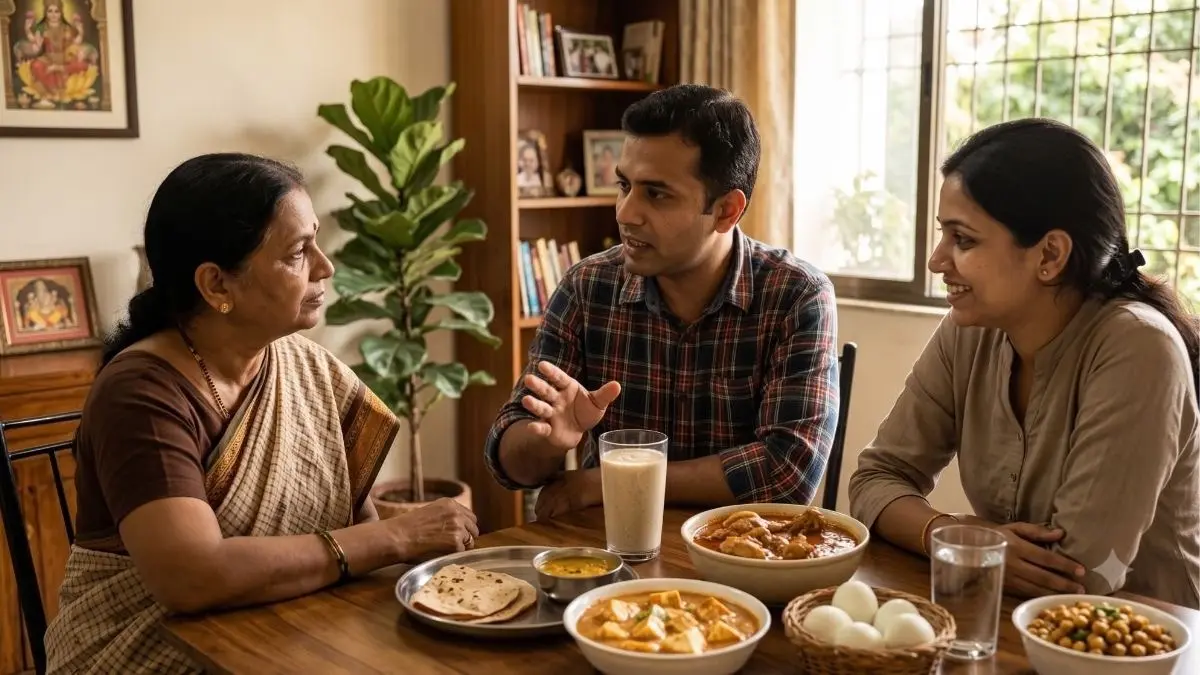
Protein used to be the staple diet of a specific crowd, mostly gym-goers and bodybuilders. Everyone else treated it as background nutrition - something a balanced diet handled on its own. That assumption is breaking down.
Walk into any Indian supermarket today and protein has moved off the supplements shelf and into everyday aisles. Protein-fortified atta sits next to regular atta. Protein bars compete with biscuits at the billing counter. Even breakfast cereals now carry protein claims. This is not a niche audience being served. This is mainstream retail responding to mainstream demand.
The Defining Shift
For years, protein conversations in India were shaped by a narrow context: muscle building, gym culture, post-workout recovery. The messaging was aspirational and body-focused, aimed at people already committed to fitness routines. That framing worked for a specific segment, but it left out a much larger population that was quietly protein-deficient without realising it.
Nutrition surveys have repeatedly pointed to a gap between recommended protein intake and actual consumption among Indians, cutting across age groups and economic classes. A traditionally carbohydrate-heavy diet, built around rice, wheat, and lentils in modest proportions, has long under-delivered on protein even among people who consider themselves well-fed. This wasn't a fitness problem. It was a population-level nutrition problem hiding in plain sight.
Advertisement
What changed is awareness. Doctors and nutritionists have grown more vocal about protein's role beyond muscle: immune function, metabolic health, satiety, and healthy aging. Post-pandemic health consciousness accelerated this. People who never thought about macronutrients started reading labels, comparing protein content per serving, and asking questions their parents never asked at the dinner table.
From Gym Bags to Grocery Carts
The consumer profile tells the real story. It is no longer the 25-year-old with a gym membership driving protein sales. The profile today is much wider: working professionals looking for sustained energy through long days, parents adding protein to a child's tiffin, and older adults managing muscle loss that comes with age.
Advertisement
Brands have read this shift accurately. Protein is no longer positioned as a performance enhancer; it is positioned as a dietary staple. The language has softened from “build muscle” to “stay strong,” from “post-workout” to “everyday fuel.” This repositioning matters because it signals who the category now serves: not athletes, but anyone trying to eat better within an ordinary routine.
What Comes Next
India's dietary patterns are shifting rapidly, with urban households increasingly reliant on processed and convenience foods. In that context, protein fortification and easier access to protein-rich everyday products can meaningfully close a nutritional gap that diet alone has struggled to close.
Expect protein to keep showing up in unexpected categories: protein-enriched snacks aimed at children, protein additions to traditional Indian staples, and clinical nutrition products crossing over into general wellness retail. Expect nutritionists to keep pushing back against the idea that protein needs are only for the young and athletic. And expect the marketing language to keep normalising, moving further away from gym imagery and closer to kitchen-table relevance.
Protein's journey from a fitness supplement to an everyday nutrition essential is not a passing trend. It reflects a genuine correction in how India understands what a balanced diet actually requires. The gym crowd got there first. Everyone else is catching up, and the market is being rebuilt around that reality.