
Why Is Bhaang Consumed On Maha Shivratri? Know The Lore Behind The Offering Made To Lord Shiva
Bhaang is consumed as thandai on Holi and Shivratri. It is considered as an auspicious offering to Lord Shiva.
- Lifestyle News
- 3 min read

;'%3e%3cpath%20d='m8,15.99c4.41,0,7.99-3.58,7.99-7.99S12.41,0,8,0,0,3.59,0,8s3.58,7.99,7.99,7.99Z'%20style='stroke:%23fff;%20stroke-miterlimit:10;%20stroke-width:.02px;'/%3e%3cpath%20d='m3.08,3.37l3.82,5.11-3.84,4.15h.87l3.37-3.64,2.72,3.64h2.94l-4.04-5.39,3.58-3.87h-.86l-3.1,3.35-2.5-3.35h-2.94Zm1.27.64h1.35l5.97,7.99h-1.35l-5.97-7.99Z'%20style='fill:%23fff;'/%3e%3c/g%3e%3c/svg%3e)


Maha Shivratri, which is considered one of the most auspicious festivals, is celebrated annually with much fervour and excitement across India. This occasion will be celebrated on March 15 this year. It's believed that while there is a Shivratri every lunisolar month of the Hindu calendar, the Maha Shivratri, happens only once every year, in February/March, when winter comes to an end and spring and summer begin.
Out of the 12 Shivratris observed in any given year, Maha Shivratri is considered especially auspicious as it is supposed to be the night of convergence of Shiva and Shakti, which in essence means the male and feminine energies that keep the world in balance. Shiva and Shakti are revered as the embodiment of love, power and oneness.

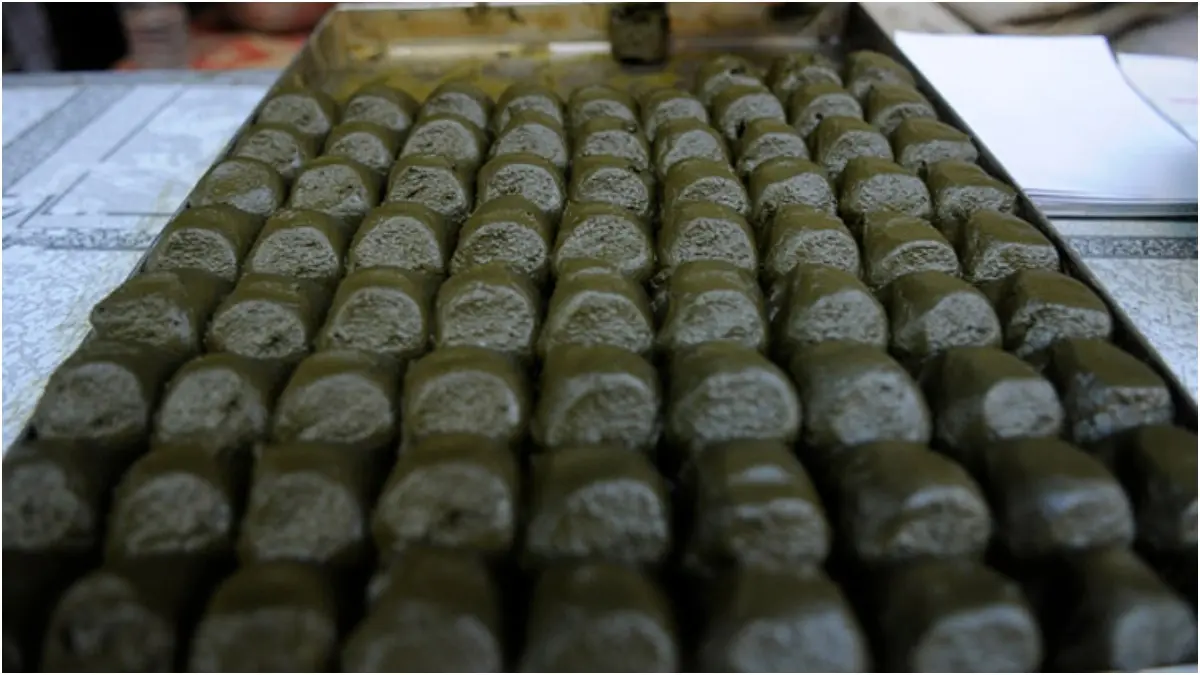
Among many devotees, consumption of bhaang is popular during Maha Shivratri. While many consider it an intoxicant, for Lord Shiva devotees it is 'prasad', which is offered to the God first and then consumed later on.
Advertisement
What is bhaang?
Bhaang is a drink prepared with edible cannabis. It is made by crushing the cannabis leaves, hemp seeds and mixing it with milk, dry fruits, nuts and aromatic mild spices. While cannabis is a banned substance under the Narcotics Act, 1985, due to its religious significance, its byproduct bhaang is consumed during festivals like Maha Shivratri and Holi.
Advertisement
Why is bhaang consumed by Lord Shiva devotees?
According to Indian scriptures, bhaang is considered as a sacred plant. It is believed to be a source of connection with the divine power of Lord Shiva and is often associated with nirvana and moksha. It is believed that bhaang is associated to the Samudra Manthan, where in the sea was churned to obtain the drink of immortality or amrit. However, during the process of manthan a poison, Halahala, came out, which had immense heat and the potential to destroy the entire universe. In order to save the creation Lord Shiva drank the poison, which is why he is also known as Neekanth.
Lord Shiva is believed to have kept the poison in his throat, which turned it blue and generated a lot of heat inside him. It is believed that right after drinking the poison, Shiva turned restless and Gods and Goddess tried to calm him down. It is believed that to calm down Lord Shiva, Chandra dev the moon God stayed in Lord Shiva’s hair (Jata). It is believed that post consuming Halahala, Lord Shiva returned to Kailasha to lower his body’s temperature and popular beliefs also claim that he was given bhaang, a coolant to reduce the heat caused due to consumption of vish (poison).This is the reason why bhaang is an essential offering at the Maha Shivratri puja.