
Karwa Chauth 2025: Know Why Women Use A Sieve(Chalni) To See Their Husband’s Face
If Bollywood films have taught us anything, it’s that no Karwa Chauth fast feels complete without the chalni ritual. Know the significance of it.
- Lifestyle News
- 2 min read

;'%3e%3cpath%20d='m8,15.99c4.41,0,7.99-3.58,7.99-7.99S12.41,0,8,0,0,3.59,0,8s3.58,7.99,7.99,7.99Z'%20style='stroke:%23fff;%20stroke-miterlimit:10;%20stroke-width:.02px;'/%3e%3cpath%20d='m3.08,3.37l3.82,5.11-3.84,4.15h.87l3.37-3.64,2.72,3.64h2.94l-4.04-5.39,3.58-3.87h-.86l-3.1,3.35-2.5-3.35h-2.94Zm1.27.64h1.35l5.97,7.99h-1.35l-5.97-7.99Z'%20style='fill:%23fff;'/%3e%3c/g%3e%3c/svg%3e)


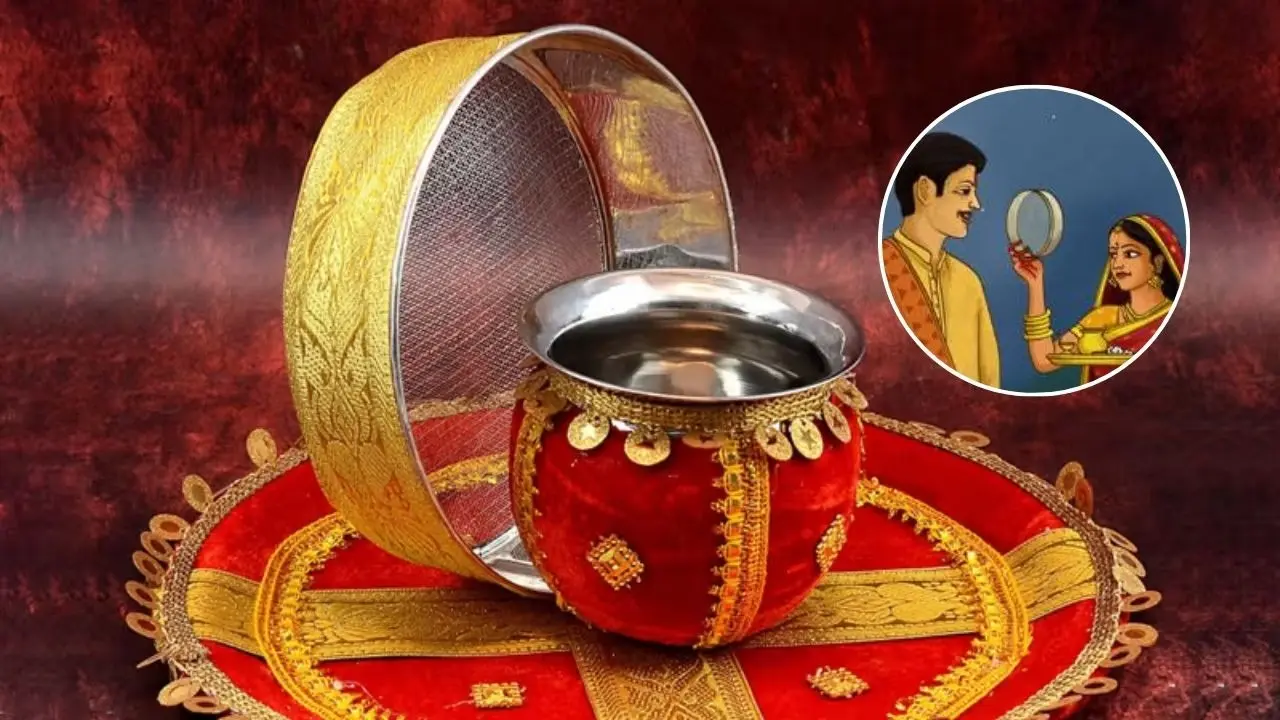
Karwa Chauth is celebrated every year, where married women fast for their husbands in northern India. The festival is seen as a strong symbol of faith, as wives fast from sunrise to moonrise, praying for their husbands’ long life and good health. But have you ever thought about why women look at the moon and then at their husband’s face through a chalni (sieve)?
Why do women use the chalni?
If Bollywood films have taught us anything, it’s that no Karwa Chauth fast feels complete without the chalni ritual. As soon as the moon rises, women look at it through a sieve and then turn the same sieve towards their husband’s face before breaking their fast. But why use a chalni?
According to my puja box, the sieve stands for clarity and focus. Its mesh separates the coarse from the fine and removes impurities. In the same way, during Karwa Chauth, the sieve symbolically filters out distractions and negativity, leaving only what truly matters. Looking at the moon through it reflects a prayer for divine blessings, while seeing the husband through the same sieve symbolises transferring that pure and sacred energy into the marriage.
There are also traditional beliefs linked to the ritual. In the past, women were not supposed to look at men directly, which is why they used veils or ghoonghats. Since Karwa Chauth is dedicated to worshipping Chandra Dev, many believe a veil is also needed during the puja. Here, the sieve serves as a light veil, transparent enough to see through but still a barrier to direct vision. In some households, women even place a diya on the sieve before performing the puja.
Advertisement
When Is Karwa Chauth 2025?
Karwa Chauth will be observed on Friday, October 10, 2025. The Puja Muhurta is set from 5:58 PM to 7:11 PM, while the fast begins at 6:08 AM and ends at 8:36 PM. On this day, married women, and now even some men, keep a strict nirjala vrat (fast without food or water) from sunrise until the moon rises at night.