
Honey Never Goes Bad: Food Myth Or Fact?
Viral claims say that from ancient tombs to modern kitchens, jars of honey have been found intact even after thousands of years. This sparks curiosity about the popular belief: Does honey never go bad?
- Lifestyle News
- 3 min read

;'%3e%3cpath%20d='m8,15.99c4.41,0,7.99-3.58,7.99-7.99S12.41,0,8,0,0,3.59,0,8s3.58,7.99,7.99,7.99Z'%20style='stroke:%23fff;%20stroke-miterlimit:10;%20stroke-width:.02px;'/%3e%3cpath%20d='m3.08,3.37l3.82,5.11-3.84,4.15h.87l3.37-3.64,2.72,3.64h2.94l-4.04-5.39,3.58-3.87h-.86l-3.1,3.35-2.5-3.35h-2.94Zm1.27.64h1.35l5.97,7.99h-1.35l-5.97-7.99Z'%20style='fill:%23fff;'/%3e%3c/g%3e%3c/svg%3e)


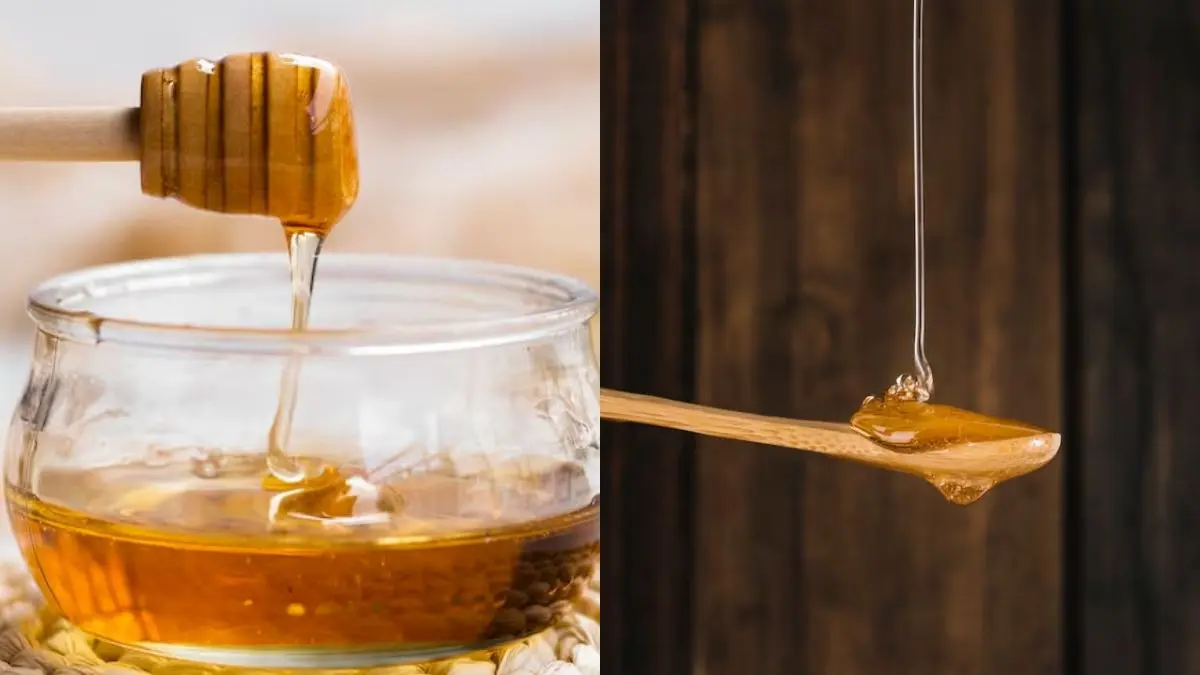
Several Instagram videos, food bloggers and publications have often celebrated honey for its remarkable shelf life. Some say that from ancient tombs to modern kitchens, jars of honey have been found intact even after thousands of years. This sparks curiosity about the popular belief: Does honey never go bad?
What is the truth behind claims that honey never goes bad?
Pure, raw honey is one of the few natural foods with an exceptionally long shelf life, making it one of the rare food items with almost no expiry date. Its unique chemical composition makes it naturally resistant to spoilage. Honey has a low moisture content and high sugar concentration, creating an environment where bacteria and microorganisms struggle to survive. In addition, honey is acidic in nature and contains small amounts of hydrogen peroxide, which further enhances its antimicrobial properties.
These factors explain why honey, when stored correctly, can remain safe to consume for years, even decades. Archaeological findings of honey in ancient Egyptian tombs are still edible after thousands of years. However, this does not mean honey is entirely immune to change.
Over time, honey may undergo crystallisation, turning thick and grainy. This is a natural process caused by the separation of glucose from water and does not indicate spoilage. Gently warming crystallised honey in a bowl of warm water can restore its smooth texture without affecting its quality.
Also Read: Relish These Sweet Winter Delicacies This Season: Imarti To Gajak
Advertisement
Is there any condition under which honey can get spoiled?
Honey can spoil under certain conditions. Exposure to moisture is the biggest risk. If water enters the jar through a wet spoon or improper storage, it can encourage fermentation. Fermented honey develops a sour smell, frothy texture and altered taste, making it unsafe to consume. Similarly, adulterated or heavily processed honey may have a shorter shelf life compared to pure varieties. Thus, there is usually an expiry date on store-bought honey bottles.
In India, where honey is widely used in home remedies, religious rituals and everyday cooking, proper storage becomes crucial. Honey should always be kept in a tightly sealed container, away from heat and direct sunlight. Glass jars are preferable, as plastic can sometimes affect flavour over long periods.
Advertisement
Another common misconception is that expired honey is harmful. Commercial honey often carries a “best before” date, not because it suddenly becomes unsafe, but because manufacturers are required to provide a quality timeline. Beyond this date, honey may lose aroma or texture, but it rarely turns toxic if uncontaminated. However, the consumption of such a product should be best avoided.
Also Read: Artisanal Pasta Vs Regular Pasta: What Is The Difference?