
Budget 2026-27: A Kartavya Blueprint For Viksit Bharat
Union Budget 2026-27 outlines India's growth story as a collective national responsibility, anchored in the concept of 'kartavya (duty)', focused on accelerating economic growth, fulfilling people's aspirations, and ensuring inclusive development, aiming for a Viksit Bharat.
- Opinion News
- 8 min read

;'%3e%3cpath%20d='m8,15.99c4.41,0,7.99-3.58,7.99-7.99S12.41,0,8,0,0,3.59,0,8s3.58,7.99,7.99,7.99Z'%20style='stroke:%23fff;%20stroke-miterlimit:10;%20stroke-width:.02px;'/%3e%3cpath%20d='m3.08,3.37l3.82,5.11-3.84,4.15h.87l3.37-3.64,2.72,3.64h2.94l-4.04-5.39,3.58-3.87h-.86l-3.1,3.35-2.5-3.35h-2.94Zm1.27.64h1.35l5.97,7.99h-1.35l-5.97-7.99Z'%20style='fill:%23fff;'/%3e%3c/g%3e%3c/svg%3e)


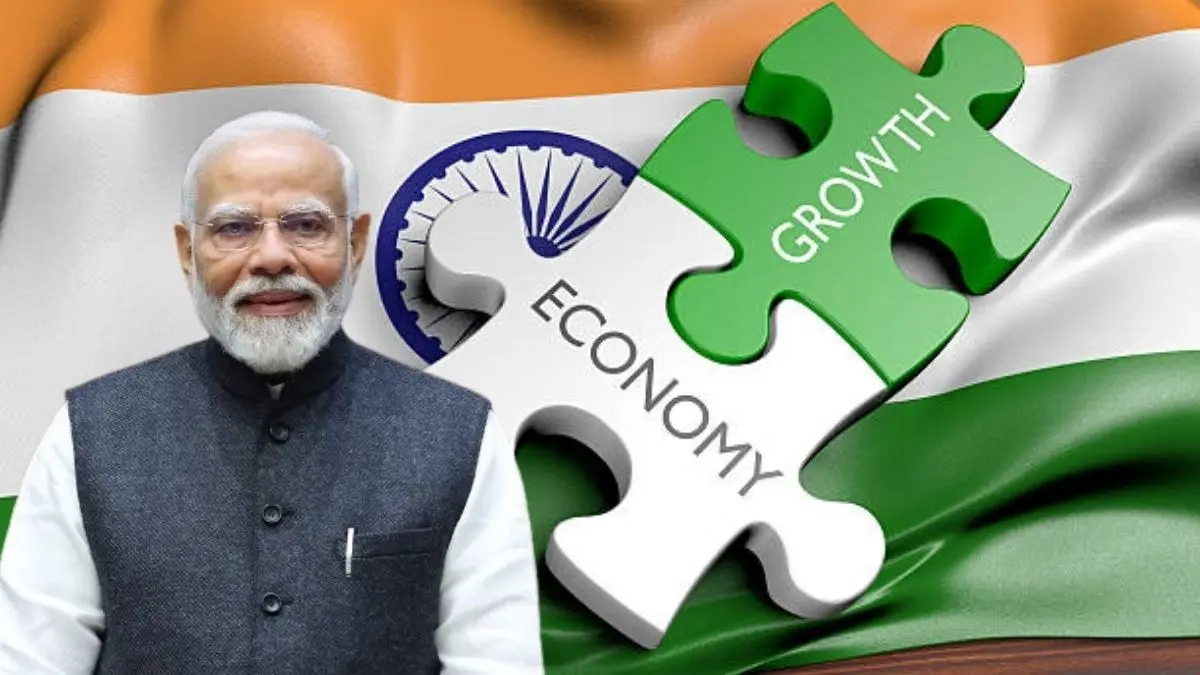
When Union Finance Minister Nirmala Sitharaman presented the Union Budget 2026–27, the document did more than outline revenue and expenditure. It laid out a philosophy of governance anchored in kartavya - duty. Presented from Kartavya Bhawan for the first time, the symbolism was unmistakable. India’s growth story is being framed not merely as an economic journey, but as a collective national responsibility shared by government, industry, and citizens alike.
This year’s Budget rests on three foundational kartavyas: accelerating and sustaining economic growth, fulfilling the aspirations of people while building their capabilities, and ensuring inclusive development so that every region and community participates meaningfully in India’s progress toward Viksit Bharat.
Far from being a populist or short-term political exercise, this Budget reads like a structural blueprint for India’s next economic decade.
Fiscal Prudence with Growth Ambition
Advertisement
The macroeconomic framework strikes a careful balance between expansion and discipline. Total expenditure is estimated at ₹53.5 lakh crore, while non-debt receipts stand at ₹36.5 lakh crore. The fiscal deficit is projected to decline to 4.3 percent of GDP, down from 4.4 percent the previous year. Meanwhile, the debt-to-GDP ratio is set to improve from 56.1 percent to 55.6 percent.
These are not accidental numbers. They reflect a government attempting to maintain fiscal credibility while still pushing forward one of the largest public investment programs in India’s history. Capital expenditure continues to rise, underlining a strategic choice: invest today to expand productive capacity tomorrow.
Advertisement
India is not spending on consumption; it is spending to build.
Kartavya One: Accelerating and Sustaining Economic Growth
The first kartavya focuses on productivity, competitiveness, and resilience in an increasingly volatile global environment. The approach is multi-pronged and deeply structural.
Manufacturing in Strategic and Frontier Sectors
A significant thrust is being placed on high-technology manufacturing, signalling India’s determination to move up global value chains.
The Biopharma SHAKTI mission, backed by ₹10,000 crore over five years, aims to position India as a global biopharmaceutical manufacturing hub. By expanding pharmaceutical education, upgrading research institutions, and creating a large network of accredited clinical trial sites, the government is attempting to secure India’s role not merely as a supplier of generics but as an innovator in advanced therapeutics. In a post-pandemic world, healthcare sovereignty is strategic power.
Similarly, the India Semiconductor Mission 2.0 seeks to go beyond chip assembly. The focus now includes equipment manufacturing, materials, and the creation of full-stack Indian intellectual property. Industry-led research centres and training hubs are expected to develop a skilled workforce capable of supporting a sophisticated semiconductor ecosystem. This marks a shift from dependency toward technological self-reliance.
Electronics manufacturing also receives a boost, with the components manufacturing scheme outlay raised to ₹40,000 crore. At the same time, dedicated Rare Earth Corridors across mineral-rich states aim to secure critical inputs required for electronics, defence, and clean energy technologies. These measures reflect a deeper understanding that future economic security lies in controlling supply chains of strategic minerals and advanced components.
Strengthening Capital Goods and Industrial Ecosystems
The Budget addresses a long-standing weakness in India’s industrial base: dependence on imported capital goods. The establishment of hi-tech tool rooms, schemes to boost construction and infrastructure equipment manufacturing, and a ₹10,000 crore allocation for container manufacturing are steps toward building domestic capabilities in precision engineering and heavy equipment.
Parallel to this is an integrated program for the textile sector that spans natural fibres, man-made fibres, technical textiles, and the modernisation of traditional clusters. The strategy blends employment generation with export competitiveness, while initiatives like the Mahatma Gandhi Gram Swaraj program aim to connect rural artisans and handicrafts to global markets through branding and skill development.
Reviving Legacy Industrial Clusters
Growth is not only about new industries. The decision to modernise 200 legacy industrial clusters through infrastructure and technology upgrades recognises that many traditional manufacturing hubs remain economically vital but technologically outdated. Improving their efficiency and competitiveness can unlock immediate employment and export gains.
Championing MSMEs
Micro, small and medium enterprises form the backbone of India’s industrial and employment landscape. A ₹10,000 crore SME Growth Fund is designed to identify and nurture high-potential enterprises into future national champions. An additional infusion into the Self-Reliant India Fund ensures continued access to risk capital for micro enterprises.
Equally significant is the introduction of “Corporate Mitras,” trained professionals who will assist smaller firms - particularly in Tier-II and Tier-III towns - with compliance, governance, and business processes. This is capacity building at the grassroots of India’s enterprise ecosystem.
Infrastructure as Economic Multiplier
Public capital expenditure is set to rise to ₹12.2 lakh crore, reinforcing infrastructure as the central pillar of India’s growth strategy.
New Dedicated Freight Corridors, expanded inland waterways, ship repair hubs, and a coastal cargo promotion scheme aim to reduce logistics costs and promote environmentally sustainable transport. The goal of doubling the share of waterways and coastal shipping by 2047 reflects a long-term logistics vision aligned with climate goals.
The introduction of incentives for domestic seaplane manufacturing and a viability gap funding scheme for operations highlights a push toward improving last-mile connectivity in remote and tourism-heavy regions.
Energy Security and Urban Growth Engines
An allocation of ₹20,000 crore for Carbon Capture, Utilisation and Storage technologies underlines a pragmatic approach to climate commitments. India is acknowledging that decarbonisation must be accompanied by technological innovation rather than growth sacrifice.
Urbanisation is being shaped through City Economic Regions, each receiving substantial support under a reform-linked framework. Seven proposed high-speed rail corridors connecting major economic centres are envisioned as “growth connectors,” fostering integrated regional development. These corridors are not merely transport projects; they are catalysts for new economic zones.
Kartavya Two: Building Human Capacity
Economic growth without skilled and healthy citizens is unsustainable. The second kartavya focuses on human capital development.
A high-powered standing committee on “Education to Employment and Enterprise” is expected to align academic systems with industry needs, especially in services - a sector that will continue to drive India’s GDP expansion.
Expanding the Health Workforce
The plan to add 100,000 Allied Health Professionals over five years addresses a critical healthcare gap. The creation of regional medical hubs is designed to strengthen India’s position as a medical tourism destination while improving domestic healthcare access. The establishment of new institutes dedicated to Ayurveda indicates a parallel commitment to traditional systems of medicine alongside modern healthcare.
Boosting Veterinary and Rural Support Services
Scaling up veterinary professionals and supporting private investment in veterinary colleges and diagnostic facilities strengthens livestock productivity and rural incomes. Animal husbandry remains a key supplementary income source for millions of rural households.
The Rise of the Orange Economy
The creative sector receives a transformative push. Support for AVGC (Animation, Visual Effects, Gaming, and Comics) labs in thousands of schools and colleges signals recognition of the digital creative economy as a serious employment generator. By nurturing talent at the school level, India is positioning itself for leadership in global digital content markets.
Tourism, Heritage, and Hospitality
Fifteen major archaeological and heritage sites - including Sarnath, Dholavira, and Leh Palace - will be developed as experiential destinations. The strategy goes beyond conservation; it aims to create immersive cultural economies that generate local employment. Upgrading hospitality institutions and training thousands of tourist guides further strengthens India’s tourism infrastructure.
Sports development through a long-term Khelo India Mission also reflects recognition of sports as an industry, a health tool, and a source of national pride.
Kartavya Three: Sabka Sath, Sabka Vikas
The third kartavya emphasises inclusive development.
Farmers and Rural Prosperity
The integrated development of reservoirs and Amrit Sarovars enhances irrigation resilience. A push toward high-value crops such as coconut, sandalwood, cocoa, and cashew supports diversification and higher farmer incomes. Bharat-VISTAAR, an AI-driven multilingual agricultural advisory platform, represents a leap toward digital empowerment of farmers.
Empowering Divyangjan
Skill development programs tailored for persons with disabilities aim to integrate them into IT, hospitality, AVGC, and service sectors. This is economic inclusion with dignity.
Mental Health as Public Policy
The establishment of a second campus of NIMHANS in North India and the upgradation of regional mental health institutions bring mental healthcare into mainstream policy focus - a long-overdue shift.
Focus on Eastern and Northeastern India
Industrial corridors, tourism circuits, and improved urban mobility in the Purvodaya states and the Northeast position the region as India’s next growth frontier. Connectivity, cultural tourism, and infrastructure investments could transform these historically underdeveloped areas into engines of regional prosperity.
Tax Reforms: Simplification and Global Competitiveness
The New Income Tax Act, effective April 2026, promises simpler compliance and redesigned forms for ordinary taxpayers. Rationalisation of TDS and TCS provisions, automated lower deduction processes, extended timelines for return revisions, and decriminalisation of minor procedural lapses collectively reduce friction between taxpayers and authorities.
For global investors, tax holidays for cloud service providers operating from India, expanded safe harbour provisions, faster Advanced Pricing Agreements, and rationalisation of Minimum Alternate Tax enhance India’s attractiveness as a global investment destination.
Customs, Trade, and Ease of Doing Business
Customs processes are being redesigned for speed and trust. A single digital window for cargo clearances, AI-driven risk assessment, expanded duty deferrals for trusted operators, and full digitisation through the proposed Customs Integrated System reflect a decisive shift toward trade facilitation.
The removal of export value caps on courier shipments will particularly benefit small businesses, artisans, and startups seeking to access global e-commerce markets.
The Union Budget 2026–27 is not built around short-term political gain. It is structured around long-term national capacity. It seeks to align fiscal prudence with infrastructure expansion, technological advancement with employment generation, and global integration with domestic resilience.
The three kartavyas - growth, capacity building, and inclusion - operate together, not sequentially. That integrated approach may well define India’s development model in the coming decade.
India is not just preparing to grow bigger. India is preparing to grow stronger, smarter, and more inclusive. And that is the true duty - the real kartavya - of a nation on the rise.