
India-US Trade Deal: Viva America & Mera Bharat Mahaan | Opinion
American companies are deeply embedded in India's economy, from digital infrastructure to consumer goods and strategic industries like aerospace and energy and the recent India-US trade deal is a recognition of this existing presence.
- Opinion News
- 3 min read

;'%3e%3cpath%20d='m8,15.99c4.41,0,7.99-3.58,7.99-7.99S12.41,0,8,0,0,3.59,0,8s3.58,7.99,7.99,7.99Z'%20style='stroke:%23fff;%20stroke-miterlimit:10;%20stroke-width:.02px;'/%3e%3cpath%20d='m3.08,3.37l3.82,5.11-3.84,4.15h.87l3.37-3.64,2.72,3.64h2.94l-4.04-5.39,3.58-3.87h-.86l-3.1,3.35-2.5-3.35h-2.94Zm1.27.64h1.35l5.97,7.99h-1.35l-5.97-7.99Z'%20style='fill:%23fff;'/%3e%3c/g%3e%3c/svg%3e)


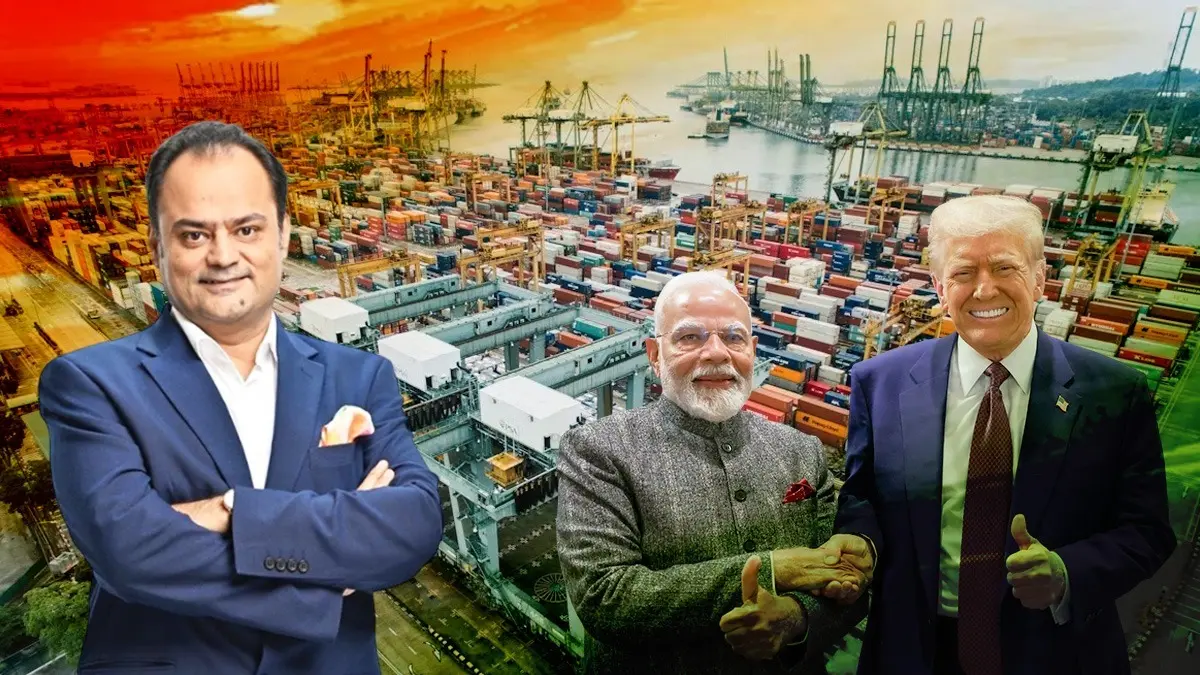
Trade Is One Thing. The Real Story Is How American Companies Already Thrive Deep Inside India’s Economy
Finally, President Donald Trump has announced a new trade understanding with India and already the headlines follow the familiar script.
Tariffs. Oil. Market access. Strategic signals between capitals. A phone call and closure.
Indeed, that’s the visible part of diplomacy.
Advertisement
But, the deeper story sits far away from meeting rooms and podiums. American brands impact how India works every day.
Long before this deal was announced, American companies had already become part of the Indian economy.
Advertisement
Inside our homes, offices, factories, data centres and supply chains.
While trade moves goods and services and is vital to the economy, it is a branded presence that really strikes root in any market.
Let us look at the digital layer of modern India. Phones light up on operating systems designed in California. Messages move through global platforms. Videos stream from servers run by American cloud firms. Government offices store data on enterprise systems built by US technology companies. Startups build their backends on the same global infrastructure.
This is the wiring of our daily life.
In the consumer economy, the shift is even more visible. American brands sit comfortably on local shelves and food courts. They live inside shopping apps and payment systems. They no longer feel foreign.
When the same phones are assembled in Indian factories and shipped to global markets, India becomes part of the world’s production map.
Then there is a strategic layer. Aerospace. Defence. Energy. Heavy industry. These are long-term national choices.
When aircraft parts are built in Indian plants and jet engines are co-produced. When energy partnerships shape future supply lines. These ties last for decades. They shape skills. They shape industrial depth. They shape confidence and build entrenchments.
Put together, this creates a quiet pattern.
At the surface is daily life. The apps people use. The videos they watch. The platforms they trust. Beneath that sits the system layer. The banks. The cloud. The consultants. The digital backbone of business and government.
At the very base lies the industrial layer. Factories. Defence lines. Energy corridors. Infrastructure machines.
To my mind, this is why the trade deal matters in a wider sense than tariff numbers.
We have to acknowledge what already exists.
For India, this brings opportunity. Access to global capital, advanced technology and a place inside global supply chains that shape the future of manufacturing and innovation.
However, it also raises a question. How does a country integrate deeply with global systems and still protect its own strategic space?
For the United States, the logic is clear. India is not simply a fast-growing market but a country with the scale and momentum to influence how the world economy evolves in the coming decades.
Being present in India is about being part of where global production is moving.
Seen this way, Trump’s announcement feels less like a beginning and more like a public recognition of a reality already on the ground.
The headlines may focus on tariffs and agreements. The deeper story is about how companies embed themselves into daily life systems and long-term national plans.
As India rises, how much of that story will we choose to write on our own terms?
Time will tell.
The four most satisfying words in English are “I told you so”. The five most expensive words are “This time it is different”.