
India’s West Asia Moment: Multi-Alignment At Work
India’s ability to maintain stability during the energy crisis was closely tied to its foreign policy approach. Under the leadership of PM Modi, India has adopted a more flexible policy of multi-alignment, being able to engage all blocs - Iran, the United States, and Russia - simultaneously.
- Opinion News
- 3 min read

;'%3e%3cpath%20d='m8,15.99c4.41,0,7.99-3.58,7.99-7.99S12.41,0,8,0,0,3.59,0,8s3.58,7.99,7.99,7.99Z'%20style='stroke:%23fff;%20stroke-miterlimit:10;%20stroke-width:.02px;'/%3e%3cpath%20d='m3.08,3.37l3.82,5.11-3.84,4.15h.87l3.37-3.64,2.72,3.64h2.94l-4.04-5.39,3.58-3.87h-.86l-3.1,3.35-2.5-3.35h-2.94Zm1.27.64h1.35l5.97,7.99h-1.35l-5.97-7.99Z'%20style='fill:%23fff;'/%3e%3c/g%3e%3c/svg%3e)


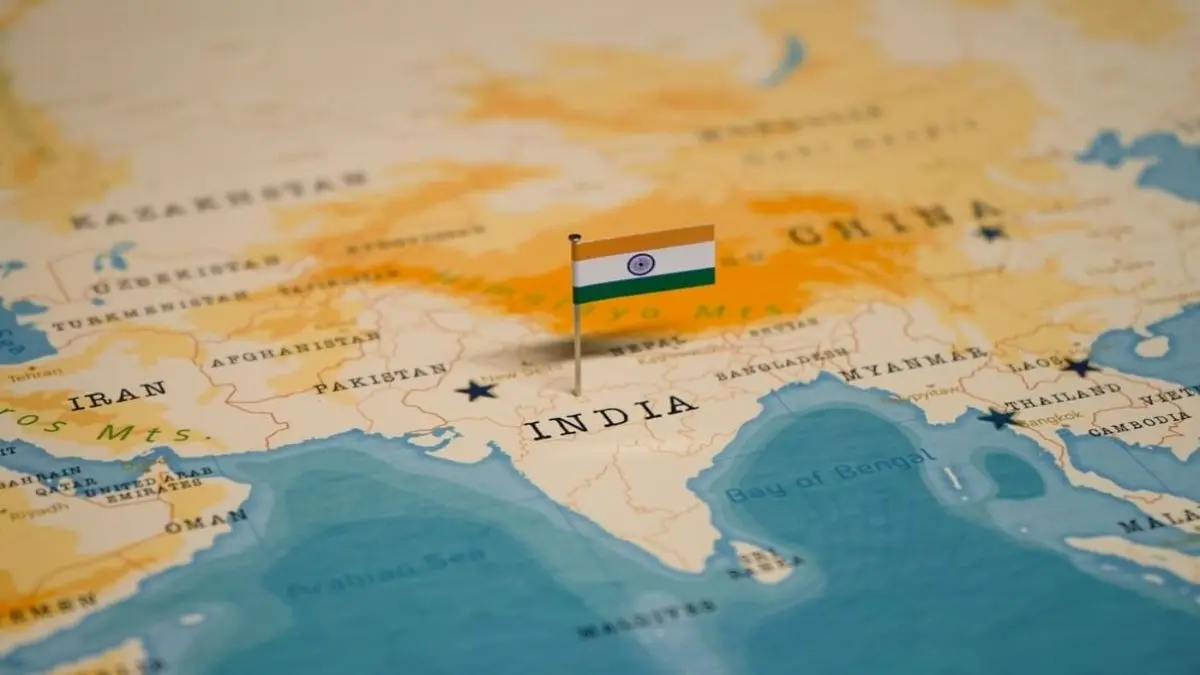
Escalations between Iran and the United States caused fears of major disruptions to global energy supplies, as a key artery of the world’s oil supply faced disruption. Many countries felt this disruption more acutely than others. For India, a country heavily dependent on imported crude, the risks were immediate. Yet, even as the world grappled with energy insecurity, India avoided any systemic disruption domestically. There were no major disruptions to essential services, no lockdowns, no severe supply shortages, and public panic was also managed by government officials. The West Asia conflict served as an early test of India’s foreign policy of multi-alignment under the leadership of Prime Minister Narendra Modi.
India’s ability to maintain stability during the energy crisis was closely tied to its foreign policy approach. Under the leadership of Prime Minister Narendra Modi, India has adopted a more flexible policy of multi-alignment, being able to engage all blocs - Iran, the United States, and Russia - simultaneously. This approach allowed India to sustain its energy needs and maintain favourable diplomatic relations, even as tensions rose rapidly. What was earlier framed as a question - whether India’s policy of multi-alignment could hold out against the pressures of a global crisis - has now found an answer. The West Asia conflict indicates that this approach can translate into tangible economic and strategic resilience.
India’s energy dependence on imports was certainly tested. However, the response was a seamless blend of diversification and coordination. As uncertainty loomed over the Strait of Hormuz, India worked to ensure stable inflows through a combination of sustained diplomatic talks and diversified energy partners. This ability to keep energy channels functional was complemented by stable domestic governance, which prevented the pressures from a global energy crisis from translating into a domestic energy crisis. This interplay of external flexibility and internal stability helped contain potential shocks before they could escalate into a full-scale crisis.
The much-awaited ceasefire between Iran and the United States has brought some relief, but it remains fragile. With renewed tensions marked by the re-closure of the Strait of Hormuz. This serves as an important reminder that geopolitical tensions may have eased intermittently, but the risk of instability persists. For India, this shift from de-escalation to uncertainty does not necessarily translate to instability at home. Having already navigated through the crisis without major disruption, India is well-placed to handle both renewed tensions and any periods of de-escalation that follow.
Advertisement
Fundamentally, the recent crisis underscores a broader shift in India’s global positioning. India has demonstrated an increasing capacity to absorb and manage external energy shocks. This transition reflects a combination of strategic diplomacy, diversified energy sourcing, and stable systems at home. Even if the ceasefire holds firm, India will enter a phase of de-escalation from a position of strength, better prepared to navigate both stability and disruption. In an increasingly tumultuous global landscape, India’s quiet resilience is emerging as one of its most definitive strengths in a rapidly evolving world order.
(Sohani Singh is a global political analyst and graduate of King’s College London from the Department of War Studies.)
Advertisement
Disclaimer: The views and opinions expressed in this article are solely those of the author and do not reflect the official policy or position of Republic.