
North Bengal Shows The Way Of Hindu Revival In Bengal
The northern parts of West Bengal, consisting of eight districts, have led the Hindu uprising in the state in the recently concluded Assembly elections, winning 40 of the total 54 seats, writes Biswajit Jha.
- Opinion News
- 9 min read

;'%3e%3cpath%20d='m8,15.99c4.41,0,7.99-3.58,7.99-7.99S12.41,0,8,0,0,3.59,0,8s3.58,7.99,7.99,7.99Z'%20style='stroke:%23fff;%20stroke-miterlimit:10;%20stroke-width:.02px;'/%3e%3cpath%20d='m3.08,3.37l3.82,5.11-3.84,4.15h.87l3.37-3.64,2.72,3.64h2.94l-4.04-5.39,3.58-3.87h-.86l-3.1,3.35-2.5-3.35h-2.94Zm1.27.64h1.35l5.97,7.99h-1.35l-5.97-7.99Z'%20style='fill:%23fff;'/%3e%3c/g%3e%3c/svg%3e)


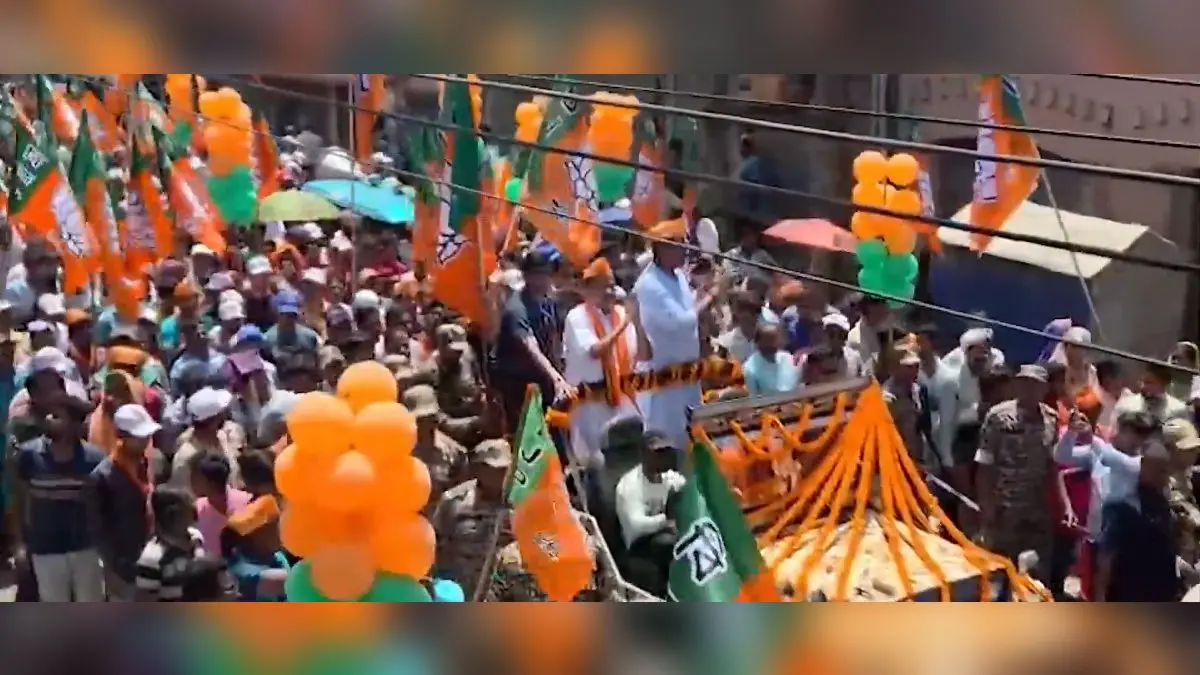
The victory of BJP over TMC in the recently concluded assembly election in West Bengal is not only a triumph of Hindutva; it’s also a victory of good over evil. This win is not only a victory for BJP, this is a conquest over the existential threat of all the Bengali Hindus living in West Bengal. Had TMC won this election, Bengali Hindus would have been eliminated from West Bengal. Through the victory of the BJP, the Hindus have saved themselves from Islamisation like what we witnessed in Bangladesh. They have also thwarted the idea of the Bangladeshi jihadis to convert West Bengal into West Bangladesh, or a part of Greater Bangladesh.
North Bengal takes the lead
North Bengal, the northern parts of West Bengal consisting of eight districts, namely Cooch Behar, Alipurduar, Jalpaiguri, Darjeeling, Kalimpong, North Dinajpur, South Dinajpur and Malda, has led the Hindu uprising in Bengal in the recently-concluded 2026 West Bengal Assembly elections winning 40 seats out of a total 54 assembly seats. This is not the first time that North Bengal has seen the Hindu revolution. In fact, Hindu revival in West Bengal started from North Bengal only. In the 2019 Lok Sabha elections, the BJP bagged seven of out of eight seats from North Bengal out of the 19 total seats the BJP secured in the state. In 2021 assembly elections, people of North Bengal remained with the BJP despite a dismal show in the state. Before the 2019 general elections BJP had never been a force to reckon with in West Bengal. Their party got only 3 seats in the 2016 assembly elections, which TMC won with a thumping majority.
Discontent and the Demand for Change
TMC came to power with a huge majority in 2011, ending a 34-year misrule of the mighty Left. People expected ‘poribarton’ (change), but what did they get in return? Bengal people were handed a government which was involved in multi-level corruption, a Muslim-appeasing ‘jihadi’ government and a dictator in Mamata Banerjee who did not allow people to vote, especially the Hindus. Hindus lost their democratic rights, and jihadi Muslims were allowed to torture the Bengali Hindus. Hindus were brutally killed and tormented by the Muslims in Muslim-dominated areas like Murshidabad, Malda and South 24 Pargana. TMC goons like Jahangirs, Soukat Mollahs and Kajal Seikhs were allowed free hands by Mamata Banerjee and her nephew Abhishek Banerjee.
Less Number of so-called Bengali Bhadrolok
But Bengali Hindu intellectuals, or so-called ‘bhadrolok’, never protested it. Rather, they supported a corrupt, communal, dictatorial and anti-national government in lieu of some petty posts, money or favour. They not only supported the Mamata government, they also created fears among the Bengali Hindus that BJP’s rise in Bengal would finish the Bengali culture and pride for which Bengal is known. They misled people. They ran propaganda, which left Bengali Hindus suffering in ignominy for so many years.
Advertisement
The Hindu and BJP uprising in Bengal started with North Bengal in 2019 because North Bengal does not have many ‘bhadralok’, unlike Kolkata and adjacent districts. The ‘bhadrolok’, who are mostly upper-class Bengali Hindus, were mostly left-orientated. They resisted anything from Hindus and they could not see anything bad about Islam. And on the back of Bengali regionalism, they always despised their own Hindu religion.
After the downfall of the Left, they found a rescuer in Mamata Banerjee, who was fighting against Hinduism. And Mamata, on her part, found a perfect ally in them. Along with these Bengali pseudo-secular ‘bhadrolok’ and Muslims, which consisted of 30 per cent in Bengal, Mamata formed a winning combination and ran a highly corrupt government for 15 years.
Advertisement
Geography, Identity, and Awareness
But the Hindus in North Bengal, cutting across all castes and creeds, united against this jihadi government. Hindus, consisting of Rajbangshi, Adibasis and Matua, did not allow Mamata to disintegrate them in the name of caste. They voted purely as Hindus, which has paid the rich dividends for the BJP. The geographical and cultural proximity to Assam also helped them in understanding the demographic change in these areas by the Bangladeshi Muslim infiltrators.
A History of Neglect
North Bengal and its people have always been deprived. It started with the Left regime of 34 years. Despite uninterrupted support of North Bengal people, the Left government of Bengal never took upon itself the onus of developing this area.
The TMC was run by a few people from Kolkata. North Bengal never got its due in any state government ministry. Despite the promise and establishment of ‘Uttarkanya’, a mini secretariat, North Bengal did not get a separate functional secretariat. Uttarkanya was merely an eyewash. People from North Bengal needed to travel to far-off Kolkata for any administrative work.
Despite having pleasant weather and a strategic geographical location, North Bengal has not seen any industrial development. Siliguri, the undeclared capital of North Bengal, could have developed as IT, education, medical and hospitality hubs. But neither the Left nor the TMC government paid any importance to the development of this area. Darjeeling, a beautiful hill station, lost its earlier glamour as a world-class tourist destination. It could not attract enough foreign tourists due to the lack of planning, security and infrastructure. The Mamata government never fulfilled the aspirations of the Gorkhas living in Darjeeling hills, who are known for their patriotism and valour.
The same thing happened for the Rajbanshi Hindus of Cooch Behar, Jalpaiguri and some other districts. The Mamata government ripped apart any demand for a separate state for the North Bengal people. Despite the lack of good infrastructure or industry and the dearth of government jobs, youths of North Bengal always look for other states to secure their future. It’s natural that most of the migrant labourers in India come from these districts of North Bengal.
For any medical emergency, people had to go to Kolkata or other states, as there is no good hospital for any critical illness like heart disease and cancer. As many tea estates and gardens closed down during the TMC rule, the tribal tea garden labourers had to suffer under the present regime.
Political Messaging and Outreach
It’s the Bharatiya Janata Party which first understood problems as well as the aspirations of the people of this area. The BJP has given these deprived people a ray of hope. They made ex-MP Nisith Pramanik deputy home minister in the last government at the centre. Even the Rajbangshi leader Nagen Roy was made a Rajya Sabha MP. Road infrastructure has been developed. The BJP government also revived the flight service from Cooch Behar to Kolkata. Cooch Behar has got many high-profile trains like Rajdhani Express and Vande Bharat Express. Not only Cooch Behar but all the North Bengal districts have got national trains.
It’s the BJP which solved the problems of the Tinbigha Corridor and the complicated Chhitmahal areas after so many years of independence.
Strategic Importance of the Region
Last year the then caretaker head of Bangladesh, Muhammad Yunus, threatened India’s sovereignty by cutting off India’s chicken’s neck, or the Siliguri Corridor, which is a 22 km wide and 60 km long strip of land in North Bengal, connecting India’s north-eastern states with India. It’s crucial in a national security sense as it is in close proximity to India’s neighbouring countries like Bangladesh, Nepal, Bhutan and China. India has to be super alert to safeguard this area if it wants to control the entire north-east. The area has become more sensitive since the rise of the jihadi elements in Bangladesh.
In view of this, this region can’t be kept in the hands of a government which has anti-national forces in it. The BJP, a nationalist party, has identified this region as a place for internal security which has been beefed up in this area over the years after the Narendra Modi-led government assumed office at the Centre. Apart from security, the development of this area has been planned in a meticulous way, like the setting up of AIMS, IIT and IIM.
Role of Sangh and its affiliated organisations
The role played by RSS, Vishva Hindu Parishad (VHP) and it’s other affiliated organisations like Akhil Bharatiya Vanvasi Kalyan Ashram (ABVKA), Hindu Jagran Manch, ABVP, Simanta Chetna Manch and many other organisations played very significant roles in victory of the BJP.
The Sangh pracharaks, karyakartas and swayamsevaks worked tirelessly for more than five decades in these areas which helped BJP gained a solid foothold over the years. The work of Akhil Bharatiya Vanvasi Kalyan Ashram among the tribal tea garden labourers is no more significant than the work of other affiliated organisations of the Sangh. Simanta Chetna Manch also helped creating an awareness among the Hindus regarding the demographic changes in the broader districts. The Hindus of these areas were constantly mobilised against the Bangladeshi jihadi organisations.
In the last two months before the elections, different organisations of the Sangh silently campaigned for the BJP by organising small meetings in different places. They were called “Jagran Baithak”. They organised such separate meetings for the people of different professions, castes, creeds. They distributed pamphlets which highlighted the agendas on which Hindus should exercise their franchises. They highlighted the plights of Hindus in different Muslim dominated districts like Malda, Murshidabad, North and South 24 Paragans.
Whether seen as a harbinger of change or a reflection of regional priorities, one thing is certain—North Bengal is no longer on the margins of Bengal’s political narrative. It is, in many ways, shaping it.
(Biswajit Jha was a Special Correspondent at Zee News, Delhi, before quitting his job and starting to work for the underprivileged tribal children in North Bengal. A TEDx speaker, he wrote two bestselling books in English. He has the unique distinction of performing Durga Puja as a priest in communist China’s capital Beijing.)
Disclaimer: The views and opinions expressed in this article are solely those of the author and do not reflect the official policy or position of Republic.