
Tariff Setback: The 6-3 Ruling That Redrew The Map Of Executive Power
By drawing a firm line between the power to regulate imports and the power to levy tariffs, the Court has not only checked executive overreach but also injected fresh uncertainty into the future of American trade protectionism.
- Opinion News
- 5 min read

;'%3e%3cpath%20d='m8,15.99c4.41,0,7.99-3.58,7.99-7.99S12.41,0,8,0,0,3.59,0,8s3.58,7.99,7.99,7.99Z'%20style='stroke:%23fff;%20stroke-miterlimit:10;%20stroke-width:.02px;'/%3e%3cpath%20d='m3.08,3.37l3.82,5.11-3.84,4.15h.87l3.37-3.64,2.72,3.64h2.94l-4.04-5.39,3.58-3.87h-.86l-3.1,3.35-2.5-3.35h-2.94Zm1.27.64h1.35l5.97,7.99h-1.35l-5.97-7.99Z'%20style='fill:%23fff;'/%3e%3c/g%3e%3c/svg%3e)


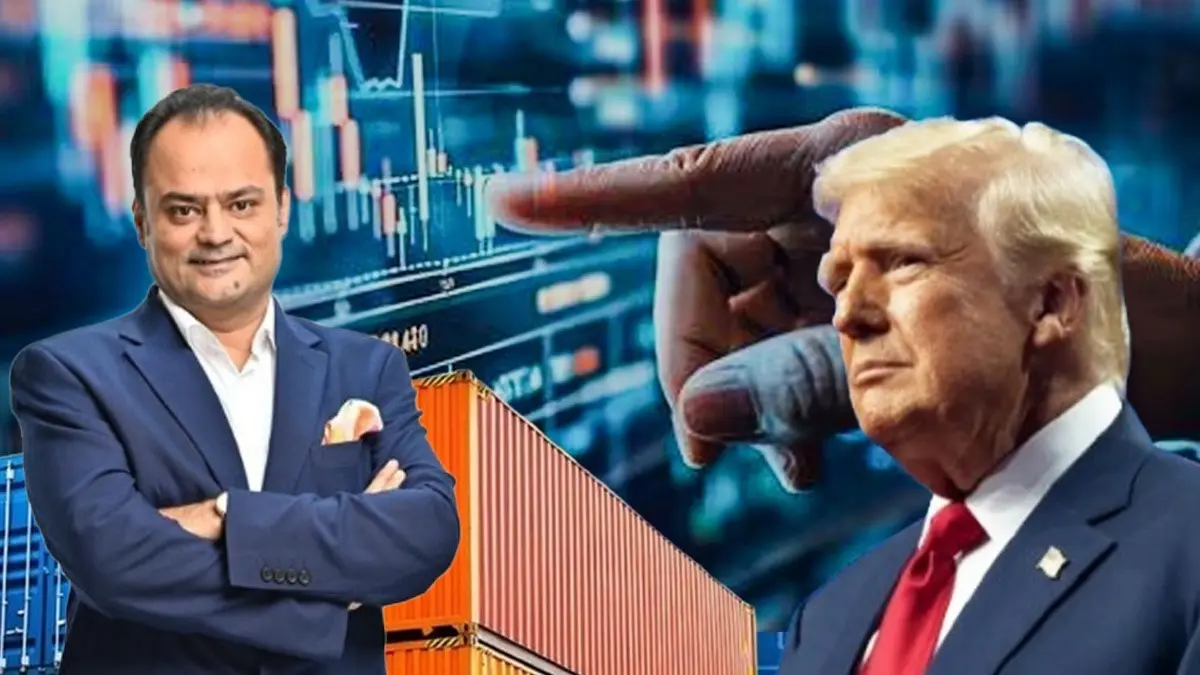
New Delhi: The United States Supreme Court’s 6–3 ruling that President Donald Trump exceeded his authority in using the International Emergency Economic Powers Act (IEEPA) to impose tariffs on dozens of trading partners is far more than a domestic constitutional moment.
By drawing a firm line between the power to regulate imports and the power to levy tariffs, the Court has not only checked executive overreach but also injected fresh uncertainty into the future of American trade protectionism.
Major setback after several earlier victories
Chief Justice John Roberts, writing for the majority, made it clear that while IEEPA allows the president to “regulate … importation,” it does not extend to the imposition of duties.
The decision, Trump’s first major setback at the Court after several earlier victories, now forces the administration to search for alternative pathways if it wishes to restore tariff barriers.
Advertisement
Those alternatives are politically and legally fraught. Congressional approval remains the most constitutionally sound route, tariffs are taxes, and taxation lies squarely within the legislature’s domain.
Appetite for overt protectionism
Yet with wafer thin majorities and midterm elections looming, the appetite for overt protectionism may be limited.
Advertisement
The more obscure possibility lies in invoking Section 338 of the Smoot Hawley Tariff Act of 1930, a never used provision permitting tariffs against countries deemed to be “discriminating” against American commerce.
But deploying a Depression era instrument in a deeply interdependent global economy would be both economically risky and diplomatically incendiary.
Window of opportunity and caution
For India, the ruling opens a complex window of both opportunity and caution.
In the immediate term, the Court’s decision dampens the unilateral tariff risk that had become a defining feature of Trump era trade policy.
India had previously been in Washington’s tariff crosshairs, whether over steel and aluminium duties, disputes around the Generalized System of Preferences, or digital and medical device pricing tensions.
A judicial curb on executive tariff power reduces the probability of sudden, sweeping duties imposed through emergency authorities.
For Indian exporters, particularly in steel, pharmaceuticals, auto components, textiles, and specialty chemicals, this restores a degree of predictability in access to the American market.
That predictability matters because the United States remains one of India’s largest export destinations.
Sectors such as IT services, generic drugs, engineering goods, and gems and jewellery are deeply tied to US demand. When tariff regimes fluctuate unpredictably, Indian firms face pricing volatility, compliance costs, and contract renegotiations.
More politically transactional
A rules bound US trade architecture, one routed through Congress rather than executive decree, allows Indian industry to plan investments, supply chains, and currency hedging with greater confidence.
Yet the medium term picture is more layered. If Trump, or any future president, is forced to seek congressional approval for tariffs, trade policy could become slower but also more politically transactional. India may find itself negotiating not just with the US Trade Representative but with Congressional blocs, industry lobbies, and labour unions.
Market access could be tied to concessions on agriculture, e commerce regulation, data localisation, or intellectual property. In other words, while the risk of sudden tariffs may fall, the complexity of trade bargaining may rise.
There is also a strategic dimension. Over the past decade, India has benefited from supply chain diversification away from China. American firms seeking a China plus one manufacturing base have increasingly looked at India in electronics, pharmaceuticals, and defence manufacturing.
A tariff heavy US regime accelerated that shift by penalising Chinese imports.
More market driven than tariff forced
If judicial constraints dilute the scale or speed of US tariffs on China, the urgency of supply chain relocation could soften at the margin.
India’s manufacturing opportunity would not disappear, structural geopolitical distrust of China remains, but the pace of relocation could become more market driven than tariff forced.
Currency and capital flows add another layer. Tariffs tend to be inflationary and growth dampening for the US economy, often strengthening the dollar in risk off environments.
If tariff escalation is curbed, global risk appetite may improve, supporting capital flows into emerging markets, including India.
That would ease pressure on the rupee and support equity inflows, particularly into export oriented sectors.
Trump Trumped?
To end, what about the economy?
Growth in the US slowed at the end of last year, as consumer spending slackened and the federal government shut down. The world’s largest economy grew at an annual pace of 1.4%% in the three months to December, falling back from a robust 4.4% in the prior quarter.
For India, that slowdown is the most immediate transmission channel.
Regardless of tariff policy, a cooling US economy dampens demand for Indian exports, from IT services billing hours to discretionary retail goods. If American consumption weakens, Indian growth feels the tremor through trade, remittances, and technology spending.
In that sense, the Court’s ruling stabilises one variable, the legality of unilateral tariffs, but leaves the larger equation intact.
India’s economic exposure to the United States will continue to hinge less on emergency trade powers and more on the trajectory of American growth itself.
Trump Trumped? Or Trump Triumph. Time will tell.