
What If Oil Breaches $150? Forecasting the Economic Shock from the America-Israel-Iran War
The killing of Iran’s Supreme Leader has shattered Middle East stability, risking a blockade of the Strait of Hormuz. With 20M barrels at stake, oil could hit $150, triggering global inflation, food crisis, and fiscal collapse in energy-importing nations like India. This is a total economic war.
- Opinion News
- 7 min read

;'%3e%3cpath%20d='m8,15.99c4.41,0,7.99-3.58,7.99-7.99S12.41,0,8,0,0,3.59,0,8s3.58,7.99,7.99,7.99Z'%20style='stroke:%23fff;%20stroke-miterlimit:10;%20stroke-width:.02px;'/%3e%3cpath%20d='m3.08,3.37l3.82,5.11-3.84,4.15h.87l3.37-3.64,2.72,3.64h2.94l-4.04-5.39,3.58-3.87h-.86l-3.1,3.35-2.5-3.35h-2.94Zm1.27.64h1.35l5.97,7.99h-1.35l-5.97-7.99Z'%20style='fill:%23fff;'/%3e%3c/g%3e%3c/svg%3e)


There is a moment in every war when the world stops pretending it is not one. That moment arrived this weekend, when American bombers and Israeli jets struck the heart of Tehran and killed Iran's Supreme Leader Ayatollah Ali Khamenei.
The war between the United States, Israel, and Iran was always going to be about more than missiles and military targets. It was going to be about leverage. And in the Middle East, leverage flows through energy. The escalation - precision strikes, retaliatory barrages, naval posturing in the Gulf - has done what decades of diplomacy tried to avoid: it has injected permanent risk into the Strait of Hormuz. That narrow artery now carries not just oil, but uncertainty. The Middle East has not merely tilted - it has shattered. And somewhere in the wreckage of that diplomatic order, the price of oil is deciding whether the rest of the world burns too.
Let us not dress this up in the polite language of geopolitics. This is a war. And wars, when fought above the Persian Gulf, do not stay in the Gulf.
Twenty million barrels of crude oil pass through the Strait of Hormuz every single day. That is not a statistic. That is the jugular vein of the global economy, and it runs directly through waters that Iran has patrolled, mined, and threatened for decades.
Advertisement
Ask yourself this: if you were sitting in what remains of Iran's military command tonight, having just watched your Supreme Leader die in a strike you could not prevent - what would you reach for? You would reach for the one lever that makes the entire West flinch. You would reach for the Strait.
A full closure of Hormuz is not merely an oil crisis. It is the mother of all bidding wars. Saudi Arabia's spare capacity, Iraq's exports, Kuwait's crude - all of it becomes landlocked overnight. The Asian giants - China, India, Japan, South Korea - would not negotiate. They would panic. And panic, in energy markets, is measured in tens of dollars per barrel, per week.
Advertisement
Oil is not just fuel. It is the bloodstream of the global economy. Every truck that carries food. Every aircraft that connects continents. Every container ship that sustains global trade. Every fertiliser plant that feeds farms. Every factory that converts raw material into product. Energy is embedded in everything. When the cost of energy leaps to $150 because war has destabilised supply routes, that cost does not stay confined to oil markets. It cascades.
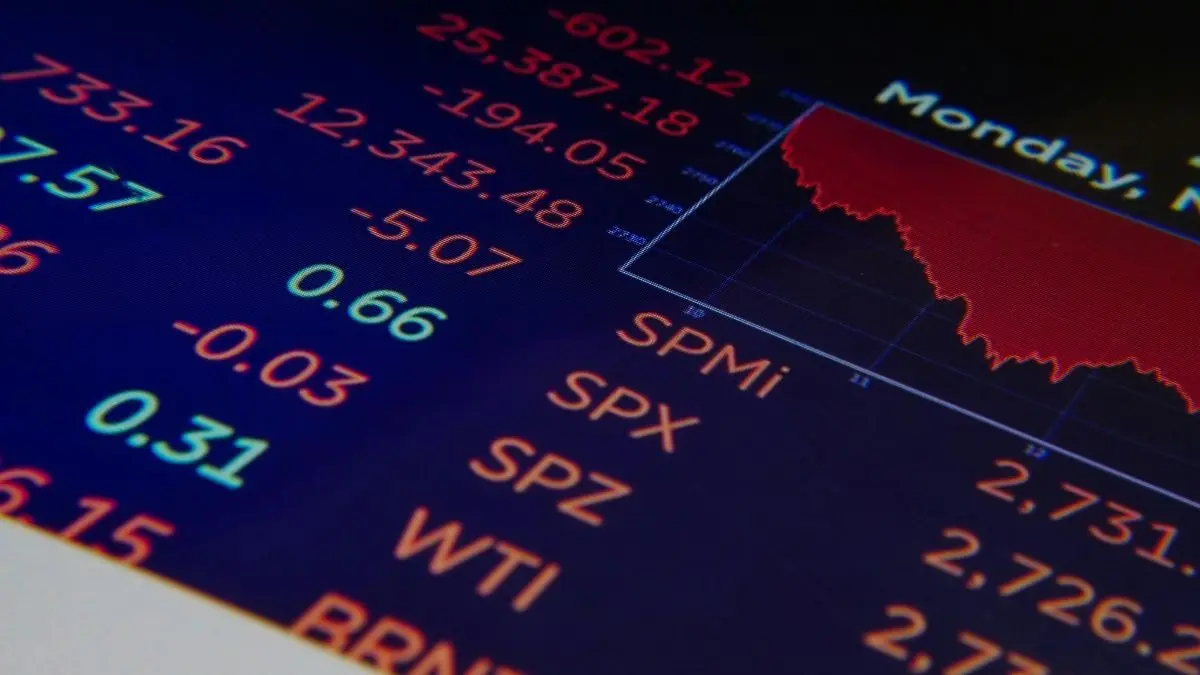
When markets opened Sunday, oil surged 13%. That was before the dust settled. Before the new Iranian leadership was even identified. Before a single tanker re-routed or a single mine was deployed. Brent crude was flirting with $80 on pure fear alone.
Goldman Sachs - not a publication given to theatrical estimates - has already placed $120 to $150 per barrel on the table in the event of an extended Hormuz disruption. That is not a worst-case fantasy. That is a banker's model. That is a number derived from supply tables, reserve calculations, and the cold arithmetic of scarcity.
OPEC rushed to announce an additional 206,000 barrels per day in production. The market barely blinked. Because everyone who understands oil understood the cruel irony: if Hormuz shuts, those extra barrels cannot reach the world either. You cannot cure a severed artery with a Band-Aid.
JPMorgan has rightly identified four variables that will determine whether $150 is prophecy or panic: How much supply is disrupted? For how long? Can alternatives mobilise quickly? And - crucially - what happens next on the battlefield?
The answer to the last question is the one nobody can give tonight. Iran's Supreme Leader is dead. A nation of 85 million people, armed with ballistic missiles, drone swarms, and a Revolutionary Guard that answers to ideology not bureaucracy, has just been decapitated. What replaces that leadership? A pragmatist who calls Washington? Or a hardliner who decides the only response is to make the world bleed at the pump?
One hundred and fifty tankers - crude carriers and LNG vessels - are already anchored beyond the Strait, waiting. They are not waiting because their captains are cautious. They are waiting because nobody, right now, knows what crossing that water costs.
Let me be direct about what $150 oil means for the world beyond Wall Street. It means inflation that central banks cannot contain with interest rate tools. It means food prices spiking, because food travels in trucks and ships that run on diesel. It means the poorest nations - in Africa, South Asia, Latin America - who are already stretched to breaking by post-pandemic debt, tip into famine and civil unrest.
For energy-importing countries, especially in Asia and Europe, $150 oil is not an abstract concern. It is a fiscal crisis. Trade deficits widen. Subsidy burdens swell. Governments face the impossible choice between protecting citizens from fuel price hikes or protecting public finances from collapse. Social unrest becomes a political variable. Energy shocks have historically preceded street anger. Bread prices and fuel prices carry political consequences.
The illusion that renewable energy has insulated the world from oil shocks collapses quickly in a $150 scenario. Yes, solar panels generate power. Yes, electric vehicles are expanding. But aviation still relies on jet fuel. Global shipping still burns marine fuel. Petrochemicals underpin plastics, pharmaceuticals, textiles. The transition is underway, but it is incomplete. The global economy still runs predominantly on hydrocarbons. War reminds us of that brutally.
India, which imports 85% of its crude, will feel this in every kitchen, on every highway, in every state budget. The political consequences of fuel at these prices in a democracy as vast and volatile as India cannot be underestimated.
This is why we cannot treat this conflict as something happening far away, to people we do not know, over causes we do not understand. The Persian Gulf is not a regional problem. It is the world's problem. It has always been. We just had the luxury of pretending otherwise - because the oil kept flowing.
My answer is this: $150 is not inevitable. But it is no longer unthinkable. The base case - swift ceasefire, diplomatic back-channel, de-escalation - gives us oil in the $85 to $105 range. Painful, but survivable. The tail risk - Hormuz mined, tankers burning, Iran's new commanders choosing defiance over deal-making - gives us the worst energy shock since 1973. Perhaps worse.
Here is what I know for certain. Wars have a momentum of their own. Once started, they resist the logic of the men who began them. The U.S. and Israel may have achieved their military objective in Tehran. But oil - unlike a missile - does not obey commanders once it is priced by fear.
If crude breaches $150 because war has destabilized the Strait of Hormuz and injected lasting risk into Gulf shipping lanes, the shock will reverberate through every continent. It will echo in European industrial output, in Asian export competitiveness, in American consumer spending, in African food security. It will force governments to reconsider energy strategies not as climate talking points but as national security imperatives.
The next 72 hours will tell us whether the world gets a war it can contain or a crisis it cannot. Watch the tankers. Watch the Strait. Watch Tehran.
Because right now, the world's most dangerous pipeline is not made of steel. It is made of silence - and that silence is breaking.