
Fact Check: When Will the Century’s Longest Solar Eclipse Actually Happen—2025 or 2027?
Social media posts, blogs, and even some news outlets have been circulating claims that this once-in-a-century event will occur on August 2, 2025. But NASA has now stepped in to clear the air and the timeline.
- Science News
- 2 min read

;'%3e%3cpath%20d='m8,15.99c4.41,0,7.99-3.58,7.99-7.99S12.41,0,8,0,0,3.59,0,8s3.58,7.99,7.99,7.99Z'%20style='stroke:%23fff;%20stroke-miterlimit:10;%20stroke-width:.02px;'/%3e%3cpath%20d='m3.08,3.37l3.82,5.11-3.84,4.15h.87l3.37-3.64,2.72,3.64h2.94l-4.04-5.39,3.58-3.87h-.86l-3.1,3.35-2.5-3.35h-2.94Zm1.27.64h1.35l5.97,7.99h-1.35l-5.97-7.99Z'%20style='fill:%23fff;'/%3e%3c/g%3e%3c/svg%3e)


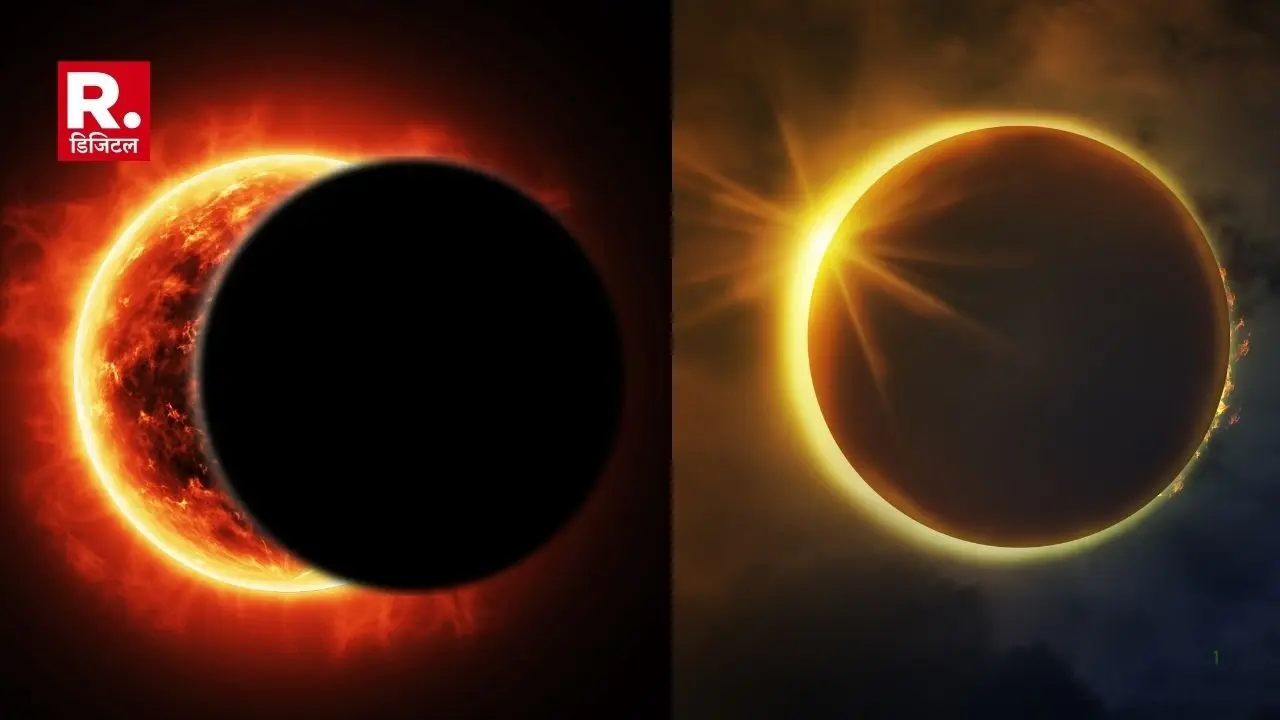
Skygazers have never been this hyped. All eyes are on the skies, and for good reason—the world is bracing to witness the longest solar eclipse of the century. The buzz says it’ll happen on August 2. But there’s just one problem: Which year is it—2025 or 2027?
That’s where the confusion begins.
Social media posts, blogs, and even some news outlets have been circulating claims that this once-in-a-century event will occur on August 2, 2025. But NASA has now stepped in to clear the air and the timeline.
The Truth: It’s August 2, 2027
Advertisement
NASA has officially confirmed that the longest total solar eclipse of the 21st century will happen on August 2, 2027. Not in 2025. Not earlier. The event will last over 6 minutes and 23 seconds at its peak- far longer than typical eclipses, which generally range between 2 to 4 minutes. The eclipse will be visible in India between 4:00 pm and 6:00 pm IST.
This eclipse, dubbed the “Eclipse of the Century”, will be most visible across parts of North Africa, the Middle East, and Europe. In India, it will be seen in Rajasthan, Gujarat, Maharashtra, and Goa.
Advertisement
It’s unclear exactly where the 2025 myth began, but it may have stemmed from confusion with another eclipse—a partial solar eclipse that will happen on September 21, 2025. NASA says it will be visible in Australia, Antarctica, the Pacific Ocean, and the Atlantic Ocean.
The solar eclipse of 2027 is a major one as it will be the longest total eclipse that can be seen from the Earth between years 1991 and 2114. During this eclipse, the Moon will be at its closest point to Earth while the Earth will be at its farthest point from the Sun, resulting in a complete blackout of sunlight and the Moon appearing bigger than usual.