
From Japan to Venezuela: How & Why Earthquakes Occur, Know the Science Behind Recent Global Tremors
According to experts, large earthquakes frequently occur around the world each year because multiple tectonic plate boundaries are continuously accumulating and releasing stress independently.
- Science News
- 4 min read

;'%3e%3cpath%20d='m8,15.99c4.41,0,7.99-3.58,7.99-7.99S12.41,0,8,0,0,3.59,0,8s3.58,7.99,7.99,7.99Z'%20style='stroke:%23fff;%20stroke-miterlimit:10;%20stroke-width:.02px;'/%3e%3cpath%20d='m3.08,3.37l3.82,5.11-3.84,4.15h.87l3.37-3.64,2.72,3.64h2.94l-4.04-5.39,3.58-3.87h-.86l-3.1,3.35-2.5-3.35h-2.94Zm1.27.64h1.35l5.97,7.99h-1.35l-5.97-7.99Z'%20style='fill:%23fff;'/%3e%3c/g%3e%3c/svg%3e)


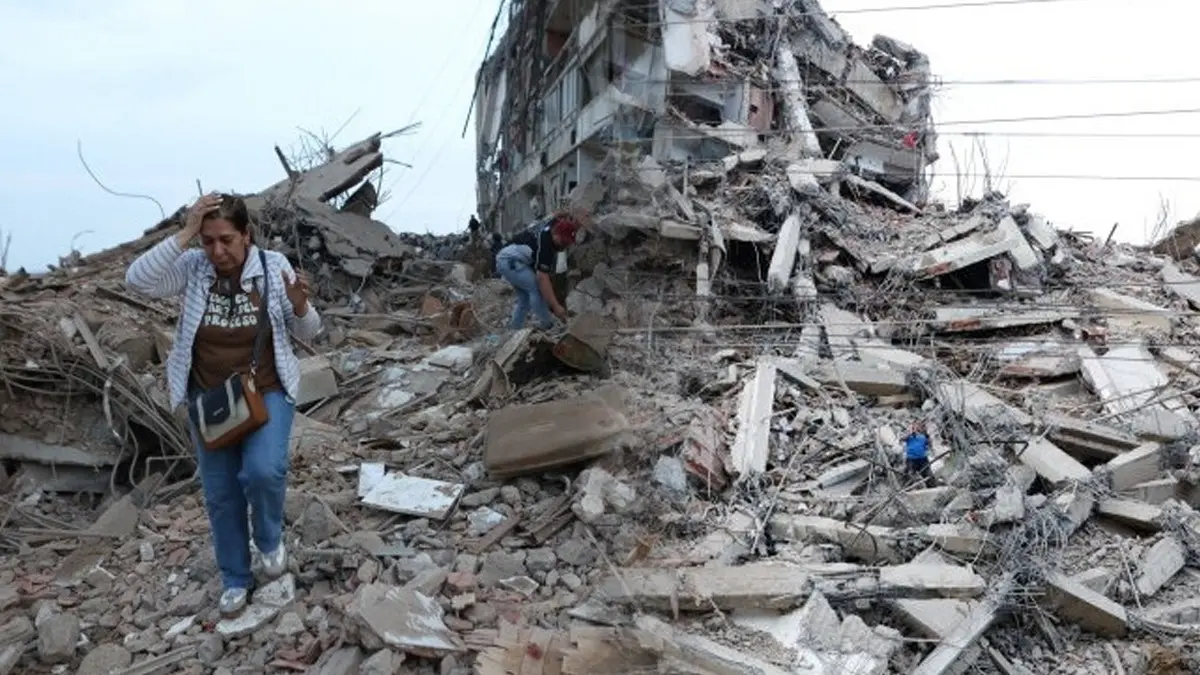
The Earth may appear solid and stable, but beneath its surface lies a dynamic system of constantly moving tectonic plates. When these massive slabs of rock shift suddenly, they release enormous amounts of stored energy, producing seismic waves that shake the ground. This phenomenon is known as an earthquake.
The past week has once again highlighted Earth's restless nature, with several powerful earthquakes striking different parts of the globe. Although these events occurred within days of one another, seismologists say they are not directly connected but are independent releases of tectonic stress along different fault systems.
What Causes an Earthquake?
Earth's outer shell, or lithosphere, is divided into several tectonic plates that float on the semi-fluid mantle beneath them. These plates move at a rate of only a few centimetres each year, but their interactions create immense pressure.
When stress builds up along faults--fractures in the Earth's crust--the rocks eventually break or slip. The sudden movement releases energy in the form of seismic waves, causing the ground to shake.
Advertisement
Most earthquakes occur along three types of plate boundaries:
--Convergent boundaries, where plates collide.
Advertisement
--Divergent boundaries, where plates move apart.
--Transform boundaries, where plates slide past each other.
Some earthquakes also occur within plates due to ancient fault lines being reactivated by tectonic stress.
Why Can't Earthquakes Be Predicted?
Scientists can identify regions that are prone to earthquakes by studying plate boundaries, fault systems and historical seismic activity. However, accurately predicting the exact time, location and magnitude of an earthquake remains beyond current scientific capability.
Modern seismic networks, satellite measurements and GPS observations help monitor crustal movement and improve hazard assessment, but they cannot forecast when a fault will rupture.
The Last Three Major Earthquakes in the Past Week
1. Venezuela's Devastating Twin Earthquakes
The most destructive event of the week occurred on June 24, when two powerful earthquakes measuring 7.2 and 7.5 struck just seconds apart along Venezuela's northern coast. The rare "earthquake doublet" caused widespread devastation around Caracas and La Guaira, collapsing buildings, disrupting transport and triggering a massive international rescue effort. Hundreds were killed, thousands were injured and many people remain missing.
2. Northern Japan Earthquake
A magnitude 7.2 earthquake struck offshore northern Japan within hours of the Venezuela disaster. Although Japan's strict building standards and earthquake preparedness helped limit damage, the quake served as another reminder of the country's position along the highly active Pacific "Ring of Fire." Experts have stressed that the Japan and Venezuela earthquakes were unrelated despite occurring on the same day.
3. Pakistan-Afghanistan Earthquake
On June 27, a magnitude 5.9–6.1 earthquake shook Afghanistan's Hindu Kush region, with tremors felt across Pakistan, including Islamabad and parts of Punjab and Khyber Pakhtunkhwa. Authorities reported no major damage or casualties, but the event underscored the seismic vulnerability of the Hindu Kush, where the Indian Plate continues to collide with the Eurasian Plate.
Are These Earthquakes Connected?
The close timing of several powerful earthquakes prompted speculation about a global chain reaction. However, earthquake scientists say there is no evidence that the events were causally linked.
According to experts, large earthquakes frequently occur around the world each year because multiple tectonic plate boundaries are continuously accumulating and releasing stress independently. While one earthquake can trigger aftershocks--or occasionally influence nearby faults--the Venezuela, Japan and California events observed this week occurred on separate tectonic systems and are considered coincidental rather than interconnected.
Living with a Dynamic Planet
Earthquakes cannot be prevented, but their impact can be reduced through strict building codes, earthquake-resistant infrastructure, early warning systems and public preparedness. Countries such as Japan have demonstrated that effective engineering and disaster planning can dramatically reduce casualties even during powerful seismic events.
As Earth's tectonic plates continue their slow but relentless movement, earthquakes will remain an unavoidable part of our planet's geological evolution. The challenge for societies is not to stop them, but to be better prepared when the ground inevitably shakes.