
India Eyes the Moon: Gaganyaan Set for 2027 Launch, First Crewed Lunar Mission by 2040
Highlighting India’s growing space capabilities, Narayanan said the country is now ranked number one globally in nine space-related categories, from finding water on the Moon to achieving the world’s first soft landing near the lunar south pole through the Chandrayaan-3 mission.
- Science News
- 2 min read

;'%3e%3cpath%20d='m8,15.99c4.41,0,7.99-3.58,7.99-7.99S12.41,0,8,0,0,3.59,0,8s3.58,7.99,7.99,7.99Z'%20style='stroke:%23fff;%20stroke-miterlimit:10;%20stroke-width:.02px;'/%3e%3cpath%20d='m3.08,3.37l3.82,5.11-3.84,4.15h.87l3.37-3.64,2.72,3.64h2.94l-4.04-5.39,3.58-3.87h-.86l-3.1,3.35-2.5-3.35h-2.94Zm1.27.64h1.35l5.97,7.99h-1.35l-5.97-7.99Z'%20style='fill:%23fff;'/%3e%3c/g%3e%3c/svg%3e)


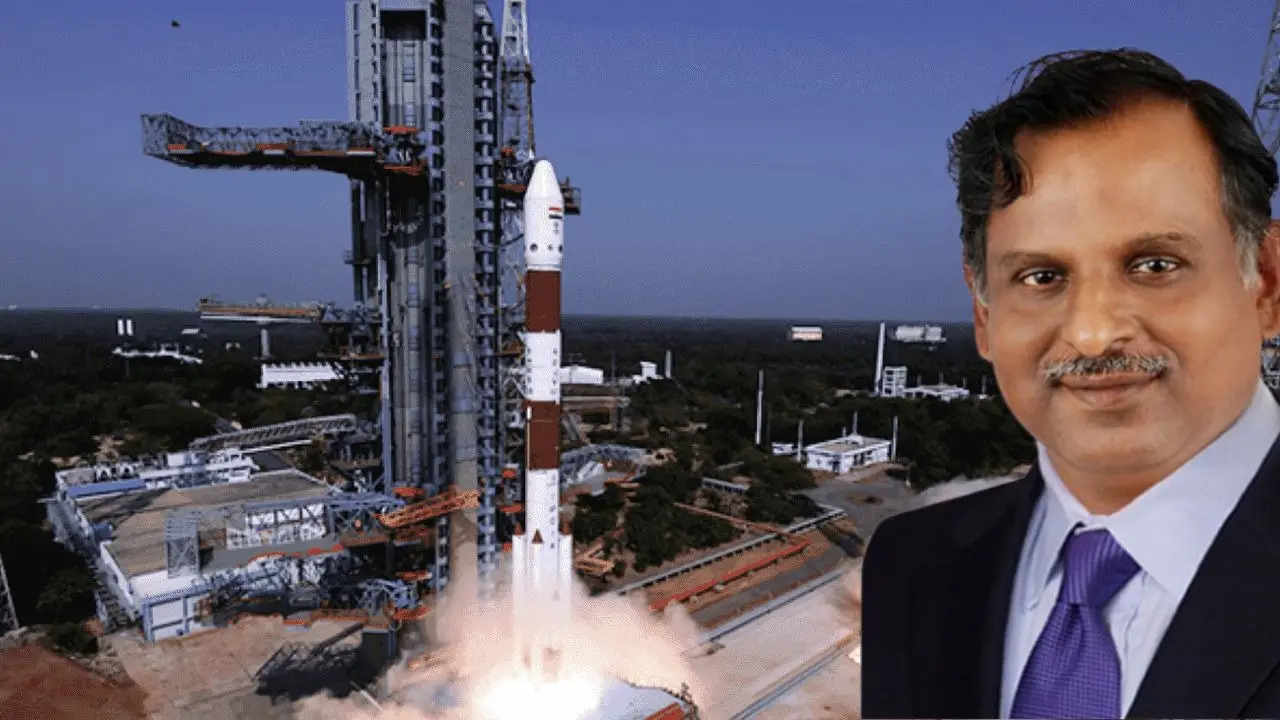
India’s ambitious human spaceflight mission ‘Gaganyaan’ is firmly on track for launch in 2027, Indian Space Research Organisation (ISRO) Chairman V. Narayanan told a news agency. The mission, which will mark India’s entry into the elite group of nations capable of sending humans to space, is one of the most complex scientific endeavours ever undertaken by the country.
Narayanan said preparations are progressing steadily, with multiple test flights and crew safety systems already in advanced stages. “Our goal is to ensure a safe, successful, and sustainable human spaceflight programme. The first Gaganyaan mission is expected to launch in 2027,” he said.
Prime Minister Narendra Modi, who has been closely monitoring India’s space achievements, has set an ambitious target of India’s first crewed lunar mission by 2040. Narayanan confirmed that plans are already being drawn up for future deep-space missions that could “eventually allow Indian citizens to travel to the Moon and back.”
Highlighting India’s growing space capabilities, Narayanan said the country is now ranked number one globally in nine space-related categories, from finding water on the Moon to achieving the world’s first soft landing near the lunar south pole through the Chandrayaan-3 mission.
Advertisement
He also revealed that over 300 Indian startups are currently working in the space technology sector, manufacturing satellites and developing next-generation systems that could boost both India’s domestic and international space missions.
ISRO has so far launched 433 satellites belonging to 34 countries, further cementing India’s role as a trusted global space partner. The Aditya-L1 mission, which studies the Sun, has already produced over 15 terabits of solar data, providing new insights into coronal mass ejections and space weather.
Advertisement
Looking ahead, Narayanan said India will need to develop rockets capable of lifting up to 80,000 kilograms into low Earth orbit to meet future human and lunar exploration goals. He added that India remains open to international collaborations that align with its scientific and strategic priorities.