
Your Name from Space? NASA's Satellite Tool Lets You Spot It on Earth | Here's How It Works
The tool is called “Your Name in Landsat", which allows users to type their name and instantly generate it using satellite imagery, where each letter is formed from natural landscapes across the planet.
- Science News
- 2 min read

;'%3e%3cpath%20d='m8,15.99c4.41,0,7.99-3.58,7.99-7.99S12.41,0,8,0,0,3.59,0,8s3.58,7.99,7.99,7.99Z'%20style='stroke:%23fff;%20stroke-miterlimit:10;%20stroke-width:.02px;'/%3e%3cpath%20d='m3.08,3.37l3.82,5.11-3.84,4.15h.87l3.37-3.64,2.72,3.64h2.94l-4.04-5.39,3.58-3.87h-.86l-3.1,3.35-2.5-3.35h-2.94Zm1.27.64h1.35l5.97,7.99h-1.35l-5.97-7.99Z'%20style='fill:%23fff;'/%3e%3c/g%3e%3c/svg%3e)


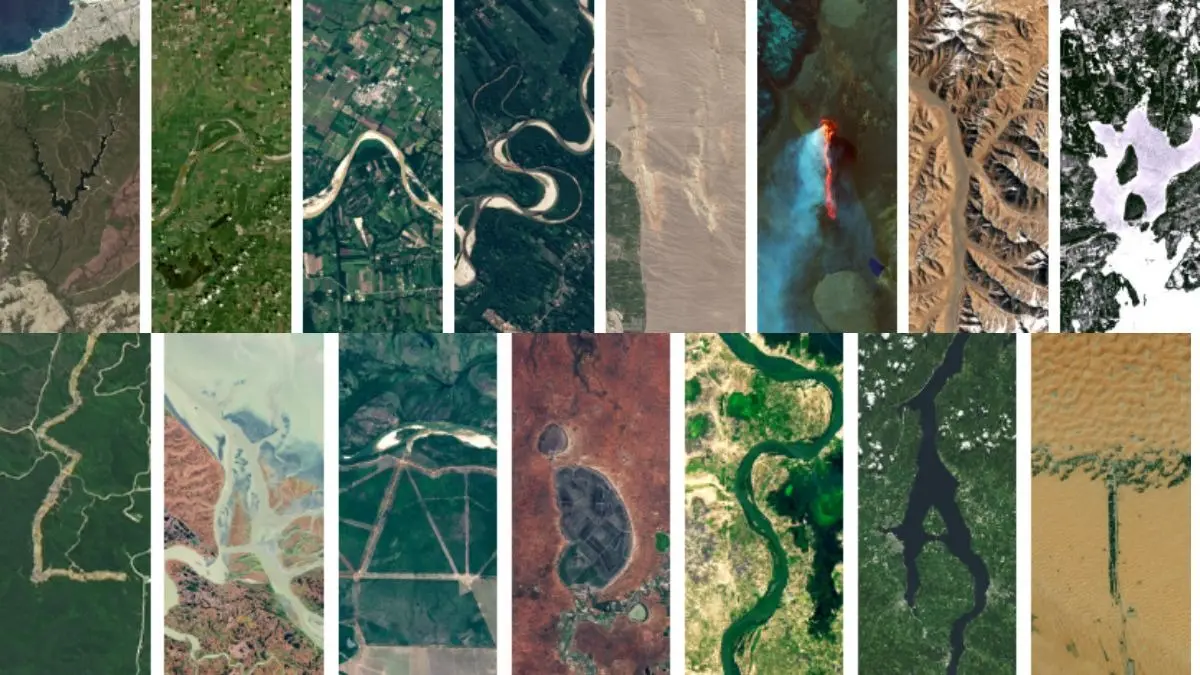
This Earth Day, NASA has introduced a unique interactive experience that lets people see their names written using real images of Earth captured from space.
Called “Your Name in Landsat", the tool allows users to type their name and instantly generate it using satellite imagery, where each letter is formed from natural landscapes across the planet.
It is developed by Ross Walter, Allison Nussbaum, and Ginger Butcher from the Landsat Project Science Support Team.
With just a simple input, users can create a visual representation of their name using actual Earth features such as rivers, deserts, forests, and coastlines.
Advertisement
The tool pulls from decades of satellite data, stitching together images to form letters that collectively spell out the entered name. Users can then view and export the final graphic.
The experience blends creativity with science, offering a fresh way to engage with Earth observation data.
Advertisement
How the Tool Work?
The “Your Name in Landsat” feature uses real satellite images collected over the years and maps them to resemble alphabetic shapes.
Each letter is not artificially created but is derived from patterns found in natural landscapes captured by Landsat satellites. This makes every generated name a unique composition of real Earth imagery.

What is the Landsat Program?
The Landsat Program is a long-running series of Earth-observing satellite missions jointly managed by NASA and the U.S. Geological Survey (USGS).
Launched in 1972, Landsat provides the longest continuous space-based record of Earth’s land surface, offering decades of data that track environmental and geographical changes.
Over the years, Landsat has become a critical resource for scientists, policymakers, and planners.
Its data has been used to study urban expansion, shifting coastlines, agricultural patterns, and forest changes. Because of its consistency and scientific accuracy, Landsat is often referred to as the “gold standard” in satellite data.
The program’s openly accessible data has also contributed significantly to the economy, with estimates suggesting a value of $25.6 billion to the United States in 2023 alone.