
Private Space Exploration Advances as Intuitive Machines Attempts Moon Landing
Intuitive Machines made history last year as the first private company to land a spacecraft on the moon, but the mission wasn’t without problems.
- Science News
- 3 min read

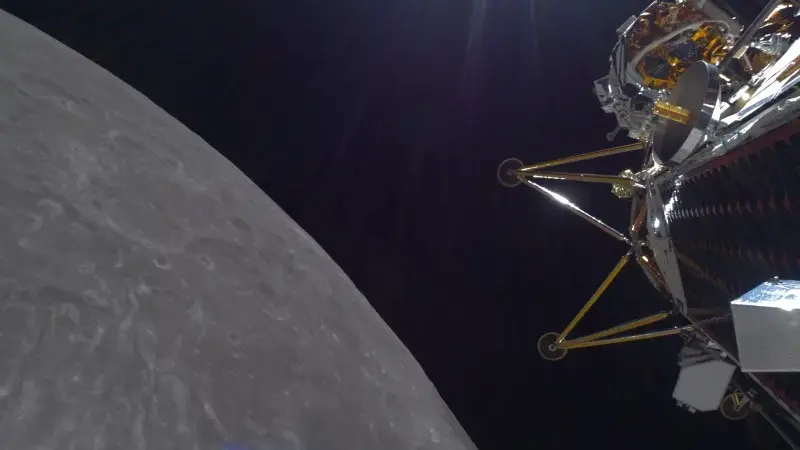
Houston-based space company Intuitive Machines is preparing for its second attempt at landing a spacecraft on the surface of the moon. The company’s Athena lander is expected to touch down near Mons Mouton, a flat-topped mountain about 100 miles from the moon’s south pole, around 12:30 p.m. EST (US) today.
If successful, the mission will mark another step toward commercial lunar exploration, bringing NASA and private companies closer to unlocking the secrets of the moon’s south pole region, which is believed to hold valuable water ice deposits.
A Mission to Find Water Ice
Athena, a solar-powered lander standing about 15 feet tall—roughly the height of a shorter adult giraffe, according to Intuitive Machines—carries several scientific instruments. Among them is a NASA-built drill designed to dig about three feet below the lunar surface in search of volatile compounds, including water.
Some craters near the moon’s south pole remain permanently in shadow, and scientists believe water ice may be hidden beneath the surface. That water could be a crucial resource for future moon bases, providing drinking water and even fuel for spacecraft. Several nations are in a race to be the first to explore and potentially claim these resources.
Advertisement
A Fleet of Tiny Rovers
Though Athena itself will remain stationary after landing, it carries a set of small rovers designed to explore the lunar surface.
- One rover, called Grace, will hop across the moon’s surface using a small rocket engine.
- Another will attempt to drive autonomously on the rough lunar terrain.
- Japan’s Dymon Corporation has included a tiny, rolling rover called YAOKI, which will capture images of the landing site.
A Challenging Lunar Landing
Landing on the moon is particularly difficult due to the lack of an atmosphere, which means parachutes can’t be used to slow down a spacecraft’s descent. Instead, the lander must rely on precise rocket engine firings to guide itself to a safe landing site—all without real-time human control.
Advertisement
Because of the moon’s distance from Earth, communication delays make it impossible for mission control to steer the lander in real-time, so Athena must navigate and land autonomously while avoiding rocks, craters, and other hazards.
Adding to the challenge, commercial lunar missions often operate on smaller budgets than government-funded ones, meaning they accept a higher risk of failure. That risk became apparent just yesterday, when NASA lost contact with Lunar Trailblazer, a mission that was sharing a ride with Athena to the moon.
Learning from Past Challenges
Intuitive Machines made history last year as the first private company to land a spacecraft on the moon, but the mission wasn’t without problems. The lander misjudged its descent, hit the surface too hard, and tipped onto its side, breaking a leg in the process.
This time, the company hopes to stick the landing more smoothly, building on lessons from its previous attempt.
A New Era of Private Lunar Exploration
The Intuitive Machines landing attempt comes just days after another private company, Firefly Aerospace, successfully landed on the moon for the first time. Both missions are part of NASA’s Commercial Lunar Payload Services (CLPS) initiative, which aims to use private industry to accelerate lunar exploration.
If Athena lands successfully, it will mark a major milestone for commercial spaceflight—and bring humanity one step closer to establishing a long-term presence on the moon.