
Jupiter at Its Biggest and Brightest: Here’s How to Watch It
Kick off 2026 with stunning celestial events! Witness Jupiter shining brighter than ever, Saturn’s close encounter with the moon, and the beautiful Beehive Cluster lighting up the night sky. Get all the skywatching tips you need for January 2026.
- Science News
- 3 min read

;'%3e%3cpath%20d='m8,15.99c4.41,0,7.99-3.58,7.99-7.99S12.41,0,8,0,0,3.59,0,8s3.58,7.99,7.99,7.99Z'%20style='stroke:%23fff;%20stroke-miterlimit:10;%20stroke-width:.02px;'/%3e%3cpath%20d='m3.08,3.37l3.82,5.11-3.84,4.15h.87l3.37-3.64,2.72,3.64h2.94l-4.04-5.39,3.58-3.87h-.86l-3.1,3.35-2.5-3.35h-2.94Zm1.27.64h1.35l5.97,7.99h-1.35l-5.97-7.99Z'%20style='fill:%23fff;'/%3e%3c/g%3e%3c/svg%3e)


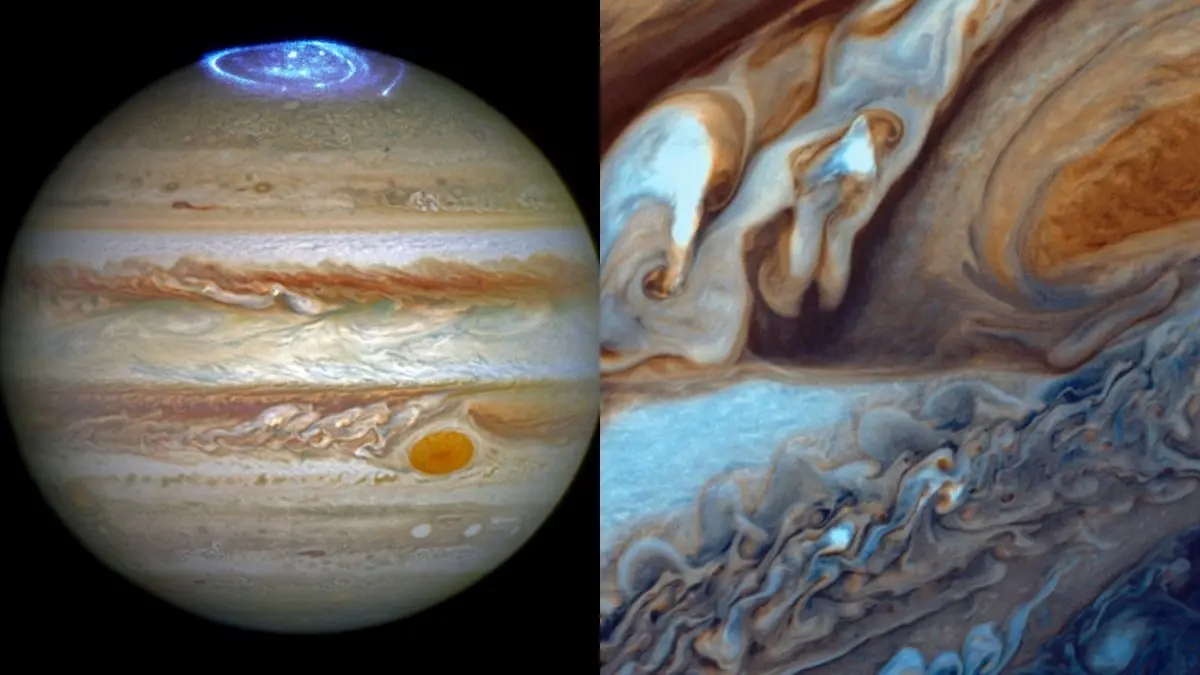
Skywatchers are in for a celestial treat as Jupiter reaches opposition on January 10, 2026, making it the brightest and largest it will appear in the night sky this year, according to NASA.
This alignment places Earth directly between Jupiter and the Sun, allowing the giant planet to shine at its maximum brilliance and apparent size.
What is Jupiter at Opposition?
On January 10, Jupiter will be at what astronomers call “opposition”, and during this event, Earth lies directly between Jupiter and the Sun, causing sunlight to fully illuminate the planet’s face as seen from Earth.
NASA underlines that this alignment makes Jupiter brighter and larger than at any other point in the year.
Advertisement
How to Spot ‘Brightest and Largest Jupiter’
According to NASA, Jupiter will be visible in the eastern sky and can be observed throughout the evening. The planet will appear in the constellation Gemini and will stand out as one of the brightest objects in the night sky.
Only the Moon and Venus will outshine Jupiter during this period, making it easy to spot even with the naked eye. Clear skies and minimal light pollution will further enhance the viewing experience.
Advertisement

Other Key Skywatching Events in January
NASA has highlighted several additional celestial events for skywatchers besides Jupiter to enjoy throughout January.
January 23: Saturn and Moon Conjunction
On January 23, the Moon and Saturn will appear close together in the night sky in a phenomenon known as a conjunction. While the two objects are actually far apart in space, they will appear visually close from Earth.
- To spot the pair, look toward the western sky, where Saturn will be visible just below the Moon, shining brightly.
Beehive Cluster Visible Throughout January
The Beehive Cluster, also known as Messier 44 or M44, will be visible throughout the month of January, according to NASA. This open star cluster is made up of at least 1,000 stars and is a loosely bound group within the Milky Way galaxy.
Open clusters like the Beehive are common in the galaxy and offer striking views through binoculars or small telescopes.
- NASA recommends looking toward the eastern night sky after sunset and before midnight to observe the Beehive Cluster.
- The best viewing opportunities are around mid-January, when the cluster is positioned at an ideal height in the sky.
With Jupiter at its most brilliant, a Moon-Saturn conjunction, and the Beehive Cluster visible all month, January offers a rewarding start to 2026 for astronomy enthusiasts.
NASA shares these tips for sky watchers to take advantage of these events by finding a dark viewing location and allowing time for eyes to adjust to the night sky.