
India signs Artemis Accords, NASA-ISRO plan joint ISS mission in 2024
The Artemis Accords will bring India on the list of nations making contributions to the sustainable exploration of the Moon, Mars and beyond.
- Science News
- 5 min read

;'%3e%3cpath%20d='m8,15.99c4.41,0,7.99-3.58,7.99-7.99S12.41,0,8,0,0,3.59,0,8s3.58,7.99,7.99,7.99Z'%20style='stroke:%23fff;%20stroke-miterlimit:10;%20stroke-width:.02px;'/%3e%3cpath%20d='m3.08,3.37l3.82,5.11-3.84,4.15h.87l3.37-3.64,2.72,3.64h2.94l-4.04-5.39,3.58-3.87h-.86l-3.1,3.35-2.5-3.35h-2.94Zm1.27.64h1.35l5.97,7.99h-1.35l-5.97-7.99Z'%20style='fill:%23fff;'/%3e%3c/g%3e%3c/svg%3e)


India finally signed the Artemis Accords, on Thursday, more than two years after they were introduced. With India's inclusion into the Artemis Accords, the Indian Space Research Organisation (ISRO) will be a part of global collaboration toward considerate space exploration. So far, 26 countries have joined the US-led effort for a peaceful and sustainable presence in space.
"India joins 26 other countries committed to peaceful, sustainable, and transparent cooperation that will enable exploration of the Moon, Mars, and beyond," an official statement from the White House read.

(Nations part of the Artemis Accords; Image: NASA)
3 things you need to know
- The Artemis Accords were launched on October 13, 2020 with Australia, Canada, Italy, Japan, Luxembourg, the UAE, the UK and the US as core members.
- It is co-led by the US Department of State and the American space agency, NASA.
- The announcement comes when PM Modi is on his first state-visit to the US.
What are the Artemis Accords?
The Artemis Accords are a set of non-binding set of principles that ensure that outer space activities must be conducted for peaceful purposes and with transparency. It is based on the Outer Space Treaty 1967 which was devised at the height of the cold war between the US and the Soviet Union.
Advertisement
It all began when the USSR or Soviet Union was getting ready to launch the world's first satellite Sputnik and was in the midst of testing its first Intercontinental Ballistic Missile (ICMB). According to the US Department of State, the USSR rejected America's proposal for international verification of the testing of space objects. It basically was an inspection system proposed by the West as part of its disarmament effort put forward in 1957.

(Sputnik 1 satellite; Image: NASA)
Advertisement
In the years that followed, there were several disagreements between the US and the USSR as the latter refused to agree to restrict outer space to peaceful uses because the former had foreign bases with short-range and medium-range missiles. It was on June 16, 1966, when both countries submitted their versions of the draft treaties and USSR's was accepted as it covered the whole outer space environment (including low-Earth orbit) as opposed to the US' version which only dealt with celestial bodies. The Outer Space Treaty then entered into force on October 10, 1967. Since the USSR collapsed in 1990, this treaty evolved and added new objectives, which are listed below:
1. Peaceful use: Affirming cooperative activities take place for peaceful purposes and in accordance with international law.
2. Transparency: Artemis Accords signatories are required to disseminate information regarding national space policies and projects.
3. Interoperability: Ensuring potential for safe and robust space exploration by enhancing interoperability.
4. Emergency assistance: Offering necessary assistance to personnel in outer space who are in distress under the Agreement on the Rescue of Astronauts, the Return of Astronauts and the Return of Objects Launched into Outer Space.
5. Registration of space objects: Registering space objects under the Registration Convention to help mitigate the risk of harmful interference.
6. Protecting heritage and ulitisation of space resources: The Artemis Accords also require the signatories to preserve historically significant human or robotics landing sites, artifacts, spacecraft, and other evidence of activity on celestial bodies. The members are also required to utilise space resources in a manner that complies with the Outer Space Treaty.
The Artemis Accords will bring India to the list of nations making contributions to the lawful exploration of the Moon, Mars and beyond. This might also take the collaborations between NASA and ISRO to the next level, considering the former's plan to colonise the Moon. So far, America's partners like Japan and Canada have had their space participation enhanced, as NASA will send a Canadian astronaut to the Moon with Artemis 2 mission and may soon send another from Japan.
The Artemis Accords draws its name from NASA's Artemis Program which aims to establish a sustainable human presence on the Moon as a test bed for Mars. The program began with the launch of the Artemis 1 mission on November 16, 2022, and the second is scheduled for launch in late 2024.

(Artistic representation of astronauts working at a lunar base; Image: NASA)
NASA to train Indian astronauts for ISS mission
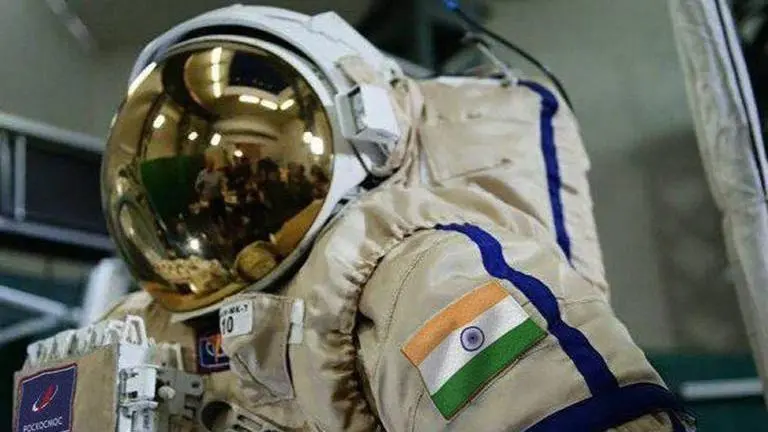
As for India's advancement, an official revealed that ISRO and NASA have agreed to a joint mission to the International Space Station (ISS) in 2024. This has increased the possibility of an Indian national flying to the space station for a short-term space mission soon. Apart from the signing of the Artemis Accords, NASA has also promised training of Indian astronauts for the space mission next year. "Additionally, NASA and the ISRO are developing a strategic framework for human spaceflight cooperation by the end of 2023," the White House said.

(India and US flags resting on the space station's cupola window; Image: Twitter/@Astro_Raja)
Currently, ISRO is preparing for the Gaganyaan mission which would see Indian astronauts launch into space for the first time no earlier than 2024 end, with the possibility of the mission slipping into 2025. With NASA in the picture now, Indian astronauts could reach space sooner with better preparations. The Artemis Accords will also open assistance from other nations and possibly encourage technology transfer to ISRO for bigger missions.
However, ISRO already has the support of the European Space Agency (ESA) which has promised ground support for Chandrayaan-3 and Aditya-L1 (India's first solar) missions. Besides, ISRO and the Japan Aerospace Exploration Agency (JAXA) are also in talks for a moon mission and a mission to Venus possibly in 2028. NISAR (NASA-ISRO Synthetic Aperture Radar) mission scheduled for launch in early 2024 is another example of the NASA-ISRO partnership.