
Updated 30 May 2022 at 17:14 IST
Boeing Space shares glorious in-orbit view from its Starliner capsule during OFT-2 mission
Boeing Space recently succeeded in its OFT-2 mission to the International Space Station and showed NASA that it is ready for space missions.
- Science News
- 2 min read

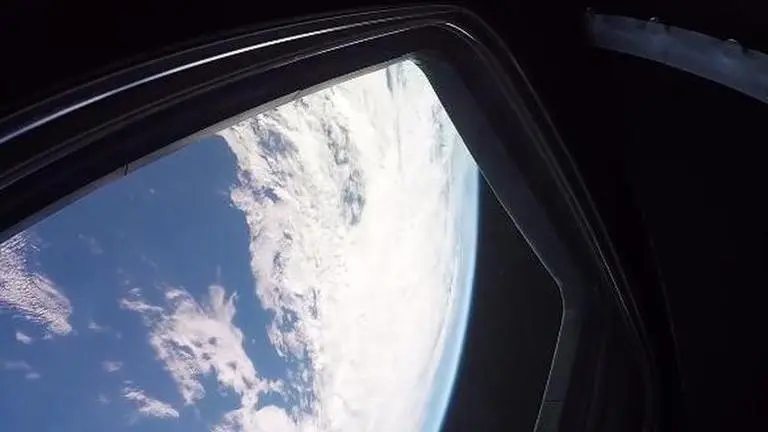
Boeing Space recently succeeded in its second mission to the International Space Station (ISS) and showed the National Aeronautics and Space Administration (NASA) that it is ready for space missions in the low-Earth orbit. Starliner was launched under the uncrewed mission named Orbital Flight Test-2 that took off from Space Launch Complex-41 at Cape Canaveral Space Force Station in Florida atop United Launch Alliance’s (ULA) Atlas V rocket. After spending five days docked at the space station, the capsule made its landing in New Mexico on May 26.
Celebrating the successful completion of the NASA-backed OFT-2 mission, Boeing recently shared a clip that was recorded from the camera inside the Starliner. The minute-long video offers a glimpse into the in-orbit views while the capsule was on its way to the space station. According to Boeing, the spacecraft reached speeds up to 28,100 kilometres per hour as it cruised through the Earth’s atmosphere to reach the ISS. Check out the video below.
#TopGun pilots aren't the only ones with the #NeedForSpeed!#RosietheRocketeer and Kerbalnaut Jebediah Kerman reached 17,500 m.p.h. when #Starliner was orbiting Earth on the way to @Space_Station. Check out the on orbit views here. pic.twitter.com/Ac0lj1adzv
— Boeing Space (@BoeingSpace) May 28, 2022
"Rosie the Rocketeer and Kerbalnaut Jebediah Kerman reached 17,500 m.p.h. when #Starliner was orbiting Earth on the way to Space Station", Boeing wrote in its tweet.
Who is Rosie the Rocketeer?
Rosie the Rocketeer is named after World War II’s Rosie the Riveter "as an ode to the women who have blazed a trail in aerospace and human spaceflight", as per Boeing. It is a mannequin that was used to gather data about the effects astronauts would feel during their space mission. For Boeing's second orbital test flight, the mannequin had donned a blue spacesuit and red polka dot headscarf, along with a matching face mask. The mannequin, which weighed 81 kgs, Rosie was fitted with 15 sensors to monitor the movement of all four crew seats in the Starliner capsule.
Advertisement
What's next for Boeing?
During a press briefing following Starliner's return, the company had revealed that the OFT-2 teams will soon move on to the crewed ISS mission, the date of which has not been finalised although a launch later this year is expected. With the second mission, Boeing had a chance to redeem itself to gain a NASA license for transporting astronauts to and from the space station. While the mission did end in a success, the Starliner's two thrusters failed while inserting the spacecraft into orbit. Thankfully, the backup thruster provided the needed assistance and pushed the capsule toward the space station.
Published By : Harsh Vardhan
Published On: 30 May 2022 at 17:14 IST