
Updated 6 June 2022 at 18:08 IST
NASA to test record-breaking GPS system on Moon under Artemis mission for first time
NASA will launch the Lunar GNSS Receiver Experiment (LuGRE) payload to the Moon to test the new lunar navigation capability using Earth’s satellite system.
- Science News
- 3 min read

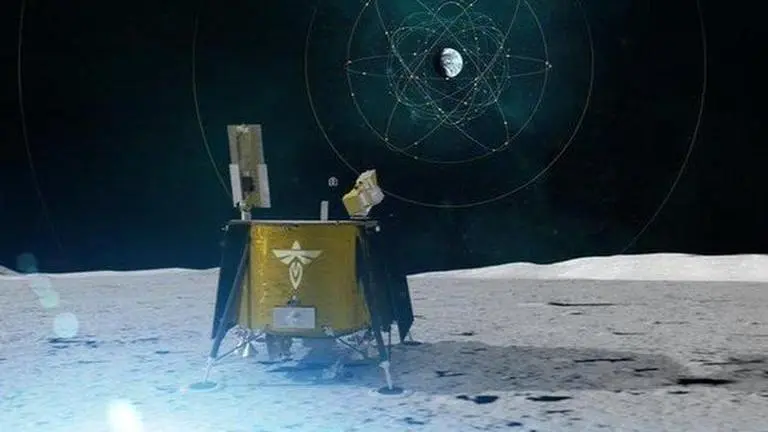
The forthcoming Moon missions under the Artemis Program would mark many firsts and NASA has added another one to the list. The US space agency believes that new navigation capabilities will be of significance to science, discovery and human exploration, owing to which, it is planning to test a GPS-like navigation system around the Moon. In a new update pertaining to the Artemis Program, NASA revealed that it will launch the Lunar GNSS Receiver Experiment (LuGRE) payload to test the new lunar navigation capability using Earth’s Global Navigation Satellite System (GNSS).
A new @NASA_technology could provide @NASAArtemis with the benefits of global navigation systems like GPS at the Moon! The Lunar GNSS Reciever Experiment (LuGRE) will demo the capability on an upcoming @NASA Commercial Lunar Payload Services mission. https://t.co/9iAWqqwcUo pic.twitter.com/O5jw7MDQd1
— NASA's Near Space Network (@NearSpaceNet) November 18, 2021
GNSS stands for Global Navigation Satellite System which involves satellite constellations and is used for position, navigation and timing services on Earth. The Global Positioning System (GPS) and Europe's Galileo are similar types of satellite-based navigation systems. Being developed by the Firefly Aerospace and the Italian Space Agency (ASI), the LuGRE system is scheduled for delivery to the Moon inside the Blue Ghost lander no earlier than 2024.
LuGRE mission profile
The under-development LuGRE will function by receiving signals from both GPS and Galileo constellations around Earth. These signals will then be utilised by the payload to calculate the first-ever location fixes both while approaching the lunar orbit and on the surface after its landing. According to NASA, LuGRE will also perform several navigation experiments at different altitudes and in the lunar orbit using the signals it collects during its multi-week flight to the Moon.
Once the payload lands with Blue Ghost, it will deploy its antenna and begin data collection over the next 12 days or more. After the LuGRE's role is complete on the Moon, the information collected will be beamed to Earth for scientists to figure out how to develop a GNSS system around the Moon.
Advertisement
Notably, this new navigation mission is NASA's attempt to expand the reach of these GNSS services also around Earth. According to the agency, its Magnetospheric Multiscale Mission once used GPS at an altitude of 70,000 km above the Earth, a record that was broken by the same mission when it operated using Earth's GNSS at an altitude of 1,87,166 km.
"LuGRE is the latest effort in a long line of missions designed to expand high-altitude GNSS capabilities", Fabio Dovis, LuGRE co-principal investigator at the ASI said in a statement. "We’ve developed a cutting-edge experiment that will serve as the foundation for operational GNSS systems at the Moon". Interestingly, the success of this mission will also pave way for the development of LunaNet, an architecture planned to enhance network capabilities on the Moon.
Advertisement
Published By : Harsh Vardhan
Published On: 6 June 2022 at 18:08 IST