
Plastic pollution labelled 'planetary emergency' in new report; oceans worst affected
The report said that this issue is equally serious as climate change and biodiversity loss and suggested countries to set a target to get rid of plastic waste.
- Science News
- 2 min read


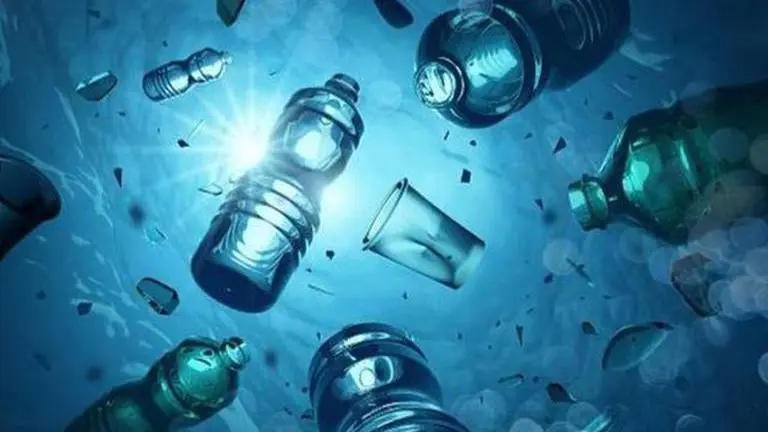
The Environmental Investigation Agency (EIA) has called upon nations to combat rising plastic pollution as it has warned that the issue has turned into a planetary emergency. In its new report concerning plastic waste, the agency said that this issue is equally serious as climate change and biodiversity loss and suggested that countries should set a target to get rid of plastic waste. It highlighted that plastic pollution can trigger 'large-scale harmful environmental changes’ and it also affects human health and worsens biodiversity loss and climate change.
The EIA is a non-governmental organisation based in London and Washington DC and made highlighted these aforementioned points in its report titled Connecting the Dots: Plastic pollution and the planetary emergency. Revealing that the plastic emission in oceans will triple by 2040, EIA’s ocean campaigner Tom Gammage said according to Daily Mail’s report-
There is a deadly ticking clock counting swiftly down. The visible nature of plastic pollution has generated huge public concern but the vast majority of plastic pollution impacts are invisible.
Plastic weight in oceans to exceed weight of fishes by 2050
If the issue does not sound alarming yet, it should be noted that the weight of plastic in the oceans will exceed the combined weight of fishes in every ocean, says EIA. Citing previous studies, the EIA also revealed that an estimated 250 million tonnes of plastic will make it to the oceans by 2025 and this number could increase to 700 million tonnes by 2040. According to the report, this increment in number is due to the overproduction of virgin plastics, which is the type of plastics manufactured from non-recyclable materials. "The damage done by rampant overproduction of virgin plastics and their life-cycle is irreversible – this is a threat to human civilisation and the planet's basic ability to maintain a habitable environment," Gammage said as per Daily Mail.
The increase in plastic production is also leading to an increment in the emissions of carbon dioxide and the resulting waste is also causing death among animals. An estimated 1.78 billion tonnes of carbon dioxide was released during plastic pollution in 2015 alone. Besides, another study cited by Daily Mail revealed that nearly 25% of polar bears in the Arctic have eaten plastic waste and at least 914 marine species face direct impact due to the same.