
Russian experts develop aluminum alloy to withstand 400°C temp & ease carbon footprint
The researchers collaborated with other Russian experts to develop a low-cost aluminium alloy that can resist temperatures up to 400°C.
- Science News
- 2 min read

;'%3e%3cpath%20d='m8,15.99c4.41,0,7.99-3.58,7.99-7.99S12.41,0,8,0,0,3.59,0,8s3.58,7.99,7.99,7.99Z'%20style='stroke:%23fff;%20stroke-miterlimit:10;%20stroke-width:.02px;'/%3e%3cpath%20d='m3.08,3.37l3.82,5.11-3.84,4.15h.87l3.37-3.64,2.72,3.64h2.94l-4.04-5.39,3.58-3.87h-.86l-3.1,3.35-2.5-3.35h-2.94Zm1.27.64h1.35l5.97,7.99h-1.35l-5.97-7.99Z'%20style='fill:%23fff;'/%3e%3c/g%3e%3c/svg%3e)


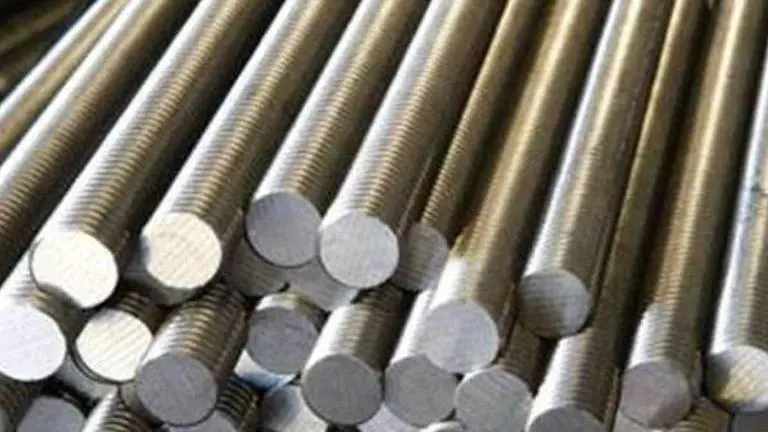
A research, which was published by the Journal of Alloys and Compounds, suggests that researchers at the National University of Science and Technology collaborated with other Russian experts to develop a low-cost aluminium alloy that can resist temperatures up to 400°C, as per the reports of Sputnik.
The material, according to the experts, would drastically lower the weight and carbon footprint of new rail vehicles, aircraft and other technology.
Senior researcher, Torgom Akopyan said that the material has a thermally robust structure that can endure temperatures of up to 400°C. Akopyan also stated that their alloy consists of copper (Cu), manganese (Mn), and zirconium (Zr), which provides a unique mix of electrical conductivity, strength and heat resistance, according to Sputnik.
In conditions such as seawater, freshwater, and other chemical solutions, aluminium and aluminium-based alloys are highly corrosion resistant. Aluminium is widely used in aviation, automobiles, electronics, and other industries because of these qualities, and also its low specific gravity and good thermal as well as electrical conductivity.
Advertisement
The material stands apart from its competitors
The structure of a new aluminium-based alloy, as well as the technology for producing wire from it, have been proposed by university researchers. The material stands apart from its competitors, according to the designers, because of its low cost, ease of manufacture, and a variety of unique physical features.
According to Sputnik, the researchers said that the aluminium alloy wire could be a viable alternative to today's costly and heavy copper-based conductors. Its application in aircraft, high-speed rail cars, and other equipment would result in huge fuel savings and a reduction in hazardous emissions into the atmosphere.
Advertisement
However, according to the National University of Science and Technology, the procedures for creating such alloys and their element bases are currently exceedingly costly and labour-intensive.
The team intends to keep working on the material's chemical composition
One of the important characteristics of the new alloy is that it contains around 10% of its volume in unique nanoparticles comprising zirconium and manganese that are equally spread in the aluminium matrix.
With the help of scientists from Russia's Kurchatov Institute, subsequent deformation-heat treatment and analytical tests were completed, according to Sputnik. The team intends to keep working on improving the novel material's chemical composition and processing in the future.
Image: PTI