
Incapable of Creating Players, This Is Pakistan's Only FIFA World Cup Connection...
No team, no qualification, not even a sniff of glory, but Pakistan still found a sneaky way into the FIFA World Cup
- SportFit
- 4 min read

;'%3e%3cpath%20d='m8,15.99c4.41,0,7.99-3.58,7.99-7.99S12.41,0,8,0,0,3.59,0,8s3.58,7.99,7.99,7.99Z'%20style='stroke:%23fff;%20stroke-miterlimit:10;%20stroke-width:.02px;'/%3e%3cpath%20d='m3.08,3.37l3.82,5.11-3.84,4.15h.87l3.37-3.64,2.72,3.64h2.94l-4.04-5.39,3.58-3.87h-.86l-3.1,3.35-2.5-3.35h-2.94Zm1.27.64h1.35l5.97,7.99h-1.35l-5.97-7.99Z'%20style='fill:%23fff;'/%3e%3c/g%3e%3c/svg%3e)


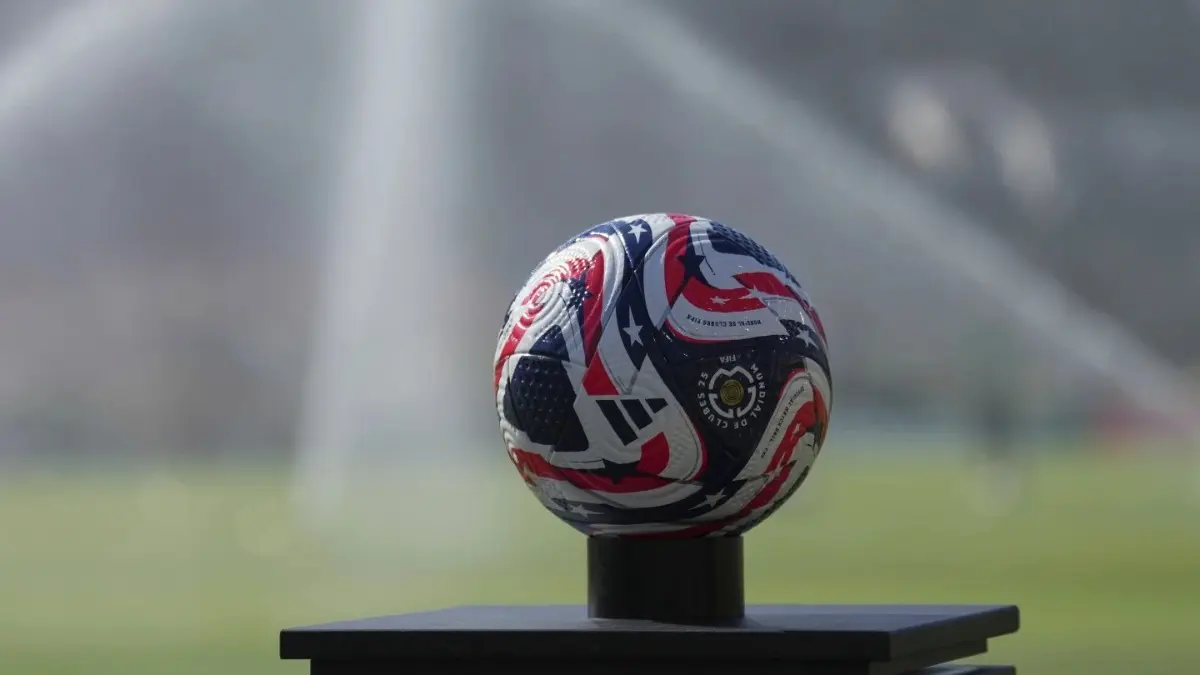
Pakistan ranks 198th in the world in football. Its national team has never come anywhere close to qualifying for a World Cup. By any normal logic, the country has zero business being part of football's biggest event.
And yet, somehow, it is. Just not the way you'd expect.
Turns Out the Closest Pakistan Gets to the World Cup Is the Ball Itself
The official match ball for the 2026 FIFA World Cup, the Adidas Trionda, is made by a company called Forward Sports in Sialkot, a city in Pakistan's Punjab province. And this isn't a lucky one-time gig. The same company has made the official ball for four World Cups in a row now: Brazuca in 2014, Telstar 18 in 2018, Al Rihla in 2022, and now the Trionda.
So while Pakistan's players have spent decades watching the World Cup from home, the ball getting booted around the pitch has been quietly "Made in Pakistan" the whole time.
Advertisement
How the Ball Nobody Thinks About Actually Gets Made
There's an oddly industrial process behind that ball, and it's worth knowing before getting too impressed by the headline figure. Most modern footballs, including this one, aren't even made of real leather anymore. Manufacturers use synthetic leather instead, mainly because it holds a consistent thickness in a way natural leather can't guarantee at scale. Underneath that synthetic shell sits a latex or butyl bladder, layered up and finished with a waterproof coating, before everything gets cut into panels and stitched or bonded into shape.

Four production methods dominate the industry. Hand stitching produces the strongest, most durable seams, but it's painfully slow, a single worker can only turn out about two balls in an eight-hour shift. Machine stitching trades some of that durability for speed and is mostly used for cheaper, lower-spec balls. A hybrid method splits the difference, stitching panels together and then reinforcing the seams with adhesive. And then there's thermal bonding, where panels are pressed and glued together inside a heated mould instead of being sewn at all, the technique behind every official World Cup ball since 2006, including the one rolling around the pitch this year.
Advertisement
None of this is particularly glamorous. It's an assembly-line industry running on patents, testing manuals, and quality-control checklists, not exactly the stuff World Cup legends are made of.
Cornering the Market Without Ever Making the Team
Sialkot has picked up the nickname "Football Factory of the World," and the numbers back it up. Around half of all FIFA-certified football manufacturers operate out of this one city, with the bulk of them quietly producing balls for the big international brands rather than selling under their own name. Forward Sports alone churns out about 20.5 million balls a year, a sharp jump from the 20-employee, single-room operation it started as back in 1991.
The man behind it, Khawaja Masood Akhtar, didn't even plan on football. He trained as a civil engineer and worked for Pakistan Railways before his uncle, who ran a sports goods business locally, convinced him to give it a shot. A deal with Adidas in the mid-90s changed his fortunes completely, and four World Cups later, here we are.
Sialkot's manufacturers have also leaned into FIFA's own quality programme over the years, working alongside the Sialkot Chamber of Commerce to keep up with shifting test requirements, things like the 2015 changes around water resistance, and ongoing research into aerodynamics and more sustainable materials. It's less a passion project and more a city making sure it doesn't lose its grip on a manufacturing contract it's built an entire local economy around.
Pakistan can't put a single player on the pitch at the World Cup. But it can, and does, put the actual ball there, stitched or bonded together on an assembly line in Punjab, every match, every tournament, without fail.