
As industry leaders warn about AI apocalypse, are immediate dangers already here?
OpenAI CEO Sam Altman and others in the industry went public with a much the possibility of an AI apocalypse when speaking about the potential for AI tools.
- Tech News
- 3 min read

;'%3e%3cpath%20d='m8,15.99c4.41,0,7.99-3.58,7.99-7.99S12.41,0,8,0,0,3.59,0,8s3.58,7.99,7.99,7.99Z'%20style='stroke:%23fff;%20stroke-miterlimit:10;%20stroke-width:.02px;'/%3e%3cpath%20d='m3.08,3.37l3.82,5.11-3.84,4.15h.87l3.37-3.64,2.72,3.64h2.94l-4.04-5.39,3.58-3.87h-.86l-3.1,3.35-2.5-3.35h-2.94Zm1.27.64h1.35l5.97,7.99h-1.35l-5.97-7.99Z'%20style='fill:%23fff;'/%3e%3c/g%3e%3c/svg%3e)


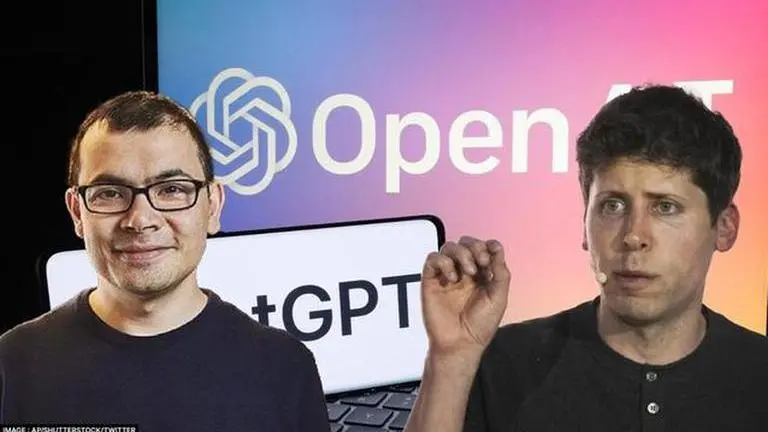
After being questioned by members of Congress regarding the potential risks of artificial intelligence tools such as misinformation spread, election disruption, and job displacement, OpenAI CEO Sam Altman, along with other industry experts, publicly expressed a more alarming concern two weeks later: the advent of an AI apocalypse.
Altman, responsible for the viral chatbot tool ChatGPT, joined Google DeepMind CEO Demis Hassabis, Microsoft’s CTO Kevin Scott and dozens of other AI researchers and business leaders in signing a one-sentence letter last month stating: “Mitigating the risk of extinction from AI should be a global priority alongside other societal-scale risks such as pandemics and nuclear war.”
The irony in the warning
The grave warning received extensive media coverage, prompting suggestions that it emphasised the urgency of addressing apocalyptic scenarios seriously. However, it also underscores a significant trend in Silicon Valley at present: Prominent executives of major tech companies are simultaneously cautioning the public about the potential for AI to cause human extinction, even as they actively compete to invest in and implement this technology into products that have a vast reach, reaching billions of individuals.
Elon Musk, CEO of Tesla, expressed concerns about AI potentially causing "civilization destruction" during a TV interview in April. However, he remains heavily engaged in the field through various investments within his extensive business empire. Additionally, Musk has expressed his intention to develop a competing AI platform to rival the offerings of Microsoft and Google.
Advertisement
AI industry experts warn about immediate harms
According to certain experts in the AI industry, directing excessive attention towards distant scenarios can divert focus from the more immediate harm that can be caused by the emergence of advanced AI tools. These tools have the potential to contribute to issues such as the dissemination of misinformation, the perpetuation of biases, and the facilitation of discrimination in various services, all of which directly impact individuals and communities.
CNN quoted a Microsoft spokesperson's statement saying, “We are optimistic about the future of AI, and we think AI advances will solve many more challenges than they present, but we have also been consistent in our belief that when you create technologies that can change the world, you must also ensure that the technology is used responsibly.”
Advertisement
How is AI an immediate threat?
The availability of generative AI tools such as OpenAI's ChatGPT and Dall-E, trained on extensive online data, enables the creation of engaging written content and images based on user prompts. However, these tools also present a potential risk as they can be utilised to rapidly mimic the style or appearance of public figures. This capability could be exploited in disinformation campaigns aimed at spreading misleading or false information.
During his testimony before Congress, Altman expressed his deep concerns regarding the potential for AI to manipulate voters and facilitate the targeting of disinformation, highlighting them as among his most significant areas of concern.
Even in more commonplace usage scenarios, concerns arise. The same AI tools have faced criticism for providing incorrect answers to user prompts, generating responses that are essentially "hallucinating" in nature, and possibly perpetuating biases based on race and gender.