
BSNL Launches a Phone Worth Rs 1,34,166: What Is It, Who Can Buy It, and Why It Works Even Without Signal
BSNL has introduced a high-priced satellite phone in India, designed for critical communication where regular networks fail. Discover what makes it unique, who it’s meant for, and why it can stay connected even when signals vanish.
- Tech News
- 5 min read

;'%3e%3cpath%20d='m8,15.99c4.41,0,7.99-3.58,7.99-7.99S12.41,0,8,0,0,3.59,0,8s3.58,7.99,7.99,7.99Z'%20style='stroke:%23fff;%20stroke-miterlimit:10;%20stroke-width:.02px;'/%3e%3cpath%20d='m3.08,3.37l3.82,5.11-3.84,4.15h.87l3.37-3.64,2.72,3.64h2.94l-4.04-5.39,3.58-3.87h-.86l-3.1,3.35-2.5-3.35h-2.94Zm1.27.64h1.35l5.97,7.99h-1.35l-5.97-7.99Z'%20style='fill:%23fff;'/%3e%3c/g%3e%3c/svg%3e)


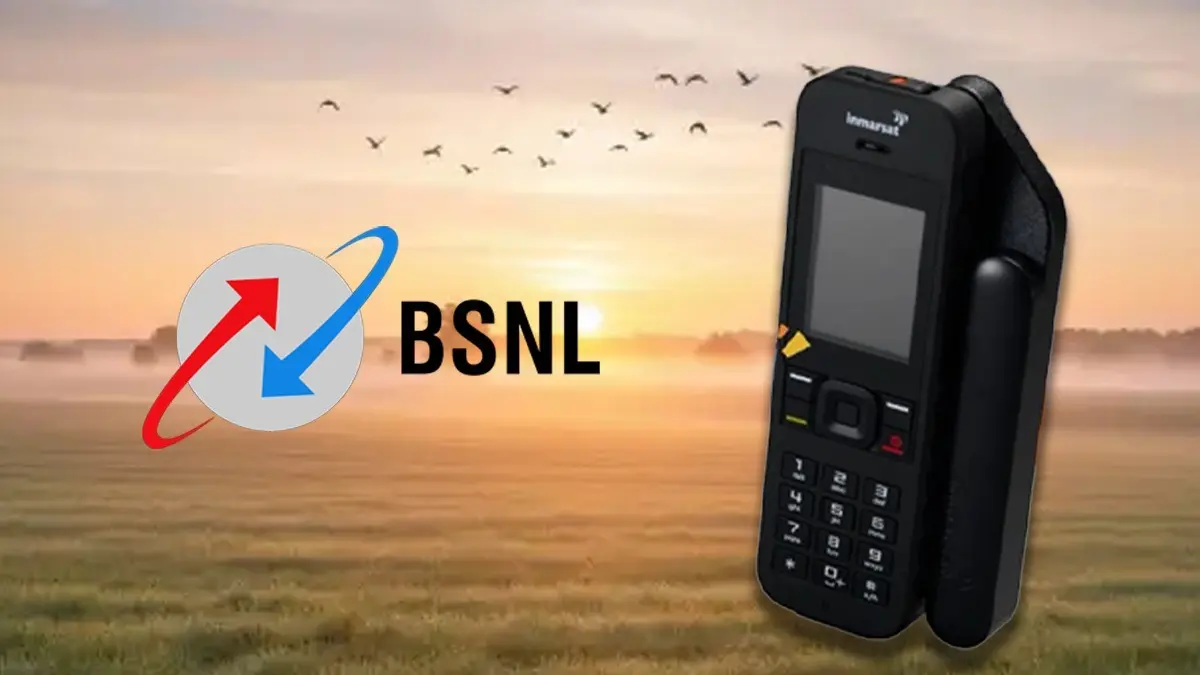
Somewhere in a flooded village in Assam, or a snowbound army post near the Line of Control, or a fishing trawler thirty kilometers off the Gujarat coast, a regular mobile phone is nothing more than a paperweight. That's the gap BSNL is stepping into. The state telecom operator is widening the rollout of its satellite phone service, a device priced well above what most people would spend on a car down payment, but built for exactly one job: staying connected where towers simply don't exist.
The Rs 1,34,166 Question
Here's what surprises most people first: the phone itself isn't what drives that number up. The handset alone runs somewhere between Rs 70,000 and Rs 82,000, expensive, but not outrageous for specialised hardware. It's everything else stacked on top, spectrum charges, licensing costs, and the mandatory setup for a service plan, that pushes the total past the Rs 1.34 lakh mark. And GST hasn't even been added to that figure yet.
Put another way, this isn't a device you buy off a shelf. It's closer to buying access to an entire private communication system, with the phone as just one piece of the package.
Why Does It Work Where Everything Else Fails?
BSNL isn't building this network alone. It's partnered with Inmarsat, a satellite operator whose fourth-generation constellation runs on the L-band, a frequency range chosen specifically because it holds up under harsh weather and doesn't degrade the way higher-frequency signals do. That's the entire engineering answer to "why does this still work during a cyclone when my phone doesn't. The signal isn't bouncing off a tower a few kilometers away, it's coming from a satellite that doesn't care whether the ground below it just lost power.
Advertisement
There's a security layer baked in too. Every call and message on the network is encrypted to standards set by the Department of Telecommunications. And notably, the entire system routes through a single domestic gateway in Ghaziabad, complete with its own government-run monitoring system. That's a deliberate design choice, not an afterthought, it's what finally cleared decades-old defense objections to satellite phones on Indian soil, since earlier concerns centered on foreign operators having potential access to Indian communications.
As for the actual hardware, the IsatPhone 2 that BSNL issues, it's less "smartphone" and more "field equipment." It's rated to survive extreme heat, freezing cold, drops, and heavy exposure to water. Internet speeds cap out around 48 Kbps, painfully slow by today's standards, but that's not an oversight. Nobody's streaming video on this thing. It exists to get a short message or a call through when nothing else will.
Advertisement
Not Exactly a Consumer Product
Don't expect to see this phone at a BSNL retail counter next to prepaid SIM offers. Indian law treats satellite phones as tightly regulated equipment, not a lifestyle purchase, and BSNL's customer list reflects that.
The people actually using this service are largely defense personnel, the Border Security Force, state police units, Indian Railways, and disaster response teams like the NDRF. Outside government, BSNL also opens access to companies operating in isolated terrain, maritime businesses, and adventure tour operators running expeditions through places like Ladakh, locations where cellular coverage was never realistic to begin with.
Getting One Isn't Like Buying a SIM Card
Owning a satellite phone in India without government approval is illegal, full stop. So the buying process looks less like a purchase and more like an application.
It begins with paperwork, submitted either at a BSNL Circle Office or online, laying out who you are and exactly why you need satellite connectivity. That application then goes through the Ministry of Home Affairs and other security agencies for review. Nothing moves forward until a formal No Objection Certificate is issued.
Only once that clearance lands does money actually change hands, payment for the device and a plan, followed by identity verification and KYC checks, before the SIM finally gets activated.
And After You Own One
The spending doesn't stop at purchase. Commercial customers can sign up for annual prepaid plans starting at Rs 64,185 (before GST), which includes 360 minutes of combined calls or texts. Go over that, and it's Rs 25 a minute for commercial users, Rs 18 a minute if you're on the government tariff. Businesses that need heavier usage can instead take a postpaid route starting at Rs 11,670 a month.
Why This Matters Beyond the Price Tag
It's easy to look at a phone costing over a lakh and call it excessive. But that framing misses the point. This isn't competing with an iPhone or a budget Android device, it's competing with silence. For someone stranded after a landslide, or a border unit operating miles from the nearest tower, the alternative to this phone isn't a cheaper phone, it's no communication at all. That's the actual product BSNL is selling here, not minutes or data, but the guarantee of a signal when everything else has gone dark.