
From Beer to Burgers to AI: Why Every Industry Now Wants an India Capability Centre
A brewer, a burger chain, a retailer, and a sports broadcaster are now building AI and cloud engineering functions in India using the same playbook a bank or a software firm would use, and that shift deserves more attention than it has received so far.
- Tech News
- 5 min read

;'%3e%3cpath%20d='m8,15.99c4.41,0,7.99-3.58,7.99-7.99S12.41,0,8,0,0,3.59,0,8s3.58,7.99,7.99,7.99Z'%20style='stroke:%23fff;%20stroke-miterlimit:10;%20stroke-width:.02px;'/%3e%3cpath%20d='m3.08,3.37l3.82,5.11-3.84,4.15h.87l3.37-3.64,2.72,3.64h2.94l-4.04-5.39,3.58-3.87h-.86l-3.1,3.35-2.5-3.35h-2.94Zm1.27.64h1.35l5.97,7.99h-1.35l-5.97-7.99Z'%20style='fill:%23fff;'/%3e%3c/g%3e%3c/svg%3e)


Across the better part of two decades, the words "Global Capability Centre" conjured a fairly narrow picture in most people's minds. A bank running its back-office operations out of Bengaluru. A software major with a second headquarters in Pune. The occasional insurance firm quietly processing claims from a glass tower in Hyderabad. It was, in short, a tech and BFSI story, and most of India's GCC coverage over the years has followed that script without much question.
That script no longer holds, and the last twelve months have made the case plainly.
Carlsberg launched its first-ever IT Global Capability Centre in India in September 2025, anchored in Gurugram, a striking move for a company whose business runs on hops and distribution logistics rather than data pipelines. McDonald's inaugurated its largest Global Capability Centre outside the United States in Hyderabad's HITEC City in October 2025, a 1.56 lakh square foot facility built to house global teams across finance, sourcing, data analytics, and AI. Walmart leased 465,000 square feet at the International Tech Park Chennai for its second India GCC, this one focused specifically on retail innovation. DAZN, the UK-based sports streaming company, launched India's first sports-tech GCC in Hyderabad with a ₹500 crore investment, targeting 3,000 jobs by the end of 2026.
Taken individually, each of these could be dismissed as a one-off, a single company chasing a single opportunity. Taken together, they point to something more structural. A brewer, a burger chain, a retailer, and a sports broadcaster are now building AI and cloud engineering functions in India using the same playbook a bank or a software firm would use, and that shift deserves more attention than it has received so far.
Advertisement
Part of the explanation lies in how the underlying logic of the GCC has changed. For years, the pitch to global boardrooms was essentially about cost. India offered access to a large pool of technically capable people at a fraction of what the same work would cost in the US, the UK, or continental Europe, and that arithmetic alone was enough to justify setting up shop.
Deloitte's recent research on the sector suggests that calculus has flipped. Companies are no longer approaching India primarily as a line item to be optimised. They are approaching it as a place where the depth and breadth of engineering, data science, and AI capability makes it possible to build functions that would be difficult to staff at the same scale or speed anywhere else. The centre is no longer a support function tucked away from the main business. Increasingly, it is where core product and technology work actually happens.
Advertisement
That reframing explains why the roles being created inside these new, unlikely GCCs look strikingly similar to what you would find inside a bank's technology arm. McDonald's Hyderabad centre is not simply processing paperwork. The company is using AI to verify orders across 400 restaurants today, with plans to scale that to 40,000 locations globally by 2027, and is betting on India as a key hub for data governance, engineering, and platform architecture. Carlsberg's new centre is not an administrative outpost either. It represents a bet that India-based engineering and analytics people can meaningfully shape how a global beverage company runs. And Walmart's second Chennai centre reflects a similar conviction that the next generation of retail technology can be built here rather than merely maintained here.
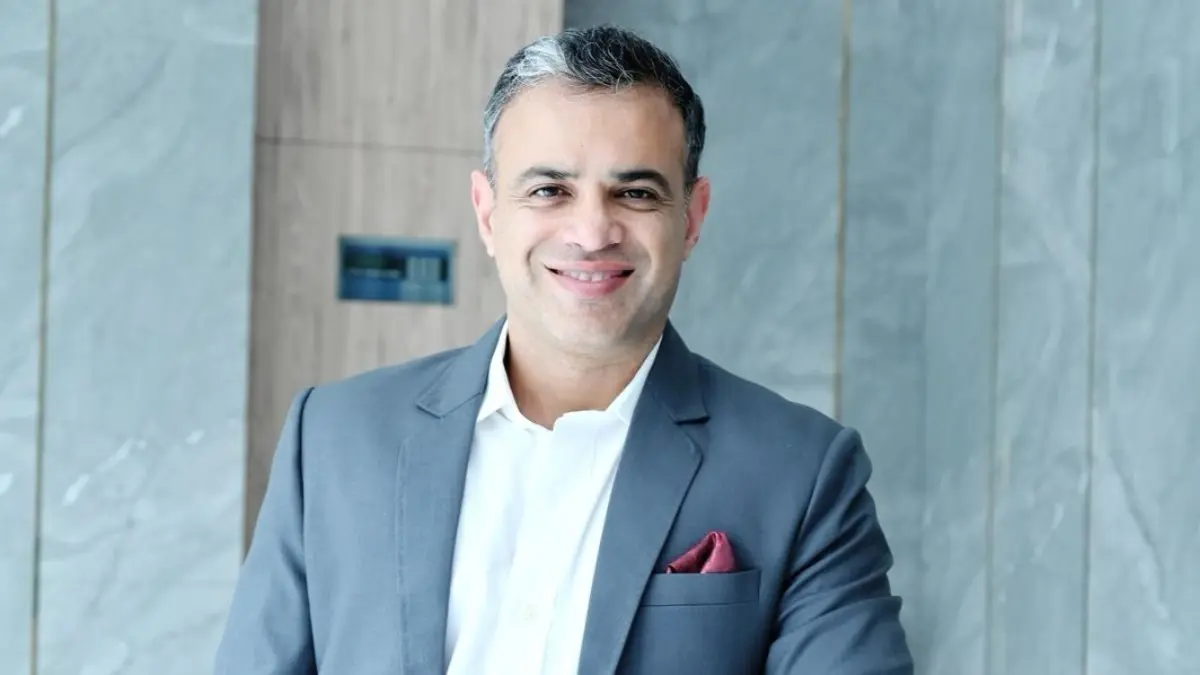
Divesh Agarwal, founder and CEO of Aumni, has spent sixteen years building and scaling India-based engineering teams for global businesses, including leading a 350-person India team through a billion-dollar acquisition earlier in his career, and sees the current wave as a natural extension of that trajectory. "When a brewer and a bank start building their most important technology functions the same way, in the same country, it stops being solely an India story and starts being a capability story," he said.
There is also a broader signal buried in DAZN's decision to anchor a ₹500 crore investment around sports data and AI specifically, rather than build a generic technology outpost. It suggests companies are no longer thinking of India centres as places to park whatever overflow work needs doing. They are thinking of India as a place to build highly specialised, domain-specific capability that sits close to the heart of what makes their business distinctive.
For India's GCC ecosystem, this diversification matters for reasons beyond headline counts. It signals that the country's value proposition has moved past a single industry's technology needs and is now being tested, and validated, across sectors as different as consumer beverages, quick-service restaurants, retail, and sports media. Hyderabad alone accounted for roughly 40 per cent of all new GCCs established in India over the past three years, ahead of Bengaluru's 33 per cent, a shift driven in large part by exactly this kind of cross-industry demand.
The question worth sitting with, then, is not whether more industries will follow Carlsberg, McDonald's, Walmart, and DAZN into India. Given the pace and range of announcements over just the past year, that seems close to inevitable. The sharper question is whether India's GCC infrastructure, policy frameworks, and talent pipelines, still largely designed around the assumptions of a tech and BFSI-led decade, are ready for a landscape where the next big centre announcement could just as easily come from a hotel chain or a sneaker brand as from a bank.