
iPhones May Soon Stream to Google Cast Devices Without AirPlay
If implemented, the move would represent one of the most meaningful changes to Apple's wireless streaming ecosystem since AirPlay was introduced more than a decade ago.

;'%3e%3cpath%20d='m8,15.99c4.41,0,7.99-3.58,7.99-7.99S12.41,0,8,0,0,3.59,0,8s3.58,7.99,7.99,7.99Z'%20style='stroke:%23fff;%20stroke-miterlimit:10;%20stroke-width:.02px;'/%3e%3cpath%20d='m3.08,3.37l3.82,5.11-3.84,4.15h.87l3.37-3.64,2.72,3.64h2.94l-4.04-5.39,3.58-3.87h-.86l-3.1,3.35-2.5-3.35h-2.94Zm1.27.64h1.35l5.97,7.99h-1.35l-5.97-7.99Z'%20style='fill:%23fff;'/%3e%3c/g%3e%3c/svg%3e)


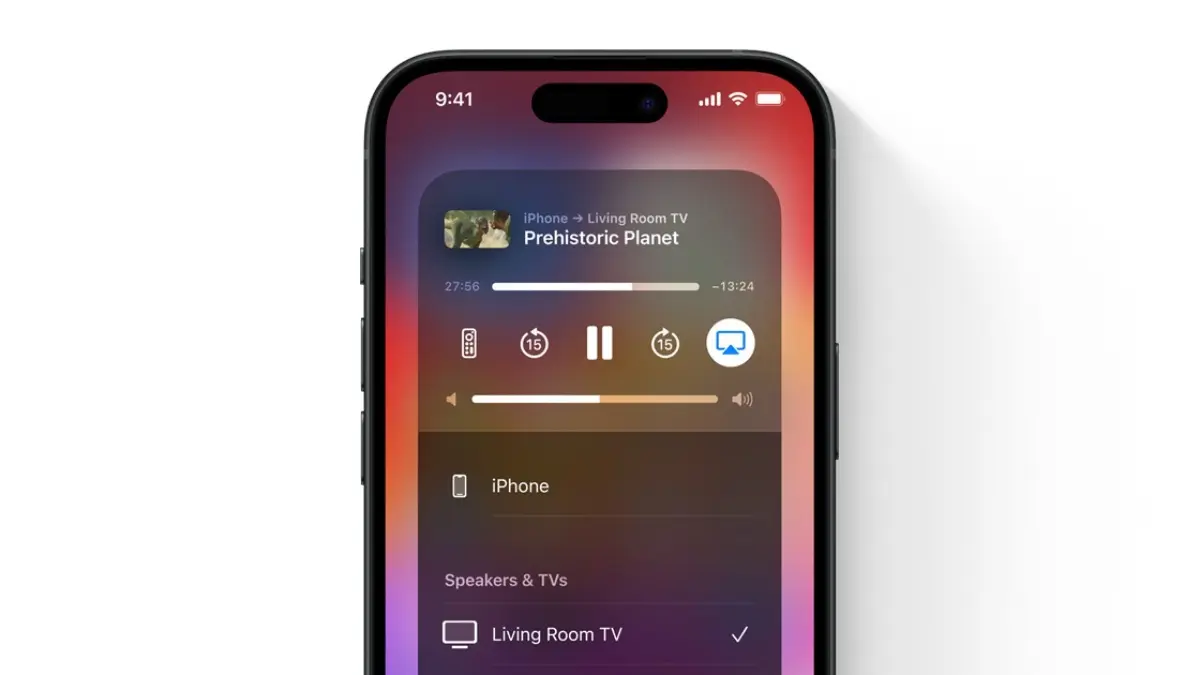
Apple is reportedly preparing a significant change to how iPhones connect with TVs, speakers, and streaming devices. According to Bloomberg's Mark Gurman, iOS 27 could allow users to choose third-party streaming protocols such as Google Cast as the default method for wirelessly sending photos, videos, and audio from an iPhone.
If implemented, the move would represent one of the most meaningful changes to Apple's wireless streaming ecosystem since AirPlay was introduced more than a decade ago. AirPlay has been Apple's preferred way of sending content from an iPhone, iPad, or Mac to compatible televisions, speakers, and media devices. While AirPlay support has expanded to many third-party products over time, Apple has largely kept the technology at the centre of its ecosystem.
That may finally be changing.
Google Cast Could Become a Native iPhone Feature
The report claims iOS 27 will support alternative streaming protocols at a system level, allowing users to select services such as Google Cast instead of AirPlay when sharing media. Today, many smart TVs, streaming sticks, hotel televisions, and smart home devices rely on Google Cast rather than AirPlay. iPhone users can often access those devices only through individual apps that support Cast functionality.
Advertisement
With native integration, the process could become considerably simpler. Instead of depending on app-specific implementations, users may be able to stream directly through iOS itself in much the same way AirPlay currently works.
The European Union Is Likely Behind the Change
The update is reportedly being developed to satisfy requirements under the European Union's Digital Markets Act (DMA), legislation designed to reduce restrictions imposed by dominant technology platforms.
Advertisement
The DMA has already forced Apple to make several changes across Europe, including alternative app marketplaces, greater interoperability with third-party services, and broader platform access for competitors.
Apple has not confirmed whether the feature will be available globally or restricted to European users. Many previous DMA-related changes have remained limited to the EU, although some eventually expanded to other regions.
This Is Bigger Than Just Google Cast
While Google Cast is the most obvious beneficiary, the implications extend beyond Google. If Apple opens system-level streaming support, manufacturers of smart TVs, speakers, projectors, conference-room displays, and home entertainment products could potentially integrate directly with iOS without requiring AirPlay certification.
That could increase compatibility across a wider range of devices and reduce the friction users sometimes face when moving between Apple and non-Apple ecosystems.
For Apple customers, the result may simply be more choice. For hardware manufacturers, it could reduce dependence on Apple's proprietary technology stack.
When Will We Know More?
Apple is expected to unveil iOS 27 at WWDC 2026, which begins on June 8. The company will likely reveal whether third-party streaming support is indeed part of the update and, more importantly, whether it will be available worldwide or limited to Europe.
If the reports prove accurate, iPhone users could soon find themselves with a choice that would have been almost unthinkable a few years ago: using something other than AirPlay as the default way to stream content from an Apple device.