
Nothing (4a) Pro Review: Futuristic With Minimalism Of Yore
The Nothing Phone (4a) Pro is a bold attempt at optimising the looks to maximise utility without a high price tag. But should you buy this mid-ranger?
- Tech News
- 7 min read

;'%3e%3cpath%20d='m8,15.99c4.41,0,7.99-3.58,7.99-7.99S12.41,0,8,0,0,3.59,0,8s3.58,7.99,7.99,7.99Z'%20style='stroke:%23fff;%20stroke-miterlimit:10;%20stroke-width:.02px;'/%3e%3cpath%20d='m3.08,3.37l3.82,5.11-3.84,4.15h.87l3.37-3.64,2.72,3.64h2.94l-4.04-5.39,3.58-3.87h-.86l-3.1,3.35-2.5-3.35h-2.94Zm1.27.64h1.35l5.97,7.99h-1.35l-5.97-7.99Z'%20style='fill:%23fff;'/%3e%3c/g%3e%3c/svg%3e)


There’s a familiar moment with most mid-range smartphones: you unbox them, appreciate what they’re trying to do, and quietly accept the compromises. They are sensible and often very good, but rarely exciting. I had been, if I’m honest, close to giving up on that category altogether, even thinking about switching ecosystems.
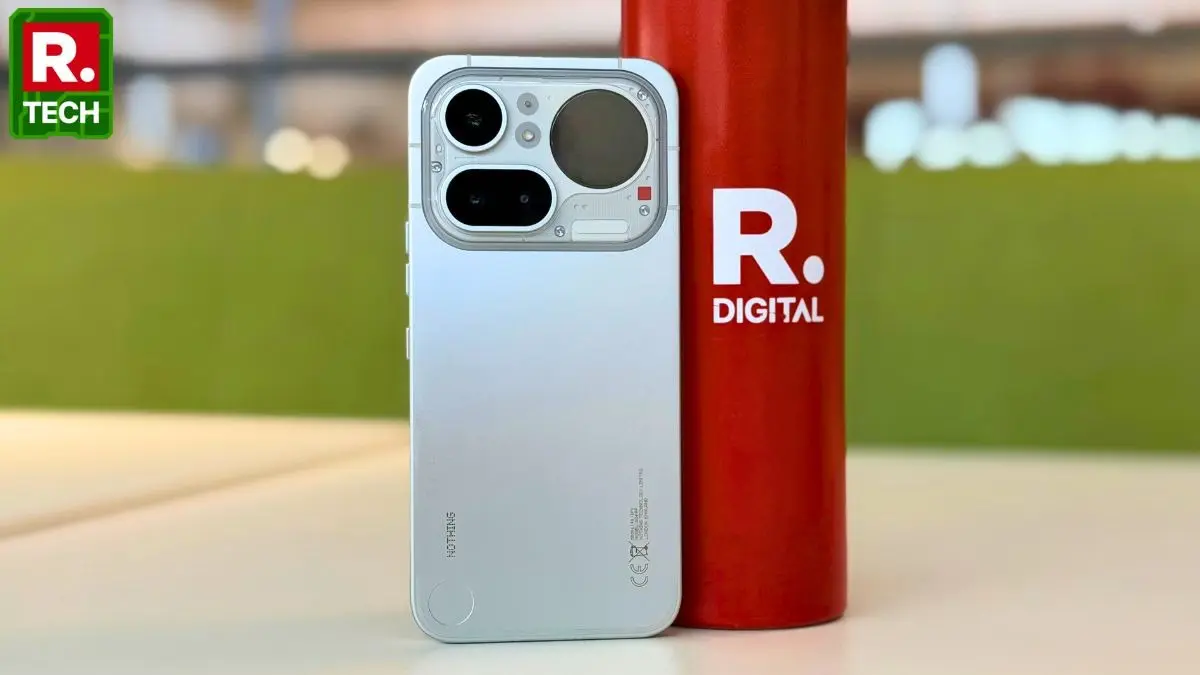
I was reading about what inspired Nothing’s design when I came across something its Global Design Director Adam Bates said. “Almost like a logo.” He is right. Put most Android phones face down on a table, and they disappear into anonymity. This one does not. The Nothing Phone (4a) Pro has instant recall. It stands out. That uniqueness is part of Nothing’s DNA. There is clarity, but also depth.
Then the phone arrived, not promising to do everything better, but to do things differently.

It does not take long to realise this is not trying to copy flagships. It is comfortable being a little different. I reviewed the Silver colourway, which probably shows off the design best. It looks simple at first, but the more you use it, the more it grows on you. The transparent elements, the exposed parts, and the Glyph lights give it character. After a few days, the initial doubt turns into curiosity, and then appreciation.
Advertisement
A design that dares to be different
Nothing’s design language is still here, but there is a noticeable shift. The Phone (4a) Pro moves away from a fully transparent back and focuses that design around the camera island instead. It feels more controlled and a bit more mature. The aluminium frame also helps, making the phone feel sturdier in everyday use.
At first glance, it can still feel a bit unusual. The raised camera module, the visible elements, and the Glyph interface are not typical. But spend some time with it and it starts to make sense. It feels like a design choice rather than a gimmick.
Advertisement
The Glyph interface now has 137 mini-LED segments and can go up to 3,000 nits. It is meant to give you information without unlocking the phone. In reality, it is useful sometimes, but not essential. Most people will use it for simple alerts or time checks. It is a fun feature, and it is okay to treat it that way.
Display: unapologetically bright, unapologetically big
At 6.83 inches, the AMOLED display is large without feeling too much. It is sharp with a 2,800 x 1,260 resolution and very smooth thanks to the 144Hz refresh rate. Everything from scrolling to gaming feels responsive.
The standout feature is brightness. It goes up to 5,000 nits, which is far higher than most phones in this range. You will not always notice it, but in bright sunlight or HDR content, it makes a real difference.
For the price, this is an excellent display. Watching videos, playing games, or just browsing feels good and consistent.
Cameras: headline tricks and genuine surprises
The 140x zoom helps the cameras stand out. It is the kind of feature that gets attention right away. The Phone (4a) Pro leans into it, and while Nothing calls it a first, it is best seen as a fun extra. It goes farther than what you get on many flagship phones, which is impressive for the price. Are the results great at 140x? Not really, but that is not the main point.
What impressed me more was the night photography. These are some of the lowest noise night-time photos I have seen on a phone in this price range. The phone combines multiple frames, seven of them, into one image and then uses AI to reduce noise. The result is clean and usable photos even in low light.
For regular photography, the Phone (4a) Pro does a good job if you take a bit of care. The 50MP main camera is the most reliable, capturing good detail and lighting in the day and holding up fairly well at night. The 50MP periscope telephoto lens powers the zoom and works well in daylight.
Phones like Pixel or iPhone will still give you more consistent and accurate images. But for the price you pay here, the results are good enough, and sometimes even surprising.
Software and AI: search, simplified and central
Nothing has made AI a core part of the experience rather than an add-on.
With built-in Google Gemini and integrated ChatGPT, the phone makes it easy to get help without switching between apps. Whether it is through widgets, voice, or quick prompts, assistance is always nearby.
This fits well with Nothing’s idea of keeping things simple. Instead of adding more clutter, it brings useful tools closer to where you already are. You are not breaking your flow to search for something. It feels more natural and less intrusive.
Nothing OS: calm, clean, and considered
Built on Android 16, Nothing OS 4.1 is clean and easy to use. The design is simple, with thoughtful layout and enough customisation without going overboard.
The redesigned lock screen offers more clock styles and widgets, which adds some personality. The Relax widgets are a nice touch if you want to stay focused or take a break from constant notifications. Most importantly, the phone feels smooth. Animations are fluid, and the overall experience feels stable. With three years of OS updates and six years of security updates, it is also built to last.
Battery life: quietly dependable
The 5,080mAh battery delivers what most people need. It easily lasts a full day with mixed to heavy use. Even after using the camera, testing performance, and pushing the brightness outdoors, I usually ended the day with around 20 to 30 per cent left. That gives a sense of reliability.
Charging is also quick enough. With 50W charging, it gets to about 50 per cent in under 30 minutes. It is not the fastest, but it is fast enough for daily use.
The small things that matter
There is a programmable “Essential” button on the side. It can be set up for different tasks. I mostly used it for screenshots, and it worked well. Durability has improved too. With an IP65 rating, the phone is better protected against dust and water splashes. The aluminium frame also adds to the sense of durability.
Verdict: bold, thoughtful, and refreshingly different
Rating: 4/5
The Nothing Phone (4a) Pro, starting at ₹39,999, does not just compete on price. It offers something different in a market where many phones feel the same.
It will not replace a flagship camera, and the Glyph interface is not something everyone will rely on. But when you look at the full package, design, display, software, and performance, it feels like a phone with its own identity.
And in a crowded market, that can make all the difference.
Read more: iQOO 15R Review: Fast Where It Matters Most