
OnePlus Pad 4 vs Xiaomi Pad 8: Which Android Tablet Should You Buy?
The OnePlus Pad 4 and the Xiaomi Pad 8 push flagship-grade chipsets, high-refresh-rate displays, stylus support, desktop-style multitasking, and increasingly aggressive specifications.

;'%3e%3cpath%20d='m8,15.99c4.41,0,7.99-3.58,7.99-7.99S12.41,0,8,0,0,3.59,0,8s3.58,7.99,7.99,7.99Z'%20style='stroke:%23fff;%20stroke-miterlimit:10;%20stroke-width:.02px;'/%3e%3cpath%20d='m3.08,3.37l3.82,5.11-3.84,4.15h.87l3.37-3.64,2.72,3.64h2.94l-4.04-5.39,3.58-3.87h-.86l-3.1,3.35-2.5-3.35h-2.94Zm1.27.64h1.35l5.97,7.99h-1.35l-5.97-7.99Z'%20style='fill:%23fff;'/%3e%3c/g%3e%3c/svg%3e)


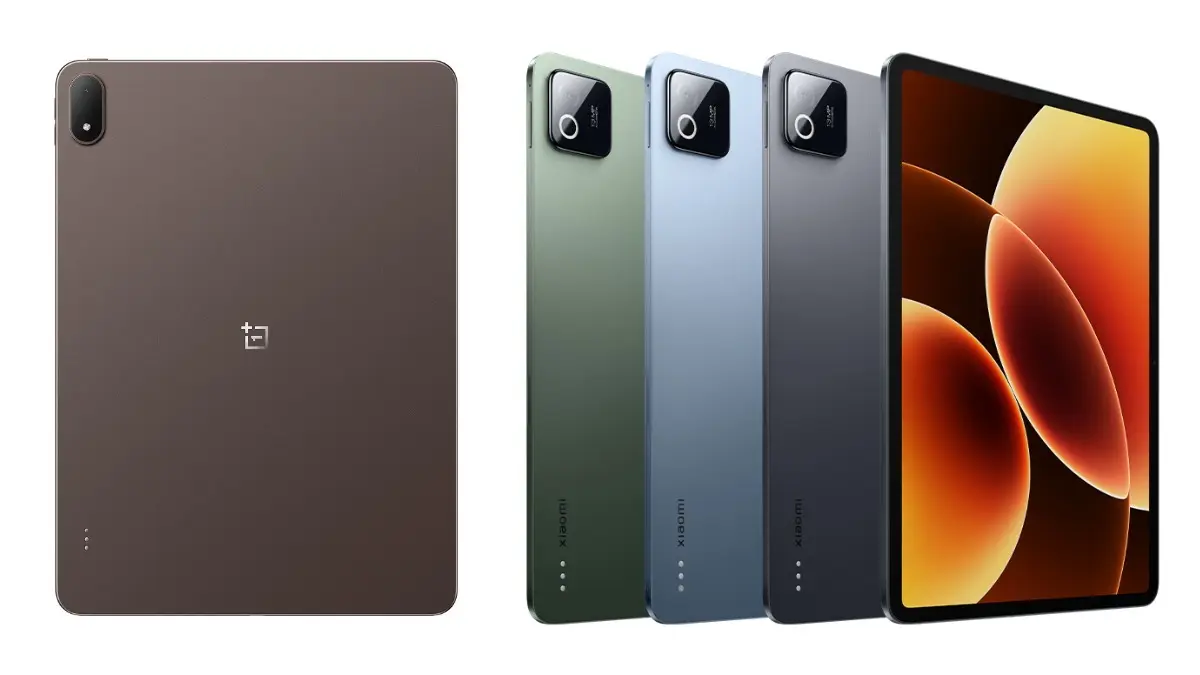
The Android tablet market has quietly become competitive again, especially in India. Companies are no longer launching oversized media screens with mid-range processors and hoping people forgive the experience because “it’s just a tablet.” Devices like the OnePlus Pad 4 and Xiaomi Pad 8 are now pushing flagship-grade chipsets, high-refresh-rate displays, stylus support, desktop-style multitasking, and increasingly aggressive specifications.
The OnePlus Pad 4 sits at the higher end of the segment with a larger display, flagship Snapdragon chipset, and a heavier productivity focus. The Xiaomi Pad 8 takes a more aggressive value-first approach while still offering premium hardware. The difference between them is not just pricing. It is philosophy.
OnePlus Pad 4 vs Xiaomi Pad 8 Price in India
The OnePlus Pad 4 starts at ₹59,999 for the 8GB + 256GB variant, while the higher-end 12GB + 512GB version is priced at ₹64,999.
The Xiaomi Pad 8 starts significantly lower at around ₹33,999 for the base configuration. Higher RAM and storage variants push the price upward, but it still remains considerably cheaper than the OnePlus offering.
Advertisement
That nearly ₹25,000 gap defines this comparison more than anything else.
Display Specifications
The OnePlus Pad 4 features a larger 13.2-inch LCD panel with a 3.4K resolution and a 144Hz adaptive refresh rate. OnePlus is using a 7:5 aspect ratio, which gives the display more vertical space for multitasking, reading, and productivity-focused applications.
Advertisement
The Xiaomi Pad 8 uses an 11.2-inch LCD display with a 3.2K resolution and the same 144Hz refresh rate.
Both tablets support Dolby Vision and adaptive refresh rate technology, but the OnePlus Pad 4 clearly prioritises large-screen productivity and multitasking, while the Xiaomi Pad 8 feels more portable and easier to use casually.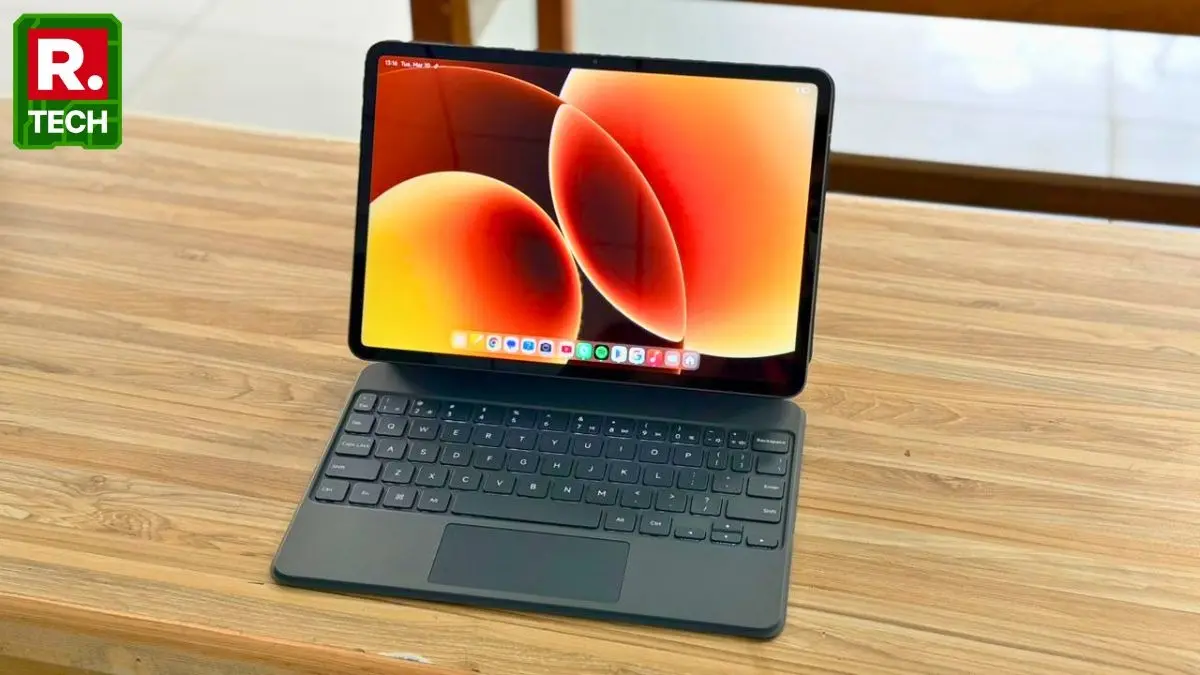
Processor and Performance
This is where the specifications diverge sharply.
The OnePlus Pad 4 runs Qualcomm’s Snapdragon 8 Elite Gen 5 chipset, which currently sits among the most powerful mobile processors available. It is paired with LPDDR5X RAM and UFS 4.1 storage.
The Xiaomi Pad 8 uses Qualcomm’s Snapdragon 8s Gen 4 chipset. While still extremely capable, it is positioned below Qualcomm’s flagship Elite lineup.
For gaming, video editing, multitasking, and long-term performance sustainability, the OnePlus Pad 4 has the clear advantage on paper.
That said, the Xiaomi Pad 8 is hardly underpowered. For most users, including gaming and productivity workloads, the Snapdragon 8s Gen 4 will remain more than sufficient for years.
RAM and Storage
The OnePlus Pad 4 offers configurations with up to 12GB RAM and up to 512GB internal storage. The company is also using faster UFS 4.1 storage standards.
The Xiaomi Pad 8 also supports up to 12GB RAM but tops out at 256GB storage.
Battery and Charging
Battery size is one of the OnePlus Pad 4’s biggest strengths.
The tablet includes a massive 13,380mAh battery paired with 80W SUPERVOOC fast charging.
The Xiaomi Pad 8 uses a smaller 9,200mAh battery. Fast charging support is present, though charging speeds are lower than OnePlus’ implementation.
Given the larger display and more powerful chipset, the OnePlus Pad 4 needs the additional battery capacity. Still, on paper, it should deliver significantly longer endurance during productivity-heavy usage.
Software and AI Features
The OnePlus Pad 4 runs OxygenOS 16 based on Android 16 and includes several AI-powered features focused on writing assistance, summarisation, multitasking, transcription, and cross-device workflows.
Xiaomi’s Pad 8 runs HyperOS based on Android 16 and includes HyperAI features along with Xiaomi’s ecosystem integrations.
The difference is that OnePlus leans more heavily into desktop-style workflows, while Xiaomi focuses more on delivering strong specifications at a lower price.-1776254968647.webp)
Accessories and Productivity
Both tablets support stylus input and keyboard accessories.
The OnePlus Pad 4 works with the new OnePlus Stylo Pro and a dedicated keyboard accessory designed around productivity workflows.
The Xiaomi Pad 8 supports Xiaomi’s Focus Pen and keyboard accessories as well.
Camera Specifications
Tablet cameras remain largely functional rather than impressive, and both companies seem aware of this reality.
The OnePlus Pad 4 includes a 13MP rear camera and an 8MP front-facing sensor.
The Xiaomi Pad 8 offers a similar setup with a 13MP rear camera and an 8MP front camera.
Which Tablet Has Better Specifications?
Purely from a specifications standpoint, the OnePlus Pad 4 is the stronger tablet.
It offers:
- a larger and higher-resolution display
- Qualcomm’s flagship chipset
- bigger battery capacity
- faster charging
- higher storage ceiling
- stronger productivity positioning
But specifications exist within context.
The Xiaomi Pad 8 delivers many premium tablet features at a dramatically lower price point. For users who primarily want media consumption, gaming, casual productivity, and portability, the Xiaomi Pad 8 arguably offers better value overall.
The OnePlus Pad 4 targets users who genuinely want a tablet capable of replacing lightweight laptops for extended workflows. The Xiaomi Pad 8 targets users who want flagship-like performance without paying flagship-like prices.