
Samsung Galaxy S26 Ultra vs Xiaomi 17 Ultra: Which Ultra Is Better for You?
If you are deciding between the two, the choice largely comes down to whether you prioritise software reliability and ecosystem features or camera hardware and battery capacity.

;'%3e%3cpath%20d='m8,15.99c4.41,0,7.99-3.58,7.99-7.99S12.41,0,8,0,0,3.59,0,8s3.58,7.99,7.99,7.99Z'%20style='stroke:%23fff;%20stroke-miterlimit:10;%20stroke-width:.02px;'/%3e%3cpath%20d='m3.08,3.37l3.82,5.11-3.84,4.15h.87l3.37-3.64,2.72,3.64h2.94l-4.04-5.39,3.58-3.87h-.86l-3.1,3.35-2.5-3.35h-2.94Zm1.27.64h1.35l5.97,7.99h-1.35l-5.97-7.99Z'%20style='fill:%23fff;'/%3e%3c/g%3e%3c/svg%3e)


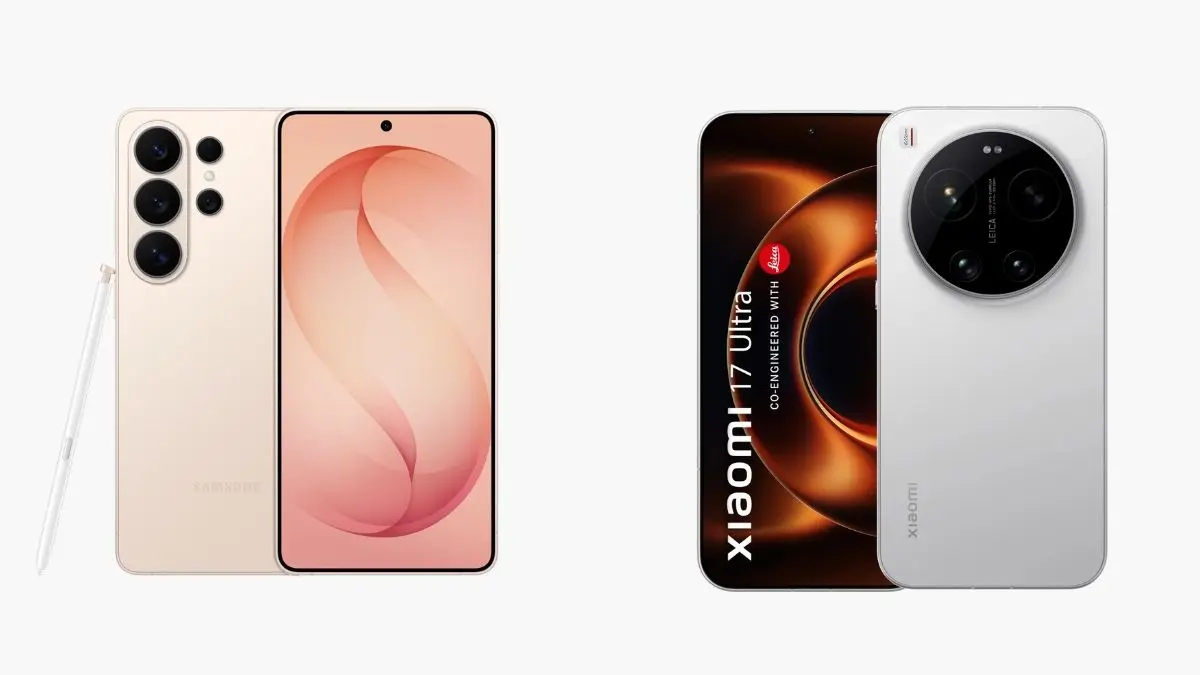
The Samsung Galaxy S26 Ultra and the Xiaomi 17 Ultra represent two different approaches to the ultra-premium Android smartphone segment. Both devices offer flagship processors, large AMOLED displays, and powerful camera systems, but they target slightly different users.
If you are deciding between the two, the choice largely comes down to whether you prioritise software reliability and ecosystem features or camera hardware and battery capacity.
Performance and hardware
Both smartphones run on Qualcomm’s Snapdragon 8 Elite Gen 5 chipset, one of the fastest mobile processors available today. The Galaxy S26 Ultra pairs this with 12GB or 16GB RAM, while the Xiaomi 17 Ultra typically starts with higher RAM configurations, such as 16GB paired with up to 512GB storage.
In everyday usage, the performance difference between the two phones is minimal. Both devices are capable of running demanding games, handling heavy multitasking, and supporting advanced AI features.
Advertisement
Display
Samsung continues to focus on display technology. The Galaxy S26 Ultra features a 6.9-inch Dynamic AMOLED display with a 120Hz high refresh rate and Samsung’s new Privacy Display technology, which limits side-angle visibility to protect sensitive information.
The Xiaomi 17 Ultra also uses a 6.9-inch AMOLED panel, but Xiaomi focuses more on brightness and colour depth rather than privacy features.
Advertisement
In practice, both screens are excellent. Samsung still leads in display calibration and outdoor visibility, while Xiaomi aims for a brighter and more cinematic experience.
Cameras
This is where the biggest difference appears.
The Galaxy S26 Ultra uses a quad-camera setup led by a 200MP main sensor, supported by ultra-wide and telephoto cameras, including 5x optical zoom and additional zoom capabilities.
The Xiaomi 17 Ultra takes a different approach with its Leica-engineered camera system, which includes a 1-inch main sensor and a 200MP telephoto lens capable of long-range zoom.
The larger sensor and Leica tuning make the Xiaomi 17 Ultra particularly strong for photography enthusiasts, especially in dynamic lighting and long-distance zoom.
Battery and charging
Battery capacity is another area where Xiaomi pushes ahead on hardware.
The Xiaomi 17 Ultra includes a 6,000mAh battery with 90W fast charging, designed for longer endurance and faster top-ups. The Galaxy S26 Ultra, by comparison, uses a 5,000mAh battery with 65W fast charging support.
While Samsung’s battery life remains strong thanks to software optimisation, Xiaomi’s larger battery may appeal to heavy users.
Software and ecosystem
Samsung still holds a major advantage in software longevity.
The Galaxy S26 Ultra runs Android 16 with One UI 8.5 and Samsung promises up to seven years of software updates, one of the longest commitments in the Android ecosystem. Xiaomi’s HyperOS has improved significantly, but historically its update cycle and software polish have lagged slightly behind Samsung’s.
Samsung also includes features such as S Pen support and deeper Galaxy ecosystem integration, which remain unique to the Ultra lineup.
The bottom line
The Galaxy S26 Ultra is the safer flagship choice. It offers long software support, strong performance, excellent cameras, and features such as the S Pen and Privacy Display.
The Xiaomi 17 Ultra, on the other hand, pushes hardware further. It offers a larger battery, extremely advanced camera hardware with Leica tuning, and faster charging.
If you want the most balanced flagship with reliable software, the Galaxy S26 Ultra is the better pick. If you care more about camera innovation, battery life, and raw hardware, the Xiaomi 17 Ultra may be the more exciting option.