
Samsung Galaxy Watch Ultra 2 Review: A Rugged Smartwatch That Takes Health Seriously
Samsung's Galaxy Watch Ultra 2 is the most ambitious fitness and health tracking device yet, but does it justify its price tag of ₹64,999?
- Tech News
- 15 min read

;'%3e%3cpath%20d='m8,15.99c4.41,0,7.99-3.58,7.99-7.99S12.41,0,8,0,0,3.59,0,8s3.58,7.99,7.99,7.99Z'%20style='stroke:%23fff;%20stroke-miterlimit:10;%20stroke-width:.02px;'/%3e%3cpath%20d='m3.08,3.37l3.82,5.11-3.84,4.15h.87l3.37-3.64,2.72,3.64h2.94l-4.04-5.39,3.58-3.87h-.86l-3.1,3.35-2.5-3.35h-2.94Zm1.27.64h1.35l5.97,7.99h-1.35l-5.97-7.99Z'%20style='fill:%23fff;'/%3e%3c/g%3e%3c/svg%3e)


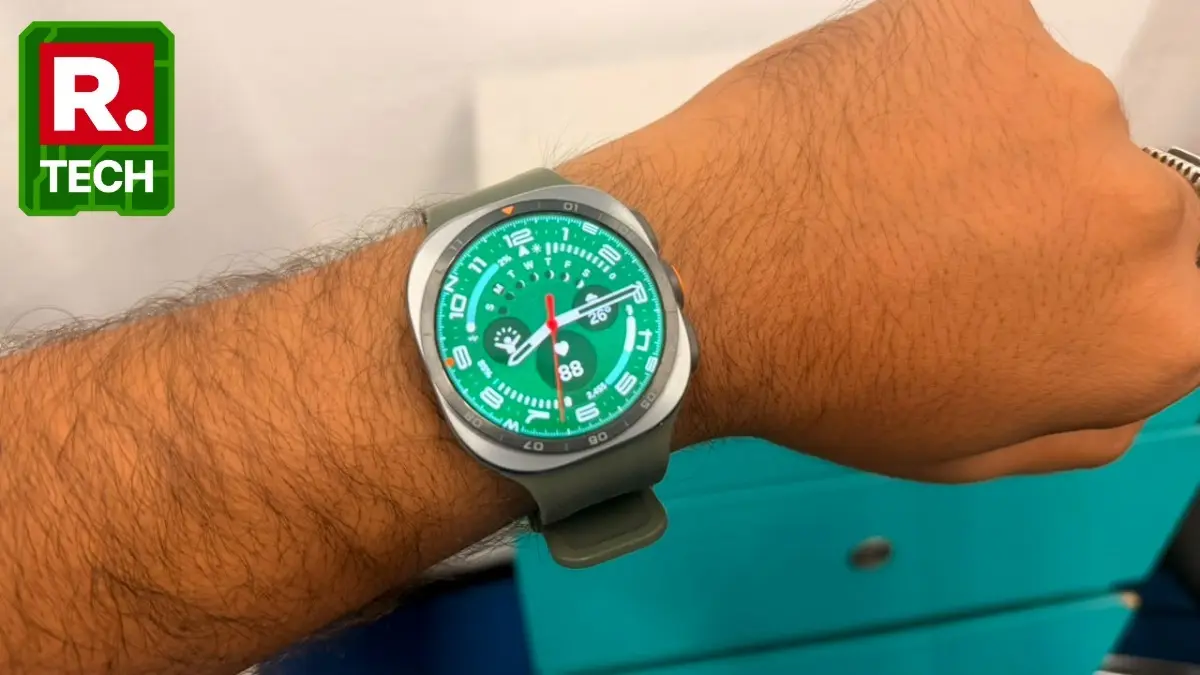
Samsung's Galaxy Watch Ultra 2 is designed for people who want more from a smartwatch than notifications, step counts, and the occasional workout summary. It is built for outdoor activities, serious fitness tracking, and continuous health monitoring, while retaining enough style to work as an everyday accessory.
At first glance, the Galaxy Watch Ultra 2 looks quite similar to its predecessor. It retains the distinctive cushion-shaped case surrounding a circular display, along with the rugged design that separates Samsung's Ultra range from its regular Galaxy Watch models. However, there are some meaningful changes underneath, including a new processor, a larger battery, a brighter display, and improved comfort.
I have been using the Galaxy Watch Ultra 2 as my everyday smartwatch, and while I appreciate its ruggedness and health-tracking capabilities, I have a few reservations about its size and how comfortable it is to wear overnight.
At ₹64,999, this is an expensive smartwatch. The question is whether its additional capabilities justify the premium over a regular Galaxy Watch.-1791817351517.webp)
Advertisement
What's Good
The design looks premium, but the watch is still hefty
The Galaxy Watch Ultra 2 follows the design language established by the original Galaxy Watch Ultra. It has a 47mm titanium case, a circular screen, and a squircle-shaped outer body that gives it a distinctive appearance.
I received the silicone strap with my unit, although Samsung offers different band options depending on the market. The design is unmistakably rugged, but it does not look out of place with formal clothing. I could wear it with a shirt and trousers or switch to casual clothing without feeling that the watch looked too sporty.
Advertisement
The titanium construction also gives the watch a premium feel. Samsung has managed to make the Ultra 2 12% thinner than its predecessor despite increasing the battery capacity, which is a meaningful improvement for a device of this size.
However, at 61.5g without the strap, the Galaxy Watch Ultra 2 is still a substantial smartwatch. You will notice its weight, particularly if you are accustomed to wearing smaller watches.
That is not necessarily a problem during the day. The weight gives the watch a reassuringly solid feel, and its rugged construction means I did not have to treat it like a delicate piece of electronics.
Sleep tracking is where the size becomes a bigger consideration, though. Wearing a large smartwatch overnight can become uncomfortable, particularly if you move around frequently while sleeping. The silicone strap can also leave marks on the skin, and prolonged moisture or friction may cause irritation for some users.-1791817362576.webp)
Samsung has made improvements to the band, which is now lighter and softer, but the watch's physical dimensions remain something to consider before buying it.
The display is excellent, even in bright sunlight
The Galaxy Watch Ultra 2 has a 1.52-inch Super AMOLED display with a resolution of 498 x 498 pixels. It is protected by sapphire crystal and supports peak brightness of up to 5,000 nits under specified high-ambient-light conditions. Samsung says this is its brightest smartwatch display yet.
In everyday use, I found the screen large enough to display important information without making me squint or repeatedly scroll through menus. Notifications, health readings, workout details, and other information are easy to read at a glance.
The display is also spacious enough for touch controls. My fingers are slightly on the broader side, and I sometimes struggle with small touchscreen interfaces because of accidental touches. That was not a significant problem with the Galaxy Watch Ultra 2.
Brightness is another major advantage. I could read information outdoors without constantly searching for shade or turning my wrist towards my body to make the screen more visible.
That matters particularly during exercise. If you are running outdoors, cycling, or checking your progress during a workout, you want to be able to glance at your watch and return your attention to the activity.
The Always-On Display is useful, too. I can check the time without having to exaggerate my wrist movement or wait for the screen to wake up.-1791817374892.webp)
Samsung also offers several watch faces, ranging from minimalist designs to information-heavy layouts. I could customise the appearance according to my preference and choose how much information I wanted visible at any given time.
My one design request would be a rotating bezel. Samsung's Galaxy Watch Classic models have made this physical control a useful way to navigate menus without covering the display with a finger. I would have liked to see something similar here.
That said, I understand why Samsung might want to retain the existing design to distinguish the Ultra 2 from its Classic models.
The durability gives me confidence when wearing it outdoors
I have brushed the Galaxy Watch Ultra 2 against wall corners and wooden doors on multiple occasions. The watch survived these encounters without any obvious damage that affected its functionality.
That is the sort of reassurance I want from a rugged smartwatch. I do not want to spend the day worrying about whether an accidental knock against a doorframe will leave a permanent mark.
Samsung rates the Galaxy Watch Ultra 2 for IP69K dust and water resistance, 10ATM water resistance, and MIL-STD-810H durability. It is also EN13319-certified for diving-related use.
In practical terms, I did not have to worry about the watch getting drenched during a downpour or accidentally wearing it into the shower. However, water resistance is not a guarantee against every possible type of water exposure, and I would still follow Samsung's guidance on cleaning and maintaining the watch.
The diving certification is particularly interesting because it expands the Ultra 2's appeal beyond conventional fitness tracking. The watch can automatically record information such as depth, dive time, and water temperature when submerged.-1791817386242.webp)
Samsung is also working with diving equipment company Mares to bring additional diving metrics through a dedicated app. These include ascent and descent speeds and safety-related dive information, although availability depends on the software rollout.
I could not put the specialised diving features through their paces, but they demonstrate that Samsung is trying to give the Ultra 2 a purpose beyond making a regular smartwatch look more rugged.
Performance is smooth, and storage is generous
The Galaxy Watch Ultra 2 moves to Qualcomm's Snapdragon Wear Elite platform, replacing the Exynos-based hardware used in the previous Ultra. It comes with 2GB of RAM and 64GB of storage, running Wear OS 7 with Samsung's One UI 9 Watch interface.
In my everyday use, the watch handled routine tasks smoothly. Moving between screens, checking notifications, opening health information, and navigating the interface did not result in the sort of stuttering that can make a smartwatch frustrating.
The extra storage is useful for a wearable, too. It gives you more room for apps and offline content, including music, without requiring you to manage storage as carefully as you might on a watch with a smaller capacity.
Setting up the watch is straightforward if you have a compatible Samsung phone. Switch it on, tap the pairing prompt on the phone, and follow the instructions to configure the watch, connectivity, and other settings. You can also configure LTE connectivity using an eSIM profile, subject to carrier support.
The LTE option is particularly useful if you want to leave your phone behind during a run or workout while remaining reachable. You can make calls and use supported connected features without depending entirely on a Bluetooth connection to your phone.-1791817397367.webp)
However, there is an important distinction here: the Galaxy Watch Ultra 2 is compatible with supported Android phones, but some Samsung health features require a compatible Galaxy smartphone. If you use another Android brand, it is worth checking feature compatibility before spending this much on the watch.
Health tracking is more useful when you look at the bigger picture
A smartwatch can collect an impressive amount of data, but I find the information more useful when it helps me understand how I am doing rather than simply showing me a long list of numbers.
The Galaxy Watch Ultra 2 tracks steps, heart rate, sleep, workouts, and several other health indicators. Its BioActive Sensor combines optical heart-rate sensing, electrical heart signals, and bioelectrical impedance analysis, while additional sensors track movement, orientation, temperature, and environmental information.
I found the step counter mostly accurate, and the readings from its health sensors were broadly in line with measurements from other devices I used, allowing for some variation.
That qualification is important. Smartwatches estimate several health measurements using sensors and algorithms, and their readings can differ from those of dedicated medical equipment. I would use the Galaxy Watch Ultra 2 to understand trends and decide when something deserves attention, not as a replacement for professional medical assessment.
The ECG function is another useful addition. It lets me record an electrocardiogram from my wrist and review the resulting information. The feature can help identify certain patterns that warrant medical attention, but it cannot detect every heart condition, and its availability depends on the paired phone, region, and applicable restrictions.
Samsung has also expanded its health platform beyond conventional activity tracking. Energy Score combines several indicators, including sleep, activity, and recovery-related information, to provide a daily assessment of how prepared you may be for the day ahead.-1791817410674.webp)
I like the idea because it encourages me to consider how I am recovering instead of treating every day as an opportunity to push harder. If sleep has been poor or activity levels have been unusually demanding, the information can help me decide whether to take it easier.
The watch also supports features such as Heart Health Score, Daily Cardio Load, and Fitness Index, depending on availability and compatibility. These tools offer additional context for people who want to understand how their fitness is changing over time.
Samsung has given outdoor enthusiasts some compelling tools
The Galaxy Watch Ultra 2 is clearly aimed at people who spend considerable time exercising outdoors.
One of its additions is Trail Run, which provides information about elevation, climbing progress, and accumulated ascent and descent. This is more useful than simply recording how far you have run because terrain can significantly affect how demanding a route feels.
Samsung has also introduced Nutrition Alert, which builds on its existing sweat-loss feature to estimate hydration needs based on sweat loss relative to body weight. The feature is intended to provide guidance during supported activities rather than act as a direct measurement of your body's hydration status.
I could not test every specialised feature because I do not regularly participate in activities such as trail running or professional diving. Nevertheless, the additional data could be valuable to athletes who want to analyse their performance beyond distance, duration, and heart rate.
Dual-frequency GPS is another important part of the package. The watch supports L1 and L5 GPS, which can improve positioning in challenging environments compared with relying on a single GPS frequency. That could be useful when running through built-up areas or navigating routes where buildings and other obstacles interfere with satellite signals.
Of course, more data does not automatically make someone a better athlete. But for people who enjoy studying their performance and making adjustments to their training, the Ultra 2 offers plenty to explore.-1791817775238.webp)
Sleep tracking is informative, but the watch is not ideal for everyone overnight
The Galaxy Watch Ultra 2 can track sleep and provide information about sleep duration and patterns. Samsung Health brings sleep information together with other health and activity data, allowing users to understand how their rest relates to their daily performance.
I found the watch capable of tracking my sleep and identifying naps, which is useful if you want to understand your routine beyond the hours spent in bed at night.
The problem is not so much the tracking itself as the physical experience of wearing the watch while sleeping.
The 47mm case is large, and the weight can become noticeable when I am trying to find a comfortable sleeping position. Depending on how tightly I wear the strap, the watch can also leave marks on my wrist.
This is a trade-off worth considering. Sleep tracking becomes more valuable when you wear the watch consistently, but a smartwatch that makes sleeping uncomfortable can defeat the purpose.
Samsung has made the Ultra 2 thinner and introduced a lighter band, which helps. However, anyone who prioritises overnight comfort above all else may find a smaller Galaxy Watch more practical.
Calls are clear, and contactless payments add convenience
I was able to make clear calls using the Galaxy Watch Ultra 2. The built-in speaker gets loud enough for me to hear the other person without having to bring the watch uncomfortably close to my ear.-1791818131190.webp)
I would not use it as my primary calling device for long conversations, but it is useful when my phone is in another room, tucked into a bag, or otherwise out of reach.
The watch also supports NFC, allowing compatible contactless payment services to be used at supported payment terminals. I did not use it to make payments during my testing, so I cannot comment on the reliability of that experience firsthand. Still, having the option is convenient, particularly if you want to leave your wallet behind during a workout.
What's Bad
The size and weight remain the biggest compromises
The Galaxy Watch Ultra 2 is more comfortable than its predecessor in some respects, but it is still a large smartwatch.
At 61.5g before adding the strap, it feels substantial on the wrist. That can be reassuring when you are outdoors or exercising, but it is not necessarily ideal for everyone.
I particularly noticed the difference when wearing it overnight. Sleep tracking is one of the watch's most useful features, yet the large case can become uncomfortable when I am trying to sleep.
The silicone strap can also cause irritation if sweat or moisture remains trapped against the skin. This is not unique to Samsung, but it is worth remembering if you plan to wear the watch continuously.
I would recommend trying it on before buying it, especially if you have smaller wrists or prefer lightweight watches.-1791818149460.webp)
The design could have benefited from a rotating bezel
I like the Ultra 2's appearance, but the circular screen inside the squircle-shaped case still feels like a missed opportunity for a physical rotating bezel.
Samsung has demonstrated with its Classic watches that a rotating bezel can be a practical navigation tool. It lets you scroll through menus and information without repeatedly touching the screen.
The Ultra 2 instead relies on its touchscreen and physical buttons. These work well enough, but I would have welcomed the option of navigating through the interface using a rotating bezel.
I understand that Samsung wants to preserve a distinct identity for the Ultra series. Even so, I do not think a useful control needs to be excluded simply to differentiate two product lines.
Most people will not use all its specialised features
Samsung has built the Galaxy Watch Ultra 2 for demanding outdoor activities, including trail running and diving. The additional metrics are impressive, but not everyone needs them.
If your smartwatch routine consists mainly of counting steps, receiving notifications, monitoring sleep, and tracking occasional workouts, much of the Ultra 2's specialised functionality may go unused.-1791818172137.webp)
The regular Galaxy Watch9 is lighter and less expensive, making it a more sensible option for people who want the core smartwatch and health-tracking experience without the rugged construction and outdoor-focused extras.
The Ultra 2 makes more sense when you know you will use its additional capabilities.
Battery life depends heavily on how you use it
The Galaxy Watch Ultra 2 has an 800mAh battery, which Samsung says is 35% larger than that of the previous Ultra model. The company has also improved the internal design to accommodate the bigger battery while reducing the watch's thickness.
In my use, I managed around four to five days on a charge with the Always-On Display enabled, extending that to roughly six or seven days with it switched off.
That is good endurance for a smartwatch with a large display and continuous health-monitoring capabilities. It also means I do not have to think about charging it every night.
However, battery life will vary according to LTE use, GPS activity, screen brightness, workouts, and background monitoring. Long outdoor sessions and frequent use of connected features can reduce the time between charges.
I would also have liked charging to be more convenient. Although the watch supports wireless charging, it uses Samsung's compatible charging system rather than allowing you to charge it on any ordinary Qi charging pad.
Verdict
Rating: 4/5
The Samsung Galaxy Watch Ultra 2 is a substantial upgrade in performance, battery capacity, display brightness, and outdoor functionality. It retains the rugged titanium design of the original Ultra while becoming thinner and introducing a more powerful platform.
What I appreciate most is that it works as an everyday smartwatch without losing sight of its more ambitious purpose. I can use it to check notifications, make calls, monitor my health, and track my daily activity, while its specialised features cater to people who run trails, spend time outdoors, or participate in demanding sports.
The display is excellent, the interface is smooth, and the durability gives me confidence that I do not need to handle the watch with excessive care. The Energy Score and broader Samsung Health ecosystem also make the collected data more useful by helping me understand recovery and activity together.
However, the size and weight are compromises I would not overlook. The watch can become uncomfortable during sleep, and several of its specialised features will be unnecessary for people who primarily want a conventional smartwatch.
At ₹64,999, the Galaxy Watch Ultra 2 is not an impulse purchase. It is best suited to people who want an advanced health and fitness companion, need reliable outdoor tracking, and appreciate the reassurance of a rugged titanium construction.
If you primarily want notifications, step tracking, and basic health monitoring, a regular Galaxy Watch will probably serve you just as well for less money.
But if you are a Samsung phone owner and want a smartwatch that combines premium construction, serious fitness tracking, useful health insights, and impressive battery life, the Galaxy Watch Ultra 2 makes a compelling case for itself. Just make sure you are comfortable with its size before committing to it.